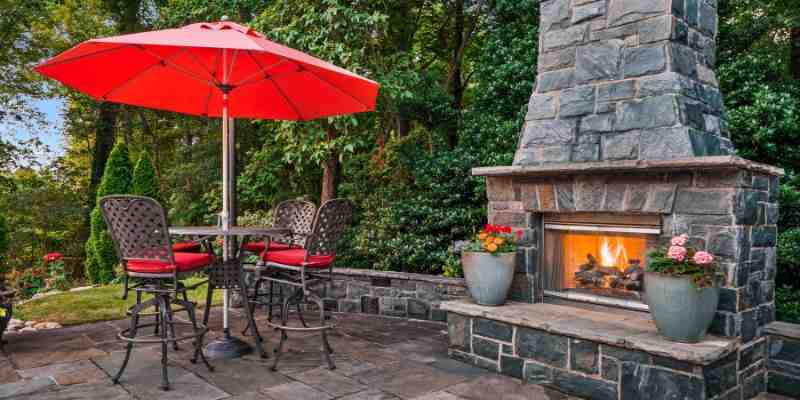

Outdoor fireplace construction: 10 Best Tips for Success
Transform Your Backyard with an Outdoor Fireplace
Outdoor fireplace construction combines function, beauty, and comfort to create a centerpiece for your outdoor living space. If you’re looking to build an outdoor fireplace, here’s what you need to know:
- Cost Range: $200-$1,500+ for DIY projects; $1,500-$8,000 for professional installation
- Timeline: Typically 1-2 weeks for completion
- Key Materials: Firebrick, refractory mortar, concrete blocks, veneer stone
- Distance Requirements: Must be at least 10-20 feet from buildings, trees, and fences
An outdoor fireplace transforms a simple backyard into an inviting gathering space that extends your living area beyond the walls of your home. Whether you’re hosting summer parties, enjoying cool autumn evenings, or even creating a cozy winter retreat, a well-built outdoor fireplace adds both value and enjoyment to your property.
“Building an outdoor fireplace is one of the best ways to turn your backyard from great to even greater,” notes industry experts. The appeal goes beyond aesthetics – a properly constructed outdoor fireplace creates a natural focal point that draws people together while providing both warmth and ambient lighting.
For commercial property managers like yourself, adding an outdoor fireplace to common areas or entertainment spaces can significantly improve tenant satisfaction and property value. The key is ensuring proper construction that balances safety, durability, and visual appeal.
Before beginning your project, understand the fundamentals of outdoor fireplace construction, from material selection to building codes and safety considerations. With careful planning and execution, your outdoor fireplace will provide years of enjoyment and function.
Must-know Outdoor fireplace construction terms:
Benefits of Adding an Outdoor Fireplace to Your Backyard
There’s something magical about gathering around a fire under the open sky. Outdoor fireplace construction isn’t just about adding a feature to your yard—it’s about creating memories and changing how you experience your outdoor space.
Improved Ambiance and Atmosphere
Fire speaks to something deep in our human nature. The soft crackle of burning wood, the gentle dance of flames against the evening sky, the warm glow that lights up familiar faces—these elements create an atmosphere that no outdoor lighting system can match. On cool Massachusetts evenings, there’s nothing quite like the cozy ambiance that radiates from a well-built fireplace.
Increased Property Value
Let’s talk dollars and cents for a moment. When you invest in quality outdoor fireplace construction, you’re not just spending money—you’re adding significant value to your property. Real estate professionals across Middlesex and Essex Counties consistently report that thoughtfully designed outdoor living spaces command premium prices. Potential buyers often fall in love with these distinctive features, seeing them as luxurious additions that justify higher asking prices.
Extended Outdoor Living Season
Here in New England, we treasure our outdoor time precisely because it’s limited. An outdoor fireplace effectively stretches your backyard season by months—letting you enjoy al fresco dinners in early spring when there’s still a chill in the air, or hosting friends for a nightcap on a crisp October evening when normally you’d be driven indoors. Many of our clients tell us their outdoor fireplace is the difference between using their yard for three months or seven months of the year.
Social Gathering Hub
“Every time we light our fireplace, it’s like sending out a silent invitation,” shared one of our Burlington clients. “Friends and family naturally drift toward it, conversations flow easier, and suddenly our backyard becomes the favorite hangout spot.”
This magnetic quality makes an outdoor fireplace the perfect centerpiece for everything from intimate family evenings to larger gatherings. The fireplace creates a natural boundary and focal point, giving structure to your outdoor space while encouraging connection.
Multi-Functional Space
Today’s outdoor fireplaces do more than just look pretty and provide warmth. With thoughtful design, your fireplace can become a culinary asset—perfect for everything from roasting marshmallows with the kids to cooking pizza on special stones. Some of our clients in Winchester and Woburn have incorporated cooking features that have transformed their outdoor entertaining options entirely.
Psychological Benefits
There’s growing evidence that fire features provide real psychological benefits. The meditative quality of watching flames can lower blood pressure, reduce stress, and improve mood. After a hectic workday in Boston or Cambridge, having a personal retreat where you can unwind by the fire might be just what the doctor ordered.
For commercial property managers, an outdoor fireplace in common areas creates distinctive appeal that can help attract and retain tenants. In multi-family settings, these spaces foster community and provide residents with a premium amenity that distinguishes your property from competitors.
When properly constructed with safety and aesthetics in mind, an outdoor fireplace becomes more than just another backyard feature—it becomes the heart of your outdoor living experience, changing how you enjoy your property throughout the year.
Choosing the Right Materials for Outdoor Fireplace Construction

When it comes to outdoor fireplace construction, the materials you choose will make or break your project. This isn’t just about creating something beautiful—it’s about building something that’s safe, durable, and will stand up to years of use and weather.
I remember visiting a client in Winchester who had attempted to build their own outdoor fireplace using regular bricks from the hardware store. Within three uses, those bricks were already cracking from the heat. Don’t make the same mistake!
Firebricks and Refractory Mortar
The heart of your outdoor fireplace—the firebox—needs special materials that can handle extreme heat. Regular bricks just won’t cut it here.
Firebricks (sometimes called refractory bricks) are your best friend for this job. These specialized bricks can withstand temperatures up to a whopping 2,000°F without cracking or breaking down. They’re typically light tan or yellowish in color, and while they cost more than standard bricks, they’re absolutely essential for safety.
Just as important is using the right mortar. Regular mortar will crack and crumble when exposed to high temperatures, potentially creating dangerous situations. Refractory mortar is specifically designed to expand and contract with heat without failing.
“I’ve seen too many DIY fireplaces fall apart because someone tried to save a few bucks on the wrong materials,” our senior mason at M.T. Mayo Corp told me recently. “When it comes to the firebox, never compromise on quality.”
Cinder Blocks and Concrete
Behind the scenes, your fireplace needs a strong supporting cast. That’s where cinder blocks and concrete come in.
Standard concrete cinder blocks (typically 8×8×16 inches) form the structural skeleton of most outdoor fireplaces. They’re affordable, readily available, and provide excellent support. For a standard-sized outdoor fireplace like the one we built in Lexington last summer, we used about 33 full concrete blocks and 12 half blocks.
The foundation matters tremendously too. A reinforced concrete pad, usually 4-6 inches thick, provides the stable base your fireplace needs. We typically use rebar and wire mesh for reinforcement, with quick-set concrete for the footings. For that Lexington project, we went through 26 80-lb bags of quick-set concrete and 6 50-lb bags of gravel for proper drainage.
These materials aren’t glamorous, but they’re the unsung heroes that keep your fireplace standing straight and strong through freeze-thaw cycles and years of use.
Natural Stone and Veneer
Now for the part everyone notices—the exterior finish. This is where your outdoor fireplace transforms from a functional heat source to a stunning focal point for your backyard.
Natural stone provides timeless appeal and exceptional durability. Fieldstone creates a rustic, natural look that blends beautifully with garden settings, while cut limestone offers a more formal, neat appearance. These materials age gracefully, often looking even better as they weather.
Manufactured stone veneer is another excellent option, offering similar aesthetics often at a lower cost and weight. It’s also typically easier to install, which can save on labor costs if you’re hiring professionals like our team at M.T. Mayo.
“The veneer is what makes people say ‘wow’ when they see your fireplace,” explains our design specialist. “It’s worth investing in quality materials here that complement both your landscape and your home’s exterior.”
For our clients in coastal areas like Manchester-by-the-Sea, we recommend materials with good resistance to salt air and moisture. If you’re further inland in places like Sudbury or Concord, you have more flexibility in your selections.
Your material choices should balance appearance, functionality, and longevity. The right materials mean the difference between an outdoor fireplace that lasts for decades and one that needs constant repairs. When you’re ready to start your outdoor fireplace construction project, our team at M.T. Mayo Corp can help you make these crucial material decisions with confidence.
Key Steps in Outdoor Fireplace Construction
Building an outdoor fireplace isn’t just a weekend project—it’s a journey that transforms your backyard into an inviting retreat. At M.T. Mayo Corp, we’ve guided countless homeowners through the process of outdoor fireplace construction across Middlesex and Essex Counties, and we’re happy to share our expertise with you.
Planning and Designing Your Outdoor Fireplace Construction Project
Every great outdoor fireplace begins with thoughtful planning. This first step might not involve any digging or mixing, but it’s arguably the most important part of the entire process.
When choosing your fireplace location, consider which way the wind typically blows in your yard. Nobody wants to be constantly shifting their chair to avoid smoke! Keep your fireplace at least 10-20 feet from buildings, trees, and fences for safety. Think about the views from inside your home too—your fireplace should improve your property’s visual appeal from every angle.
One Woburn homeowner we worked with shared, “My hearth starts with the belief that in order to cook over live fire, all you need is a fireproof surface and some logs.” While this simplified approach works for some, most homeowners prefer something more substantial that complements their home’s style.
When designing your fireplace, standard dimensions include a firebox opening of about 36 inches high, overall width between 4 and 6 feet, and a total height (including chimney) of 8 to 10 feet. The style should harmonize with your home’s architecture—a sleek, minimalist fireplace might look out of place next to a colonial home, while a rustic stone fireplace might clash with modern architecture.
| Style | Characteristics | Best For |
|---|---|---|
| Traditional | Brick or stone, classic proportions | Colonial, Victorian, or traditional homes |
| Modern | Clean lines, minimal detailing | Contemporary homes, minimalist landscapes |
| Rustic | Natural stone, irregular shapes | Woodland settings, country properties |
| Mediterranean | Stucco finish, arched openings | Spanish-style homes, warm climate settings |
Building a Solid Foundation
An outdoor fireplace can weigh several tons when completed, so a proper foundation isn’t optional—it’s essential. Think of it as the unsung hero of your project.
Always start by calling 811 to mark underground utilities before you dig—this simple step can prevent costly and dangerous accidents. Next, excavate to a depth of 8-12 inches, depending on your local frost line. In Massachusetts, we typically recommend going deeper rather than shallower.
Create a form using pressure-treated 2×6 lumber, then add 2-3 inches of gravel for drainage. The gravel layer helps prevent water from pooling beneath your foundation, which could cause cracking during freeze-thaw cycles. Install rebar in a grid pattern at 1-2 foot intervals to reinforce the concrete, then pour 6-8 inches of concrete and allow it to cure for at least 24-48 hours before building.
While industry data suggests, “On average, a contractor can put up our outdoor stone masonry fireplace kits in 3-4 hours,” the foundation work takes considerably longer and requires proper curing time. Rushing this step can compromise the entire structure.
Constructing the Firebox
The firebox is where the magic happens—it needs to withstand extreme heat while properly directing smoke upward rather than outward.
Start by creating a U-shaped structure using firebrick—never substitute regular brick, which will crack under high heat. Use only refractory mortar between firebricks, as standard mortar will fail when exposed to direct flame. Standard dimensions are approximately 36 inches high, 30 inches wide, and 16-20 inches deep.
Our masonry team explains, “Squared walls maximize the firebox space and promote better smoke drainage compared to angled walls in outdoor environments.” This differs from indoor fireplaces, where angled (Rumford) designs are sometimes preferred. Build the firebox floor with a slight slope toward the opening to ensure proper water drainage during rainstorms.
Building the Chimney
A well-designed chimney ensures your gathering spot remains smoke-free and comfortable. Without proper chimney construction, even the most beautiful fireplace becomes unusable.
Create a smoke chamber above the firebox that gradually narrows, using the “staircase” technique to transition from firebox to flue size. Install a steel lintel across the firebox opening to support the weight above—this critical structural element prevents collapse.
Add ceramic flue liners (typically 18″ x 24″) and ensure the chimney height is at least 24 inches tall, extending at least 2 feet above adjacent structures. Our construction team emphasizes, “A proper draft is critical to ensure that smoke does not spill out from the front of the fireplace.” Cap the chimney with a spark arrestor to prevent embers from escaping and potentially starting fires.
Applying Finishing Touches
The exterior finish transforms your fireplace from a functional structure to a beautiful focal point that improves your entire outdoor living space.
Install cement board over the cinder block structure, followed by metal lath for better mortar adhesion. Then apply your chosen facing material—whether stone veneer, brick, or another option—using appropriate mortar. Many homeowners choose to install a mantle, with natural stone slabs working particularly well in outdoor settings.
Don’t forget to add a hearth extension in front of the firebox (typically 16-20 inches) to catch embers and provide a transition zone. Consider practical additions like built-in wood storage or seating that improve both function and appearance.
Our design specialist notes, “We find that integrating the fireplace design with elements from the home’s architecture creates a cohesive look.” This might mean matching stone types, mortar colors, or architectural details from your home.
With careful attention to each of these steps, your outdoor fireplace will become not just a construction project, but the heart of your outdoor living space for years to come.
Understanding Local Building Codes and Restrictions
When planning your outdoor fireplace construction project, understanding local regulations is just as crucial as selecting the right materials. Building codes aren’t just bureaucratic red tape—they’re designed to keep you and your neighbors safe while protecting property values.
Permit Requirements
Most towns and cities in Middlesex and Essex Counties require permits before you can break ground on your outdoor fireplace. The process typically includes submitting detailed plans, paying permit fees (usually between $50-$200), and scheduling inspections throughout the construction process.
“Hot Tip! Check local zoning and building codes before you start. Some communities do not allow wood burning fireplaces,” our permitting specialist often reminds clients. This is especially true in densely populated areas like Cambridge or Somerville, where air quality concerns may limit certain types of outdoor fires.
I recently worked with a homeowner in Lexington who was surprised to learn their initial design wouldn’t pass code—making changes on paper saved them thousands in potential reconstruction costs later.
Zoning Considerations
Zoning ordinances can significantly impact your fireplace plans. These regulations may limit the size of outdoor structures, their proximity to property lines, and even impose height restrictions. Some neighborhoods have specific usage restrictions—particularly regarding wood burning.
If you live in a historic district in Salem, Newburyport, or Concord, expect additional design review requirements. These extra steps ensure your new fireplace complements the historic character that makes these areas special. One client in Salem told me, “I was worried about the approval process, but it actually helped us create a more authentic design that looks like it’s always been part of our property.”
Setback Requirements
Safety-focused setback requirements typically mandate specific distances between your fireplace and other structures. Most local codes require fireplaces to be 10-30 feet from any structure (like your house or garage), 10-20 feet from property lines, and at least 10 feet from overhead trees.
In Woburn specifically, outdoor fireplaces generally need to be at least 15 feet from structures and 10 feet from property lines—but always check current regulations, as they can change. These requirements aren’t arbitrary—they’re calculated to prevent fire spread and ensure proper ventilation.
Before breaking ground, you’ll need to Call 811 Before You Dig to mark underground utilities. This free service can prevent dangerous and costly accidents during excavation.
Environmental Regulations
Environmental concerns have led many communities to implement additional regulations affecting outdoor fireplaces:
Some areas have air quality restrictions that limit wood burning on certain days—particularly during summer months when air pollution is higher. If your property is near wetlands or in watershed protection areas, you may need conservation commission approval before proceeding.
A client in Manchester-by-the-Sea shared their experience: “We had to adjust our fireplace location because of wetland proximity, but the conservation agent was actually really helpful in suggesting alternatives that worked with our landscape.”
Homeowner Association Rules
If you live in a neighborhood with an HOA, there’s another layer of approval to steer. HOAs often have their own requirements regarding:
Design aesthetics, material limitations, usage restrictions, and sometimes even stricter setback requirements than municipal codes. Getting written HOA approval before starting construction can save you from potential conflicts with neighbors and association boards.
One client in a Burlington HOA told me: “I had to submit three different design proposals before getting approval, but working with professionals who understood the requirements made the process much smoother.”
Professional Assistance
Navigating this regulatory maze can be challenging, which is why many homeowners appreciate professional guidance. Our team at M.T. Mayo Corp. regularly helps clients with determining which permits are needed, preparing applications, scheduling inspections, and ensuring compliance with all local codes.
The consequences of skipping these steps can be severe—from fines to forced removal of your beautiful new fireplace. Even worse, unpermitted structures can create major headaches when selling your property down the road.
A well-planned approach to codes and permits might add a few weeks to your timeline, but it provides invaluable peace of mind. As one of our Winchester clients put it, “Knowing everything was up to code lets me enjoy my fireplace without worrying about what might happen in a home inspection later.”
Safety Considerations in Outdoor Fireplace Construction
When it comes to outdoor fireplace construction, safety isn’t just a checkbox—it’s the foundation of your entire project. A well-built fireplace creates years of wonderful memories, while one with safety shortcuts can lead to disaster. At M.T. Mayo Corp., we’ve seen how proper safety planning makes all the difference.
Ensuring Proper Draft in Outdoor Fireplace Construction
Have you ever sat around a campfire only to find yourself constantly shifting positions to avoid smoke? That’s what happens without proper draft in your outdoor fireplace.
Good draft ensures smoke rises up and away rather than billowing into your gathering space. Your chimney should stand at least 24 inches tall to create sufficient updraft. The smoke chamber needs a gradual transition from firebox to flue—think of it as a smooth highway for smoke to travel rather than a congested intersection.
One Lexington homeowner told us, “Our first DIY fireplace was beautiful but unusable because smoke constantly blew into our faces. After rebuilding with proper draft considerations, we finally enjoy smoke-free evenings outside.”
The shape matters too. While indoor fireplaces often benefit from angled walls, outdoor fireplaces generally perform better with squared walls that help manage the unpredictable effects of wind. Even gentle breezes can dramatically affect how your fireplace draws.
Selecting Fireproof Materials for Safe Outdoor Fireplace Construction
Using the right materials isn’t about being fancy—it’s about keeping your family safe. Outdoor fireplace construction demands specific fire-resistant materials that can withstand extreme temperatures.
Firebricks are non-negotiable for the firebox. These specialized bricks withstand temperatures up to 2,000°F without cracking. Regular bricks might look similar, but they’ll literally crack under pressure, creating serious safety hazards.
Similarly, you must use refractory mortar between firebricks. Standard mortar simply can’t handle the heat and will deteriorate quickly, compromising the entire structure. The concrete blocks providing structural support should be solid and properly reinforced.
“I was tempted to save money by using leftover bricks from another project,” confessed a Winchester client, “but I’m so grateful my contractor insisted on proper firebricks—especially after seeing how intense the heat gets during longer fires.”
For the flue, ceramic or stainless steel liners provide essential protection. And don’t forget the hearth extension—this non-combustible area in front of your fireplace acts as a safety buffer and should be made of stone, brick, or concrete.
Maintaining Safe Distances and Placement
Location, location, location—it matters just as much for safety as it does for real estate. Your outdoor fireplace needs breathing room.
Most communities require fireplaces to stand at least 10-20 feet from any structures like your home or shed. Keep trees and shrubs at least 15 feet away—remember, they can dry out and become fire hazards. Property lines typically require a 10-foot buffer, while overhead structures need about 15 feet of clearance.
Combustible materials shouldn’t come closer than 5 feet to your fireplace. This includes furniture, decorations, and especially firewood storage.
Wind patterns matter tremendously. In coastal communities like Marblehead, sea breezes can dramatically affect where smoke travels. We always recommend spending time in your yard during different weather conditions before finalizing your fireplace location.
“We initially planned our fireplace on the west side of our patio,” shared a Burlington homeowner, “but after observing our yard’s wind patterns for a week, we realized the east side would keep smoke away from our seating area most evenings.”
Structural Integrity
An outdoor fireplace isn’t a lightweight structure—it’s essentially a small building that needs to stand strong through years of New England weather.
Your foundation should be at least 6 inches of reinforced concrete with steel rebar running throughout. The steel lintel over the firebox opening bears tremendous weight and heat stress, so never compromise on its quality. The chimney needs proper support all the way down to the foundation.
Our New England freeze-thaw cycles put extra stress on masonry structures. Using over 100 linear feet of steel rebar and concrete with a PSI rating above 3500 ensures your fireplace won’t start cracking after just a few seasons.
“A proper draft is critical to ensure that smoke does not spill out from the front of the fireplace,” our construction team always emphasizes. This isn’t just about comfort—it’s about preventing smoke inhalation and keeping your outdoor space enjoyable.
Fire Safety Equipment
Even perfectly built fireplaces benefit from having safety equipment nearby. Keep a fire extinguisher rated for wood fires within easy reach. A garden hose with spray nozzle provides quick response to any stray embers.
Don’t forget personal safety items like fire-resistant gloves and long-handled tools for managing fires safely. A spark screen for wood-burning fireplaces adds significant protection, especially during dry conditions.
We strongly recommend installing a spark arrestor on your chimney cap. This simple mesh covering prevents airborne embers from escaping and potentially starting unwanted fires nearby. It’s an inexpensive addition that provides enormous peace of mind, especially during our dry fall months when leaves collect around yards.
Building your outdoor fireplace with safety as the priority doesn’t just protect your property—it ensures your new gathering space brings years of worry-free enjoyment instead of becoming a source of stress.
Wood-Burning vs. Gas Outdoor Fireplaces
When planning your outdoor fireplace construction, one of the most fundamental decisions you’ll face is choosing between wood-burning and gas. This choice affects everything from the building process to your long-term enjoyment of the feature.
Wood-Burning Outdoor Fireplaces
There’s something magical about gathering around a crackling wood fire on a cool evening. The dancing flames, the distinctive aroma of burning wood, and the satisfying pop and hiss create an experience that many homeowners find irreplaceable.
“My hearth starts with the belief that in order to cook over live fire, all you need is a fireproof surface and some logs,” one of our Winchester clients told us after we completed their backyard renovation. This sentiment captures the beautiful simplicity that draws many people to traditional wood-burning fireplaces.
Wood-burning fireplaces do provide significantly higher heat output than their gas counterparts, making them ideal for actually warming your outdoor gatherings on chilly New England evenings. They also tend to have lower initial installation costs since you don’t need to run gas lines to your backyard.
The construction process for a wood-burning outdoor fireplace is more substantial, however. You’ll need a properly designed chimney (at least 24 inches tall) to create sufficient draft, especially important in outdoor settings where wind can affect performance. The firebox must be lined with firebrick and properly sized, with a well-designed smoke shelf and chamber to direct smoke upward rather than out into your seating area.
Don’t forget practical considerations like a spark arrestor on the chimney to prevent errant embers from causing problems, and an ash dump or clean-out method for easier maintenance. You’ll also need a hearth extension of at least 16-20 inches in front of the fireplace for safety.
For those with access to firewood, ongoing fuel costs can be minimal or even free—a nice bonus after the initial investment.
Gas Outdoor Fireplaces
“The first time I pressed a button and instantly had a beautiful flame in our outdoor fireplace, I knew we’d made the right choice for our family,” shared a client from Lexington. This convenience factor is what draws many homeowners to gas fireplaces.
Gas options offer remarkable convenience with instant on/off operation—no kindling, no newspaper, no waiting for flames to catch. There’s also no smoke or ash to manage, meaning your clothes won’t smell like a campfire after an evening outdoors. The flame is consistent and controllable, allowing you to adjust the height and heat output to match your needs.
From a construction standpoint, gas fireplaces are generally simpler to build. They require less substantial chimney construction (sometimes none at all for certain ventless models), though proper ventilation remains important even outdoors. You’ll need professional gas line installation to ensure safety, and typically an electrical connection for the ignition system.
Gas fireplaces eliminate the need for firewood storage, which can be a significant space-saver for smaller properties. They’re also more likely to be permitted in areas with air quality restrictions that limit wood burning, such as parts of Cambridge or Somerville.
For commercial properties in Woburn or community areas in condominium developments throughout Middlesex and Essex Counties, gas fireplaces often make more sense due to their lower maintenance needs and consistent performance.
Hybrid Options
Some of our more creative clients opt for flexibility with hybrid solutions. We’ve installed wood-burning fireplaces with gas starters for easier lighting, and even designed outdoor living spaces with both a traditional wood-burning fireplace and an adjacent gas fire feature to provide options depending on the occasion.
For a recent project in Winchester, we created a traditional wood-burning fireplace for weekend gatherings when the homeowners had time to tend a fire, paired with a convenient gas fire pit for quick enjoyment on weeknights.
| Feature | Wood-Burning | Gas |
|---|---|---|
| Foundation | Heavier, more substantial | Can be lighter |
| Firebox | Larger, lined with firebrick | Smaller, houses burner system |
| Chimney | Taller, more substantial | May be shorter or decorative only |
| Maintenance | Regular ash removal, chimney cleaning | Minimal, occasional burner check |
| Ambiance | Natural crackling, authentic aroma | Consistent flame, no smoke |
“When designing an outdoor living space, we always consider how the fireplace will actually be used,” explains our design team at M.T. Mayo Corp. “For clients who entertain frequently and want ease of use, gas is often preferable. For those seeking a traditional experience with higher heat output, wood burning is the way to go.”
Your lifestyle, property constraints, and personal preferences should guide this important decision. Both options can create beautiful focal points for your outdoor space when properly constructed.
Cost Considerations and DIY vs. Professional Construction
Building an outdoor fireplace is an investment—both financially and in your property’s value. Whether you’re planning to tackle this project yourself or hire professionals, understanding the costs involved will help you make the best decision for your specific situation.
Understanding the Costs Involved in Outdoor Fireplace Construction
When homeowners ask me about outdoor fireplace construction costs, I always explain that the price range can be quite wide. For a DIY project, you’re looking at spending anywhere from $200 to over $1,500 just for materials, depending on the size and complexity of your design.
The foundation materials—concrete, rebar, and gravel—typically run between $200-$500. Your structural components like cinder blocks and mortar will add another $300-$800. The critical firebox materials, including those essential firebricks and refractory mortar, generally cost $200-$400. Don’t forget about chimney components ($150-$300) and those all-important finishing materials that everyone will see, which can range from $500 to well over $2,000 depending on whether you choose natural stone or manufactured veneer.
If you’re hiring professionals like our team at M.T. Mayo Corp., the investment typically ranges from $1,500 to $8,000, with custom designs potentially going higher. This reflects not just materials but also the expertise and labor that ensure your fireplace is built safely and correctly.
I remember a client in Winchester who told me, “I initially balked at the professional quote, but after calculating the cost of materials, tools I’d need to buy, and the value of my weekends—not to mention the peace of mind knowing it was done right—the professional route made perfect sense.”
Pros and Cons of DIY vs. Hiring a Professional
The decision between DIY and hiring professionals isn’t just about money—it’s about time, skill, and peace of mind.
Going the DIY route can save you considerably—typically 50-70% compared to hiring professionals. There’s also something deeply satisfying about building something with your own hands that you’ll enjoy for years to come. You can work at your own pace and customize every detail exactly how you want it.
However, DIY outdoor fireplace construction requires specialized knowledge, particularly for critical elements like the firebox and chimney. It’s physically demanding work—mixing concrete, lifting heavy stones, and precision bricklaying aren’t for everyone. A typical DIY project takes 1-3 weeks of dedicated work, and mistakes can be costly both financially and safety-wise.
Professional construction brings expertise and efficiency to your project. Our masons have built countless outdoor fireplaces throughout Middlesex and Essex Counties and know exactly how to handle everything from permit requirements to ensuring proper draft. A professional team can typically complete your fireplace in 3-7 days, and their work usually comes with a warranty.
“If you lack masonry experience, hiring a professional is a safer alternative to DIY construction,” as industry experts consistently note—and after seeing some DIY repair jobs, I wholeheartedly agree!
Many homeowners in our service area opt for a middle ground—having professionals handle the technical aspects like the foundation and firebox while taking on finishing work themselves. Pre-engineered kits ($1,000-$3,000) are another option that simplifies the process while still allowing for personal involvement.
A client in Billerica shared their experience: “We spent about $3,500 on materials and hired M.T. Mayo Corp. for the technical aspects like foundation work and firebox construction. We handled some of the finishing work ourselves, which gave us the perfect balance of professional quality and personal involvement.”
Cost-Saving Tips for Your Outdoor Fireplace Project
After years of building outdoor fireplaces throughout Middlesex and Essex Counties, I’ve learned a few tricks for managing costs without compromising quality:
Plan thoroughly before starting. Changes mid-project can double your costs and extend your timeline significantly. Spend time researching designs and materials before breaking ground.
Consider seasonal timing. Contractors (including us at M.T. Mayo) often offer better rates during off-peak seasons. Planning your project for early spring or late fall might save you money.
Source materials carefully. Local stone yards frequently have remnants at reduced prices that are perfect for outdoor fireplaces. The natural variation can add character to your design.
Prepare the site yourself. Even if you’re hiring professionals, doing the initial excavation and site prep can save on labor costs. Just make sure you’re following the specifications provided by your contractor.
Choose simpler designs. A straightforward, squared design uses fewer materials and requires less specialized cutting than more complex styles. A homeowner in Reading told me, “We built our outdoor fireplace using a squared-wall design rather than the more complex Rumford style. This simplified the construction while still providing excellent performance.”
| Aspect | DIY Cost | Professional Cost | Hybrid Approach |
|---|---|---|---|
| Materials | $800-$1,500 | $1,000-$2,000 | $800-$1,500 |
| Labor | Your time | $1,500-$6,000 | $800-$3,000 |
| Equipment | $100-$300 rental | Included | $50-$200 rental |
| Permits | $50-$200 | Often included | $50-$200 |
| Timeline | 1-3 weeks | 3-7 days | 1-2 weeks |
| Total | $950-$2,000 | $2,500-$8,000+ | $1,700-$4,900 |
Whatever approach you choose, an outdoor fireplace is an investment in your property and lifestyle. When built properly—whether by your hands or ours—it will provide years of enjoyment and likely increase your property’s value. That makes it money well spent, regardless of which construction path you choose.
Design Elements and Styles for Outdoor Fireplaces
The design of your outdoor fireplace isn’t just about looks—it’s about creating a space that feels right for your home and lifestyle. When planning your outdoor fireplace construction, thoughtful design choices can transform a simple backyard feature into the heart of your outdoor living area.
Popular Design Styles
Traditional Brick Fireplace
There’s something timeless about a classic brick fireplace that feels right at home in New England. Throughout communities like Lexington and Concord, we’ve built countless traditional fireplaces that complement colonial and Cape Cod homes. The symmetrical proportions and clean lines of these designs create a sense of balance and permanence in your landscape. The warm red tones of traditional brick bring a welcoming feel that never goes out of style.
Rustic Stone Fireplace
For homeowners blessed with wooded properties in places like Lincoln or Boxford, rustic stone fireplaces seem to grow naturally from the landscape. We love working with fieldstone or river rock to create these organic-feeling structures. The irregular shapes and varied textures catch the light differently throughout the day, creating visual interest that changes with the seasons. Topped with a chunky wood or rough-hewn stone mantle, these fireplaces feel like they’ve always been part of your property.
Modern Minimalist Fireplace
“Clean lines never go out of style,” as one Cambridge homeowner told us after we completed their sleek, contemporary fireplace. Modern designs focus on geometric simplicity and often incorporate metal elements alongside stone or concrete. These designs particularly shine in contemporary homes and urban settings. Many of our clients in Newton and Lexington choose gas over wood for these installations, embracing both the aesthetic and convenience benefits.
Mediterranean/Tuscan Fireplace
Bringing a touch of old-world charm to Massachusetts, Mediterranean-inspired fireplaces feature warm stucco finishes and graceful arched openings. These designs often become the centerpiece of outdoor kitchens, with decorative tile accents adding pops of color and personality. One client in Winchester transformed their ordinary backyard into a Tuscan retreat, complete with a pizza oven integrated into their fireplace design.
Design Elements to Consider
Hearth Extensions
The hearth is more than just a safety feature—it’s an opportunity to improve your design. Whether flush with the ground or slightly raised, this area typically extends 16-20 inches in front of the firebox. We often use the same material as the facing for visual continuity, though contrasting materials can create striking effects. One Burlington family cleverly designed their hearth as a casual seating area, perfect for kids roasting marshmallows.
Mantles and Shelving
A well-designed mantle adds character while providing practical display space. Natural stone slabs offer substantial, weather-resistant options that stand up to New England’s challenging climate. Built-in shelving and recessed areas can house everything from decorative lanterns to firewood storage. When planning your mantle height, consider both aesthetics and functionality—too high, and it loses its visual impact; too low, and it might interfere with the fire.
Integrated Seating
“Our fireplace isn’t just something to look at—it’s where we live,” explains a Woburn homeowner whose outdoor fireplace includes built-in bench seating on both sides. Wing walls that double as seating areas maximize your investment by creating a complete outdoor room. For comfort, consider adding weather-resistant cushions that can be stored during harsh weather. Most of our clients find 18-20 inches the ideal seating height for comfort.
Multi-Functional Design
Today’s outdoor fireplaces often do double or triple duty. We’ve designed combination fireplace/pizza ovens that become weekend entertainment centers. Integrated wood storage keeps fuel dry and accessible while adding visual texture. Some clients request built-in grill areas or television mounting spaces above the fireplace. One particularly innovative design in Reading incorporated a pergola overhead, creating a defined outdoor room with shade during the day and firelight at night.
Regional Design Considerations
The communities we serve throughout Middlesex and Essex Counties each have unique characteristics that influence fireplace design:
Coastal Communities (Marblehead, Beverly, Gloucester)
Oceanfront properties require special consideration for materials that can withstand salt air. We select salt-resistant materials and incorporate extra weather protection in these installations. Many coastal clients request designs with nautical touches that complement their seaside setting. Local stone often makes an appearance, connecting the design to the surrounding landscape.
Suburban Settings (Woburn, Reading, Burlington)
In more densely populated areas, we carefully consider how the fireplace fits into the overall landscape and respects neighbors’ sightlines. Multi-functional designs that maximize limited space are particularly popular. We work to ensure the style complements both your home and the neighborhood aesthetic. One Burlington client noted, “Our fireplace became the conversation piece of the neighborhood—in a good way!”
Rural Properties (Carlisle, Dunstable, Boxford)
Expansive properties allow for larger-scale fireplaces that might overwhelm smaller lots. We love incorporating locally-sourced stone that feels authentic to the wooded settings common in these areas. Rustic elements tend to work beautifully here, creating harmony between the built and natural environments. These fireplaces often become destination points within larger landscape designs.
Trending Design Elements
The world of outdoor fireplace construction continues to evolve, and we’re excited to bring the latest trends to homeowners throughout Middlesex and Essex Counties:
See-through fireplaces that serve multiple areas have become increasingly popular, creating visual connection between different outdoor zones. Linear, contemporary gas fireplaces offer clean aesthetics with minimal maintenance. Many clients now request mixed material facades that combine stone with metal or wood elements for textural contrast.
Smart home integration has reached outdoor spaces, with app-controlled gas fireplaces that can be turned on before you even step outside. Eco-friendly design elements reflect growing environmental consciousness. Perhaps most significantly, we’re seeing more indoor/outdoor transitional spaces where fireplaces serve as the anchor point between home and landscape.
“Transform the outdoors into living space,” has become our mantra at M.T. Mayo Corp. We believe outdoor fireplaces aren’t just luxury features—they’re practical investments that create functional outdoor spaces while adding real value to your home.
Enhancing Your Backyard Aesthetics and Functionality
Your outdoor fireplace construction isn’t just a standalone feature—it’s the heart of a complete outdoor living experience. When thoughtfully integrated with your landscape, it transforms your backyard into a space where memories are made year after year.
Creating Conversation Areas
There’s something almost magical about how a fireplace naturally draws people together. I’ve seen countless backyards come alive once a fireplace becomes the anchor for social gatherings.
“The fireplace completely changed how we use our yard,” shared one Lexington homeowner. “Now instead of just passing through, we actually live in our outdoor space.”
For comfortable conversation areas, consider arranging seating in a welcoming semi-circle facing the fireplace. Most gatherings involve 6-8 people, so plan accordingly with a thoughtful mix of seating options—perhaps built-in stone benches complemented by movable Adirondack chairs or a weather-resistant outdoor sofa. That conversation flows best when people aren’t too far apart—about 4-8 feet between seats creates intimacy without crowding.
Landscape design guidelines suggest planning a patio area between 12 by 12 feet to 18 by 18 feet to comfortably accommodate both your fireplace structure and seating arrangement. This gives everyone enough space to relax without feeling cramped.
Integrating with Hardscaping
Your fireplace should feel like it was always meant to be there, not an afterthought. Achieving this seamless integration means thinking about how it relates to your existing or planned hardscape elements.
Choose paving materials for surrounding patios that complement your fireplace stonework—perhaps the same stone in a different cut, or a contrasting material that picks up accent colors from the fireplace facade. Consider how the fireplace connects to other structures like pergolas or outdoor kitchens through pathways that guide movement naturally through your space.
Many of our clients in Burlington and Winchester use subtle changes in elevation or materials to define different “rooms” within their outdoor living areas, with the fireplace marking the transition between dining and lounging spaces. Just be sure pathways are at least 3 feet wide for comfortable movement, especially when carrying drinks or plates of food.
Balancing with Softscaping
A fireplace built without considering plantings can feel stark and unwelcoming. The right balance of hardscape and softscape creates a space that feels both designed and natural.
Ornamental grasses planted near a fireplace add wonderful movement and sound as they rustle in the evening breeze. Strategic evergreens provide year-round structure and privacy. For an extra sensory dimension, consider fragrant plants like lavender or rosemary that release their scent in the fireplace’s warmth.
“We planted a small herb garden near our fireplace,” one Winchester client told us. “The kids love picking fresh rosemary to throw on the fire for an amazing aroma.”
Container gardens offer flexibility to change seasonal color schemes, and thoughtful landscape lighting extends enjoyment into the evening hours. In communities like Lexington and Concord, we often incorporate native New England plantings that not only thrive in local conditions but also support local wildlife.
Practical Considerations
Beauty matters, but functionality ensures you’ll actually use your outdoor space regularly. Think about the practical elements that make gatherings comfortable and convenient.
Adequate lighting is essential for evening use—consider a mix of ambient lighting for atmosphere and task lighting for functionality. Many clients incorporate sound elements like water features that provide a pleasant background to the crackling fire.
If you’re building a wood-burning fireplace, convenient wood storage is a must—perhaps built into the fireplace structure itself or as an attractive nearby feature. Side tables or surfaces for drinks and food prevent awkward balancing acts, and weather protection like a pergola extends the usability of your space during light rain or intense sun.
Don’t forget about drainage—the area around your fireplace should gently slope away to prevent puddles. And adding electrical outlets nearby dramatically increases functionality, allowing for everything from phone charging to outdoor speakers.
Creating Multi-Season Appeal
One of the greatest benefits of an outdoor fireplace construction in our New England climate is extending your outdoor living season. With thoughtful design, your outdoor space can be enjoyable from early spring through late fall.
Strategic wind breaks—whether permanent structures or movable screens—make shoulder seasons much more comfortable. Consider overhead structures for protection from rain and early evening dew. Many homeowners complement their fireplace with outdoor heaters to push the boundaries of outdoor enjoyment even further.
Evergreen plantings maintain visual interest even in winter months, and landscape lighting becomes even more important during our early New England sunsets. A simple weatherproof box for storing blankets makes impromptu gatherings comfortable even on chilly evenings.
“Before our fireplace, we basically abandoned our backyard after Labor Day,” a Woburn client explained. “Now we’re out there making s’mores well into November. It’s completely changed how we think about outdoor living in New England.”
Commercial Applications
The benefits of outdoor fireplace construction extend beyond residential properties. Throughout Middlesex and Essex Counties, we’ve helped commercial clients create distinctive outdoor amenities that improve their properties’ value and appeal.
Restaurant patios with fireplace focal points draw customers and encourage them to linger, especially in shoulder seasons. Apartment complexes find that outdoor gathering areas with fireplaces foster community among residents. Office buildings are creating more humane workplaces with fireplace-centered outdoor break spaces where employees can refresh and connect.
Hotels throughout our service area have found that outdoor lounges centered around fireplaces create memorable experiences that generate positive reviews and repeat visits. Even community centers benefit from these welcoming features that encourage people to gather and connect.
The investment pays dividends in unexpected ways, as one commercial client shared: “Adding an outdoor fireplace to our office courtyard created a space employees actually use for breaks and informal meetings. What started as a nice-to-have amenity has become a valuable recruitment and retention tool.”
At M.T. Mayo Corp., we specialize in creating these integrated outdoor living spaces where your fireplace serves as the heart of a complete backyard change. Our custom outdoor spaces and hardscaping services ensure your fireplace becomes part of a cohesive, beautiful, and functional outdoor environment you’ll enjoy for years to come.
Maintenance Tips for Long-Lasting Outdoor Fireplaces
Taking care of your outdoor fireplace construction isn’t just about preserving your investment—it’s about ensuring years of cozy gatherings and memorable evenings under the stars. Here in New England, where we experience everything from summer heat to winter frost, proper maintenance becomes even more crucial.
Seasonal Maintenance Schedule
As the seasons change in Middlesex and Essex Counties, so should your fireplace maintenance routine. When spring arrives, take time to inspect your fireplace for any winter damage. Those freeze-thaw cycles can be tough on masonry, often creating cracks or causing mortar to deteriorate.
“The first warm weekend in spring is perfect for fireplace maintenance,” says one of our long-time clients in Lexington. “I clear out all the accumulated ash, check for any damage, and make sure no critters decided to make a winter home in my chimney.”
Summer maintenance is more about prevention. Keep an eye on vegetation growing too close to your structure—those decorative grasses might look beautiful, but they can become fire hazards when dry. Also watch for wasps who often find outdoor fireplaces perfect for nesting.
Fall brings the heaviest use season for most outdoor fireplaces. Before those cool evenings arrive, give your fireplace a thorough cleaning and stock up on properly seasoned firewood. Make sure leaves and debris are cleared away, creating both a safer and more attractive setting for autumn gatherings.
Winter maintenance might seem counterintuitive, but it’s actually critical. After snowfall, gently remove accumulation from top surfaces to prevent water damage during melting. If you’re using your fireplace during winter (and many of our clients do!), always burn properly seasoned wood to minimize creosote buildup.
Cleaning Techniques
Different materials require different cleaning approaches. For stone and brick exteriors, a soft-bristle brush works wonders for removing loose debris without damaging the surface. A simple solution of mild soap and water handles most cleaning needs, but avoid pressure washing—it might seem efficient, but it can force water into mortar joints and cause significant damage.
The firebox needs special attention, especially for wood-burning fireplaces. Wait until ashes are completely cool, then remove them using a metal scoop. A shop vacuum with a HEPA filter works great for getting those last bits of fine ash. While you’re cleaning, check the firebrick for any cracks or deterioration.
“I keep a dedicated ash bucket with a tight-fitting lid next to my fireplace,” shares a Burlington homeowner. “It makes regular cleaning easier, and properly disposed ash can actually be great for my garden.”
Chimney and flue maintenance is not something to overlook. Even outdoor fireplaces benefit from annual chimney sweep service, especially if you use your fireplace frequently. Creosote buildup isn’t just unsightly—it’s a fire hazard that needs regular attention.
Repair and Maintenance
Small issues can quickly become big problems without timely attention. Mortar repairs are among the most common maintenance needs. If you notice deteriorating mortar joints, repointing with an appropriate mortar mix can prevent water infiltration and structural issues. The key is matching the new mortar to the existing in both color and texture for a seamless repair.
Cracks require vigilant monitoring. Hairline cracks might be normal, but if they start expanding, it’s time for action. Significant cracks should be repaired promptly, using materials appropriate for the affected area. Cracks are often symptoms of underlying issues like settlement or freeze-thaw damage.
Water management might not seem directly related to fireplace maintenance, but it’s actually crucial. Ensure proper drainage away from your structure, check that your chimney cap is functioning correctly, and address any pooling water around the base. In our New England climate, water infiltration followed by freezing can cause serious structural damage.
Wood-Burning Fireplace Specific Maintenance
If you have a wood-burning unit, your maintenance routine includes a few additional tasks. Always use properly seasoned hardwood that’s been aged 6-12 months. Green wood creates more smoke, less heat, and significantly more creosote buildup.
Clean out ash regularly, though leaving about an inch at the bottom actually helps insulate the firebox and makes starting new fires easier. Inspect for creosote buildup in the chimney and clean when it reaches 1/8″ thickness.
Proper firewood storage is also part of maintenance. Keep it lifted off the ground, with the top covered but sides open for air circulation. This prevents rot and ensures your wood burns cleanly and efficiently.
Gas Fireplace Specific Maintenance
Gas fireplaces require less frequent maintenance but demand specialized attention. Have a professional inspect gas lines and connections annually—this isn’t an area for DIY solutions. Check ignition systems regularly and replace batteries as needed.
“My gas fireplace is practically maintenance-free compared to my neighbor’s wood-burning one,” notes a Woburn resident. “But I still have it professionally inspected every fall to ensure everything’s working safely.”
Clean glass doors according to manufacturer specifications, as using the wrong products can create clouding or damage. Regularly inspect burners for debris and verify proper venting and airflow. And always maintain working carbon monoxide detectors nearby—safety first!
Professional Maintenance Services
While many maintenance tasks are DIY-friendly, some aspects of outdoor fireplace construction maintenance benefit from professional expertise. Annual chimney sweeping and inspection, gas line checking, and major mortar repairs are all areas where professional skills make a difference.
At M.T. Mayo Corp., we understand that your outdoor fireplace is both a significant investment and a source of enjoyment. Our maintenance packages are customized to the specific needs of outdoor fireplaces throughout Middlesex and Essex Counties, ensuring your fireplace remains beautiful and functional despite our challenging New England weather.
“Regular maintenance isn’t just about repairs,” our masonry team often reminds clients. “It’s about prevention and preservation. A well-maintained fireplace will provide decades of enjoyment, while a neglected one can become unsafe and unsightly within just a few seasons.”
Frequently Asked Questions about Outdoor Fireplace Construction
How Far Does an Outdoor Fireplace Need to Be from the House?
Safety distances aren’t just recommendations when it comes to outdoor fireplace construction – they’re essential for protecting your property and ensuring peace of mind.
Most local building codes throughout Middlesex and Essex Counties require outdoor fireplaces to be positioned at least 10-20 feet away from your home, garage, or any other structures. Property lines typically need a 10-foot buffer, while trees and vegetation should have at least 15 feet of clearance. Don’t forget about what’s overhead too – a minimum of 15 feet of clearance from branches or structures is standard.
Our permitting specialist at M.T. Mayo Corp. often reminds clients, “Most neighborhoods have rules that the fireplace must be at least 10 to 20 feet away from any buildings, trees, and fences.” In Woburn specifically, we typically see requirements of about 15 feet from structures and 10 feet from property lines – though it’s always best to verify current regulations as they do change.
When choosing your fireplace location, think beyond just the minimum requirements. Consider which way the wind typically blows (you don’t want smoke constantly drifting toward your patio seating or into open windows). Also think about the views both to and from the fireplace, how you’ll get firewood to it or run gas lines, and how it fits with your existing outdoor spaces. The right placement makes all the difference in how much you’ll enjoy your outdoor fireplace.
Do I Need a Permit to Build an Outdoor Fireplace?
Yes, most communities throughout Middlesex and Essex Counties require permits for outdoor fireplace construction, and for good reason. These permits help ensure your fireplace meets safety standards and won’t cause problems for you or your neighbors.
The typical permitting process involves submitting detailed plans showing dimensions and setbacks, specifying your chosen materials, identifying property lines and distances, scheduling inspections during construction, and having a final inspection before your first fire.
Here’s a valuable tip we share with all our clients at M.T. Mayo Corp.: “Check local zoning and building codes before you start. Some communities do not allow wood burning fireplaces.” This is particularly true in more densely populated areas or communities with air quality concerns.
If your home is in a historic district – common in towns like Salem, Concord, or Lexington – you might face additional design review requirements to ensure your fireplace complements the historic character of the neighborhood. It might seem like extra hoops to jump through, but these requirements help maintain the charm and character that make these neighborhoods special.
Don’t let the permitting process intimidate you. Our team at M.T. Mayo Corp. can help steer these requirements in all the communities we serve throughout Middlesex and Essex Counties. Getting proper permits not only ensures safety but also prevents potential headaches when selling your home down the road.
What Materials are Best for Building an Outdoor Fireplace?
Choosing the right materials for your outdoor fireplace construction is crucial for both safety and longevity, especially given our challenging New England weather.
For the firebox – the area directly exposed to flames – you absolutely must use firebrick (also called refractory brick) and refractory mortar. Our masonry expert warns, “Not using proper firebrick and refractory mortar is one of the most common and dangerous mistakes in DIY outdoor fireplace construction. Regular bricks will crack under pressure—literally!” Regular bricks simply aren’t designed to withstand the extreme temperatures a fireplace generates.
The structural components need proper support too. Concrete blocks provide excellent structural integrity, while reinforced concrete creates a stable foundation that won’t shift or crack over time. Adding steel rebar throughout the structure adds significant strength and durability – particularly important with our freeze-thaw cycles.
When it comes to the exterior finish – the part everyone sees – you have more flexibility. Natural stone offers timeless appeal and excellent durability, while manufactured stone veneer provides a consistent appearance often at a lower cost. Traditional brick veneer creates a classic look that complements many New England homes, while stucco works beautifully for Mediterranean or contemporary designs.
Whatever materials you choose need to withstand our Massachusetts weather extremes – from summer heat to winter freeze-thaw cycles. Quality materials might cost more upfront but save significant money and headaches over the life of your fireplace.
Can I Build My Own Outdoor Fireplace?
Building your own outdoor fireplace is certainly possible, but it requires an honest assessment of your skills and resources. DIY outdoor fireplace construction can be rewarding, but it’s not for everyone.
DIY construction is most suitable if you have basic masonry skills, understand construction principles, can interpret building codes, own or can rent the proper tools, have the physical ability to lift heavy materials repeatedly (often 60+ pounds), and can dedicate sufficient time (typically 1-3 weeks of actual work).
As industry experts note, “If you lack masonry experience, hiring a professional is portrayed as a safer alternative to DIY construction.” This is particularly true for critical elements like the foundation, firebox, and chimney, where mistakes can lead to safety hazards or structural failures.
Many homeowners in our area opt for a middle-ground approach that balances cost savings with professional quality. They might hire professionals like M.T. Mayo Corp. for technical aspects like foundation work and firebox construction, then handle the finishing work themselves. Others purchase pre-engineered kits that simplify the process while still allowing for personal involvement.
One of our clients in Reading shared, “I’ve always enjoyed DIY projects but recognized that some aspects of fireplace construction were beyond my expertise. Having M.T. Mayo handle the structural elements gave me peace of mind, while I got to personalize the stone veneer and surrounding landscape.”
How Long Does It Take to Build an Outdoor Fireplace?
The timeline for outdoor fireplace construction varies considerably based on the complexity of your design and whether you choose DIY or professional construction.
For DIY projects, you’ll need to budget 1-3 weeks of active work, though this typically spreads over 4-8 weeks when you account for planning, permitting, material delivery, weather delays, and curing times. Breaking it down, planning and permitting typically takes 2-4 weeks, site preparation 1-2 days, foundation work 2-3 days (including concrete curing time), basic structure 3-5 days, firebox and chimney construction 2-3 days, and finishing work 3-7 days.
Professional construction moves considerably faster. While the design and permitting phase still takes 2-4 weeks, the actual construction typically takes just 3-7 days from start to finish, with a total timeline of 3-6 weeks from concept to completion.
Industry data for pre-fabricated kits notes, “On average, a contractor can put up our outdoor stone masonry fireplace kits in 3-4 hours,” though this doesn’t include the necessary foundation work or finishing touches.
A client in Billerica shared their experience with us: “From the day M.T. Mayo Corp. broke ground to our first fire was about three weeks, with most of the actual construction happening in just five days. The permitting process took longer than the building!” This timeline is fairly typical for professional installation in our area.
What is the Average Cost to Build an Outdoor Fireplace?
The cost of outdoor fireplace construction varies widely based on size, materials, complexity, and whether you DIY or hire professionals.
For DIY projects focusing just on material costs, a basic design with simple materials might run $200-$800. Moving up to better materials and a larger size, expect to spend $800-$1,200. For premium materials and complex designs, DIY materials alone can reach $1,200-$1,500 or more.
Professional construction naturally costs more but includes labor, expertise, and often warranties. A basic professional installation with a simple design and standard materials typically ranges from $1,500-$3,000. Mid-range professional projects with custom designs and quality materials generally run $3,000-$5,000. High-end professional installations featuring premium materials and complex designs start around $5,000 and can exceed $8,000 for truly custom creations.
According to industry data, “Building an outdoor fireplace can range from $200 to $1,500+ depending on materials and complexity” for DIY projects, while “hiring a contractor to build an outdoor fireplace can range from $1,500 to $8,000.”
At M.T. Mayo Corp., we’ve found that being transparent about costs from the beginning leads to smoother projects and happier clients. We work with homeowners throughout Middlesex and Essex Counties to develop designs that meet both their aesthetic goals and budget constraints. Sometimes simple adjustments in size or materials can significantly impact cost without sacrificing the overall vision for your outdoor space.

Conclusion
Outdoor fireplace construction represents one of the most rewarding investments you can make in your property. More than just adding a heat source, a thoughtfully designed outdoor fireplace creates a natural gathering space that extends your living area and genuinely improves how you enjoy your home.
Throughout our years working in Middlesex and Essex Counties, we’ve seen how outdoor fireplaces transform ordinary backyards into cherished family retreats. From intimate evening gatherings in Burlington to sophisticated entertainment areas in Lexington, each project tells a unique story while adhering to the fundamental construction principles that ensure safety and longevity.
As one of our clients wisely noted, “Good things are worth the wait,” and a properly constructed outdoor fireplace certainly qualifies. The investment of time, resources, and expertise continues paying dividends through years of enjoyment and added property value.
When looking back at everything we’ve covered, several important points stand out. Safety must always come first – using proper materials, maintaining adequate distances from structures, and adhering to local building codes aren’t just recommendations, they’re necessities. The quality of materials truly matters, from the firebrick lining your firebox to the stone veneer creating your fireplace’s distinctive look.
We’ve also seen how professional expertise adds tremendous value, whether you’re tackling parts of the project yourself or hiring experts for the entire construction. Even the most skilled DIYers benefit from experienced guidance on critical elements like the foundation and firebox.
Integration is essential to successful outdoor fireplace design. Your fireplace shouldn’t feel like an isolated feature but rather a natural part of a cohesive outdoor living space. And finally, regular maintenance preserves your investment – simple, consistent care ensures your fireplace remains both safe and beautiful for many years.
At M.T. Mayo Corp., we bring decades of experience in excavation, masonry, and hardscaping to every outdoor fireplace construction project we undertake throughout Woburn and surrounding communities. Our team understands the unique challenges of New England’s climate and building requirements, ensuring your project is built to last through harsh winters and hot summers alike.
Whether you’re considering a simple project with professional guidance or dreaming of a comprehensive outdoor living space with an elaborate fireplace as its centerpiece, we’re here to help. Our expertise in site preparation, foundation work, and masonry ensures your outdoor fireplace will be both beautiful and structurally sound for years to come.
For more information about our custom outdoor spaces or to discuss your specific outdoor fireplace construction needs, contact M.T. Mayo Corp. today. We’re ready to help you transform your backyard with a beautiful, functional outdoor fireplace that will create memories for years to come.
As industry experts have noted, “Building an outdoor fireplace is one of the best ways to turn your backyard from great to even greater.” After helping countless homeowners throughout the region create their perfect outdoor spaces, we couldn’t agree more.