land grading near me: 10 Top Expert Tips for 2025 Success
Finding Professional Land Grading Near Me
When you’re typing “land grading near me” into your search bar, you’re taking the first step toward solving drainage issues that could be threatening your property. Finding the right professional for this crucial job isn’t just about who’s closest—it’s about finding someone with the right credentials, equipment, and experience.
Start by looking for certified contractors who specialize in land grading. Proper certification, especially Erosion & Sediment Control certification, indicates a contractor understands how to manage water flow without causing environmental damage. Always verify that any company you’re considering carries proper licensing and insurance—this protects both you and them if anything unexpected happens during your project.
Experience matters tremendously in this field. An established company with a substantial equipment fleet can tackle your project more efficiently than someone who’s just starting out. Ask potential contractors about similar projects they’ve completed in your area. Local references are particularly valuable since they’ll have faced similar soil conditions and municipal requirements.
“I thought all grading companies were basically the same until I hired the wrong one first,” shares a Massachusetts homeowner. “The difference between an amateur and a professional grading job became obvious after the first heavy rain.”
Customer reviews tell you the real story about a contractor’s reliability and quality of work. Take time to read through Google reviews, check ratings on service platforms like HomeGuide or Angi, and ask neighbors who they’ve used for similar work. A pattern of positive feedback is a strong indicator of consistent quality.
When you receive estimates (aim for at least three), pay attention to the level of detail provided. Prices typically range from $0.40-$2.00 per square foot, but the cheapest option isn’t always the best value. Professional grading contractors should provide a comprehensive written plan that addresses your specific drainage challenges.
Most residential grading projects take between 3-7 days, depending on the size and complexity of your property. The investment is worthwhile—proper grading can increase property value by 5-12% when completed as part of a larger landscape improvement project, preventing costly water damage down the road.
For scientific backing on the importance of proper lot drainage, you might find this research on lot drainage particularly informative. It explains how proper grading prevents water from pooling around foundations and the science behind effective drainage solutions.
What Is Land Grading and Why Is It Important?
Picture this: you’re standing in your yard after a heavy rain, watching water pool around your foundation instead of flowing away. That’s when you realize the importance of proper land grading.
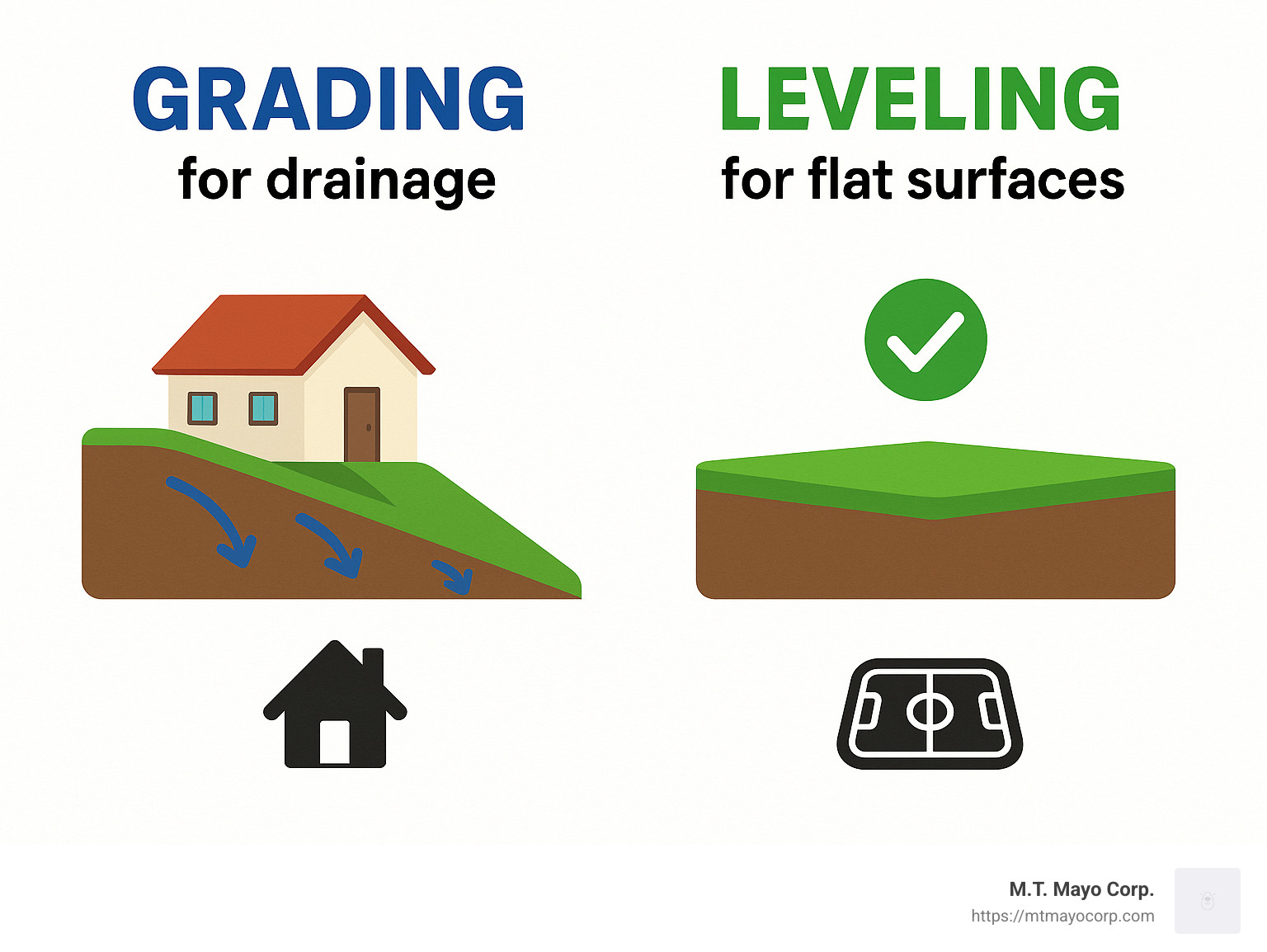
Land grading is the art and science of reshaping your property’s surface to create intentional slopes and elevations. It’s like giving your land a purposeful makeover that directs water where it should go, rather than where it shouldn’t.
At its core, land grading solves one of property owners’ biggest headaches: drainage problems. When your land isn’t properly graded, water doesn’t know where to go, so it goes everywhere—including places that can damage your property.
Proper grading provides essential protection for your home and landscape. Without it, you’re looking at potential foundation damage as water seeps into cracks and expands during freeze-thaw cycles. Your basement becomes vulnerable to flooding, and valuable topsoil washes away during heavy storms, taking your landscape investments with it.
Beyond protection, good grading also:
- Boosts property value by creating an attractive, usable outdoor space
- Prepares sites for construction by establishing stable ground
- Stabilizes soil to prevent shifting and settling
- Improves landscaping potential by creating proper growing conditions
- Reduces environmental impact by preventing chemical and nutrient runoff
As one homeowner told us after a grading project: “It’s like my property finally knows what to do with water. No more soggy spots, no more muddy shoes, and most importantly, no more worrying every time it rains.”
How Land Grading Helps Drainage & Erosion Control
When we talk to clients about land grading near me searches, we explain that good grading is all about creating intentional water flow patterns.
The golden rule of grading is simple: water should always flow away from structures. Ideally, the ground should slope away from your foundation at a rate of at least 1 inch per foot for the first 10 feet. This seemingly minor incline makes all the difference between a dry basement and a wet one.
For properties with more complex topography, we implement strategic drainage solutions alongside grading:
Swales act as natural-looking shallow channels that guide water away from problem areas. They can be beautifully integrated into your landscape design while serving a crucial function.
Negative grading (when land slopes toward your foundation instead of away) is the enemy of dry basements. Correcting this issue often provides immediate relief from moisture problems.
For properties with persistent drainage challenges, we might recommend complementary solutions like French drains, retaining walls, or catch basins to work alongside your newly graded landscape. These systems create a comprehensive approach to water management that protects your property for years to come.
“The right slope isn’t just about preventing water damage,” explains our lead grading specialist. “It’s about giving water a job—directing it to nourish plants where needed and exit your property where it won’t cause harm.”
Want to learn more about comprehensive drainage solutions? More info about Drainage Systems
Professional vs. DIY: When to Call the Pros
We understand the appeal of DIY projects. There’s satisfaction in completing work with your own hands, and the potential cost savings can be tempting. But when it comes to land grading, the line between DIY and professional work is pretty clear.
Small projects like leveling a garden bed or creating a slight slope away from a shed might be suitable for DIY enthusiasts. But most grading projects quickly become more complex than they initially appear.
Professional grading makes sense when:
Heavy equipment is required – Professional graders have access to bulldozers, skid steers, and laser transit equipment that most homeowners don’t keep in their garage. Renting this equipment can cost upwards of $1,000 per day, not including delivery fees or the learning curve to operate it safely.
Safety is a concern – Operating heavy machinery carries significant risks, especially for the inexperienced. Our operators have hundreds of hours of training before they handle equipment independently.
Cost-efficiency matters – Surprisingly, DIY grading often ends up costing more than hiring professionals. Between equipment rentals, material delivery, potential mistakes, and your valuable time, the “savings” can quickly disappear.
Permits are needed – Most substantial grading projects require permits, especially when they affect drainage patterns that could impact neighboring properties. Professionals know which permits are needed and how to obtain them.
Precision is essential – Professional graders use laser levels and specialized equipment to achieve precise slopes—something difficult to accomplish with DIY methods.
As one client told us after attempting a DIY grading project: “I spent a weekend moving dirt around my yard, only to realize I needed expertise I didn’t have. Hiring professionals not only saved my back but probably saved me money in the long run.”
Improper grading can create more problems than it solves. Water directed incorrectly can damage neighboring properties, violate local regulations, and create new problem areas in your landscape. When in doubt, at least consult with a professional before deciding whether to DIY or hire experts.
Do You Need Land Grading? 8 Warning Signs to Watch For
Is your property sending you signals that it’s time for professional grading? Many property owners miss these crucial warning signs until serious damage occurs. If you’re wondering whether you should search for land grading near me, here’s what your land might be trying to tell you:
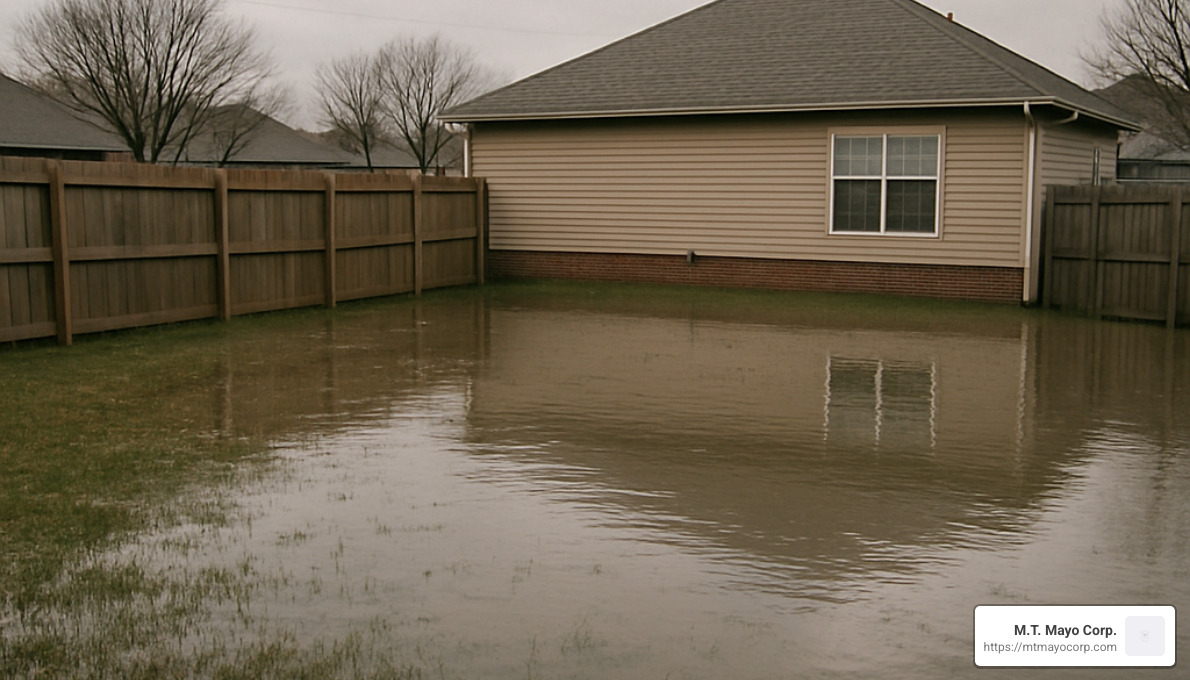
Water that refuses to drain away is perhaps the most obvious red flag. If you’re seeing puddles that linger for more than 24 hours after rainfall, your yard is essentially waving a white flag of surrender. These pools aren’t just unsightly—they’re breeding grounds for mosquitoes and can signal serious drainage issues beneath the surface.
Your basement might be the first to sound the alarm. Water seeping through foundation walls indicates that moisture is being directed toward your building instead of away from it—a condition professionals call “negative grading.” This silent destroyer can compromise your entire foundation if left unchecked.
Walking across your property shouldn’t feel like traversing a sponge. Persistently soggy soil that squishes underfoot days after rain is a clear indication that water isn’t properly draining through your soil profile. This saturation can suffocate plant roots and create unstable ground conditions.
Take a look at your trees and shrubs. Exposed roots aren’t just reaching for attention—they’re revealing that erosion is actively carrying away your soil. One property manager told us, “We had mature trees literally falling over because erosion had exposed so much of their root systems. Proper grading saved the remaining landscape.”
If your lawn mower bounces along like it’s on a roller coaster, your yard likely has dips and rises that need addressing. Uneven mowing patterns often reveal underlying grading issues that may be directing water in harmful ways.
After heavy rains, check for miniature canyons or channels forming in your soil. These erosion pathways show exactly where water is flowing too rapidly across your property, carrying valuable topsoil away with each rainfall.
Your plants are excellent indicators of drainage problems. Patches of dead or struggling vegetation in specific areas often mark spots where roots are either drowning in too much water or suffering from erosion. As one landscaping expert notes, “Plants don’t lie—they’re the first to show signs of drainage problems.”
Don’t ignore cracks appearing in your hardscaping. When patios, walkways, or driveways begin to split or settle unevenly, it often means the ground beneath is shifting due to improper water flow and inadequate grading.
Seasonal Considerations for Scheduling Land Grading
Timing can make or break your grading project. Here in Middlesex and Essex Counties, Mother Nature gives us specific windows of opportunity for optimal results.
Spring brings workable soil and perfect timing for immediate revegetation. April and May offer ideal conditions as the ground has thawed but isn’t yet baked by summer heat. The natural rainfall can help establish new grass and plants, though you’ll want to schedule early enough to avoid spring downpours that might delay your project.
Fall might actually be the secret sweet spot for land grading. September and October typically bring drier, more predictable weather, making it easier for crews to work efficiently. The cooler temperatures are not only more comfortable for workers but also ideal for fall grass seeding. One client shared, “Our fall grading project went so smoothly—the crew finished ahead of schedule because they weren’t battling mud or extreme heat.”
While summer projects are certainly possible, they come with challenges. The ground can become rock-hard during dry spells, making it more difficult and time-consuming to grade properly. Additionally, establishing new vegetation during hot, potentially drought-prone months requires more intensive irrigation and care.
We generally advise against winter grading in our region. Frozen ground makes proper soil manipulation nearly impossible, and snow cover can hide important topographical features. We reserve winter work for true emergency situations where foundation damage is imminent.
At M.T. Mayo Corp., we’re straightforward with our clients: if you’re experiencing serious drainage issues that threaten your property’s integrity, don’t wait for the “perfect” season. Emergency solutions are available year-round, though optimal results come from proper timing when possible.
Maintaining Your Yard After Grading
The work doesn’t end when the grading equipment leaves your property. In fact, what you do in the days and weeks following your grading project can be just as important as the grading itself.
Freshly graded soil is vulnerable to erosion until vegetation establishes. That’s why we strongly recommend immediate soil stabilization through seeding, sodding, or installing erosion control blankets. This crucial step prevents your carefully crafted slopes from washing away with the first heavy rain.
Your newly graded property needs a chance to settle in. Limiting traffic on these areas protects the work we’ve done and gives new grass or plants the opportunity to establish strong root systems. For commercial properties, this might mean temporarily redirecting foot traffic or equipment routes.
The real test comes with the first significant rainfall. We encourage clients to observe how water flows across their property during and after storms. This inspection might reveal minor adjustments needed to perfect the drainage pattern. One property manager told us, “I walked the property during our first big rain after grading—it was amazing to see water flowing exactly where it was supposed to go, away from our buildings.”
Long-term success requires ongoing attention. Regular maintenance checks should become part of your property management routine, especially after severe weather events. Look for signs of soil movement or new areas of pooling water that might indicate shifting conditions.
Healthy vegetation is your best ally in preventing erosion. Robust grass and plant coverage hold soil in place with their root systems while absorbing excess moisture. For commercial properties, this often means implementing regular fertilization and overseeding programs.
Keep all drainage features functioning properly by removing debris from swales, catch basins, and drainage outlets. Even small blockages can compromise your entire drainage system during heavy rainfall.
Many of our clients find that complementing their grading work with professional hardscaping creates both beautiful and functional spaces. Well-designed patios, walkways, and retaining walls can improve your drainage system while adding value to your property. More info about Hardscaping Services
Small issues can quickly grow into major problems. A minor erosion channel might seem insignificant, but left unaddressed, it can undermine your entire grading system. As one satisfied customer shared, “The maintenance plan M.T. Mayo recommended has kept our property looking great and functioning perfectly for years after our initial grading work.”
Finding Professional Land Grading Near Me
When you’re searching for land grading near me in Middlesex or Essex County, finding the right professionals can make all the difference between a successful project and ongoing drainage headaches. The search requires some homework, but your effort will pay off with quality results that protect your property for years to come.
Let’s start with what really matters – credentials. Any reputable grading contractor should have proper state licensing for excavation and site work. This isn’t just paperwork – it means they’ve met minimum standards of competence and knowledge. Always verify they carry adequate insurance coverage too, including both liability and workers’ compensation. Without these protections, you could be liable for accidents or property damage.
Look specifically for companies with Erosion and Sediment Control certification. This specialized training ensures they understand how to prevent soil runoff during and after your project – something that’s not only good practice but often required by local regulations.
“We always recommend checking a contractor’s certifications before signing any agreement,” says one industry expert. “The difference between certified professionals and those without proper training becomes obvious when the first heavy rain hits.”
Experience matters tremendously in land grading work. At M.T. Mayo Corp., we’ve spent years learning the unique challenges of New England soil conditions. Companies that own their equipment (rather than renting for each job) typically provide better value and more consistent results. Ask potential contractors about similar projects they’ve completed – commercial property experience is particularly valuable if you manage business property.
Don’t skip checking customer feedback. Online reviews can reveal patterns of quality or concerns, but also ask for direct references from similar commercial projects. Request before-and-after photos that demonstrate their ability to transform properties like yours. A quick check with the Better Business Bureau can also flag any serious complaints.
For those interested in the technical aspects of proper drainage, this Scientific research on lot drainage provides excellent background on the principles that guide professional grading work.
What to Look for in a Reputable Grading Company
Beyond basic qualifications, certain hallmarks separate truly exceptional grading companies from the merely adequate ones.
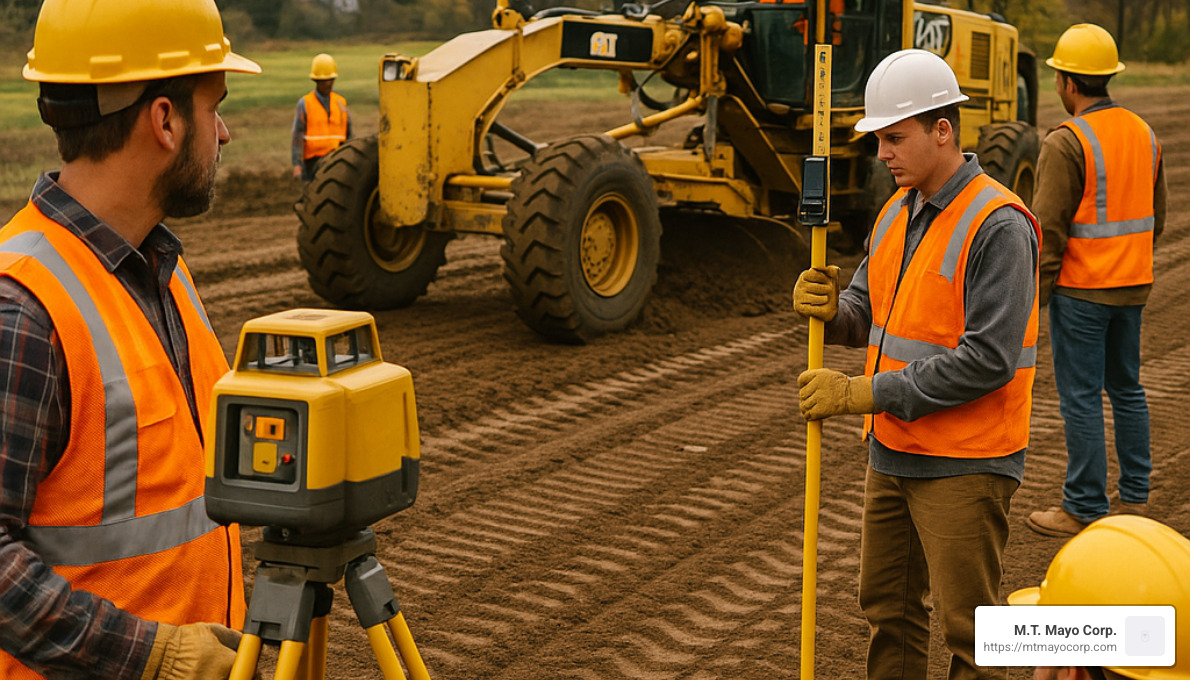
Technical expertise stands out immediately. The best grading contractors use modern technology like laser levels (shown above) and sometimes GPS-guided equipment for precision work. They understand proper soil compaction methods – not just moving dirt around, but creating stable surfaces that won’t settle unevenly later. Look for contractors who demonstrate knowledge of hydrology and can explain how water will flow across your property after grading.
Professional business practices tell you a lot about what to expect. Reputable companies provide detailed written estimates rather than vague verbal quotes. They offer clear contracts specifying the scope of work, timeline, and payment terms. They handle permit applications and schedule necessary inspections without prompting. They also maintain established relationships with quality material suppliers.
Project management makes or breaks your experience. The best contractors assign a dedicated project manager who communicates proactively about schedule and progress. They document work with photos and measurements, and conduct thorough final inspections to ensure everything meets specifications.
“Their attention to detail made all the difference,” reported one satisfied customer about their grading project. “They didn’t just remove the trees and old topsoil – they created a yard that finally drains properly after 30 years of problems.”
Many quality grading companies offer valuable additional services, including utility locating and protection, erosion control implementation, thorough site cleanup, and warranties on their workmanship. At M.T. Mayo Corp., we consider these essential components of a complete grading project, not extras.
Questions to Ask Before Hiring – Land Grading Near Me
The interview process with potential contractors reveals a lot about their professionalism and capabilities. Here are the essential questions to ask before making your decision:
First, probe their experience and qualifications. Ask how many years they’ve been providing grading services specifically in your area, as local knowledge matters tremendously. Request examples of similar commercial projects they’ve completed, especially ones addressing challenges similar to yours. Verify what certifications and licenses their operators hold, and confirm they’re familiar with grading regulations in your specific municipality.
Discuss project specifics in detail. Will they provide a detailed grading plan showing proposed elevations and slopes? How will they ensure proper drainage away from buildings and structures? What equipment will they use, and is it appropriate for your site conditions? Will they handle utility locating and protection during the grading process?
Timeline questions help set expectations. Get their estimated timeline and ask if they offer any guarantees on completion dates. Discuss how they handle weather delays or unexpected site conditions. Find out if the same crew will work on your project from start to finish or if you’ll see different faces throughout.
Material and method discussions reveal expertise. Where will they source fill dirt if needed, and is that cost included? What compaction methods do they use to prevent future settling? How do they control dust and minimize disruption during the grading process? What erosion control measures will they implement both during and after grading?
Finally, clarify business terms. Request a detailed written estimate with all costs itemized. Understand their payment schedule and accepted payment methods. Ask about warranties on their grading work. Confirm they’ll handle all necessary permits and inspections.
One contractor puts it plainly: “There’s nothing worse than big home projects that drag on forever. Ask if they offer any financial guarantee if they miss deadlines.”
At M.T. Mayo Corp., we welcome these questions because we know informed clients make the best partners. We believe in transparency throughout the entire grading process, from initial consultation through final inspection. Our goal is always to exceed expectations while delivering lasting solutions to drainage and erosion problems.
Land Grading Costs, Estimates & Money-Saving Tips
When you’re planning a land grading project, understanding the costs involved helps you budget properly and evaluate contractor quotes. If you’ve been searching for land grading near me, you’ll want to know what to expect financially before making any decisions.
Land grading typically costs between $0.08 and $2.00 per square foot, with most homeowners paying around $1.40 per square foot on average. For larger projects measured by acreage, expect to invest between $15,800 and $44,535 per acre, with the national average hovering around $30,000.
“I was shocked by how much prices varied between contractors,” says one Massachusetts property owner. “Getting multiple estimates saved me nearly $5,000 on my backyard grading project.”
For smaller residential projects, like grading around your house foundation or fixing a drainage issue in one corner of your yard, costs typically range from $500 to $3,000. Medium-sized commercial projects, such as small parking lots or building pads, usually run between $3,000 and $10,000. Larger commercial undertakings that require extensive site preparation often exceed $10,000.
Want to save money on your grading project? Consider scheduling during fall or early spring when contractors might offer more competitive pricing. Combining grading with other site work can also reduce mobilization costs. Ensuring good site access for equipment will minimize labor time, and reusing existing materials like topsoil or clean fill when possible can significantly cut expenses. Perhaps most importantly, addressing grading issues early prevents them from becoming more extensive (and expensive) problems down the road.
At M.T. Mayo Corp., we believe in transparent pricing. When we provide an estimate, we clearly outline all costs associated with your project so there are no surprises. Our goal is delivering excellent value while maintaining the highest quality standards for our Middlesex and Essex County clients.
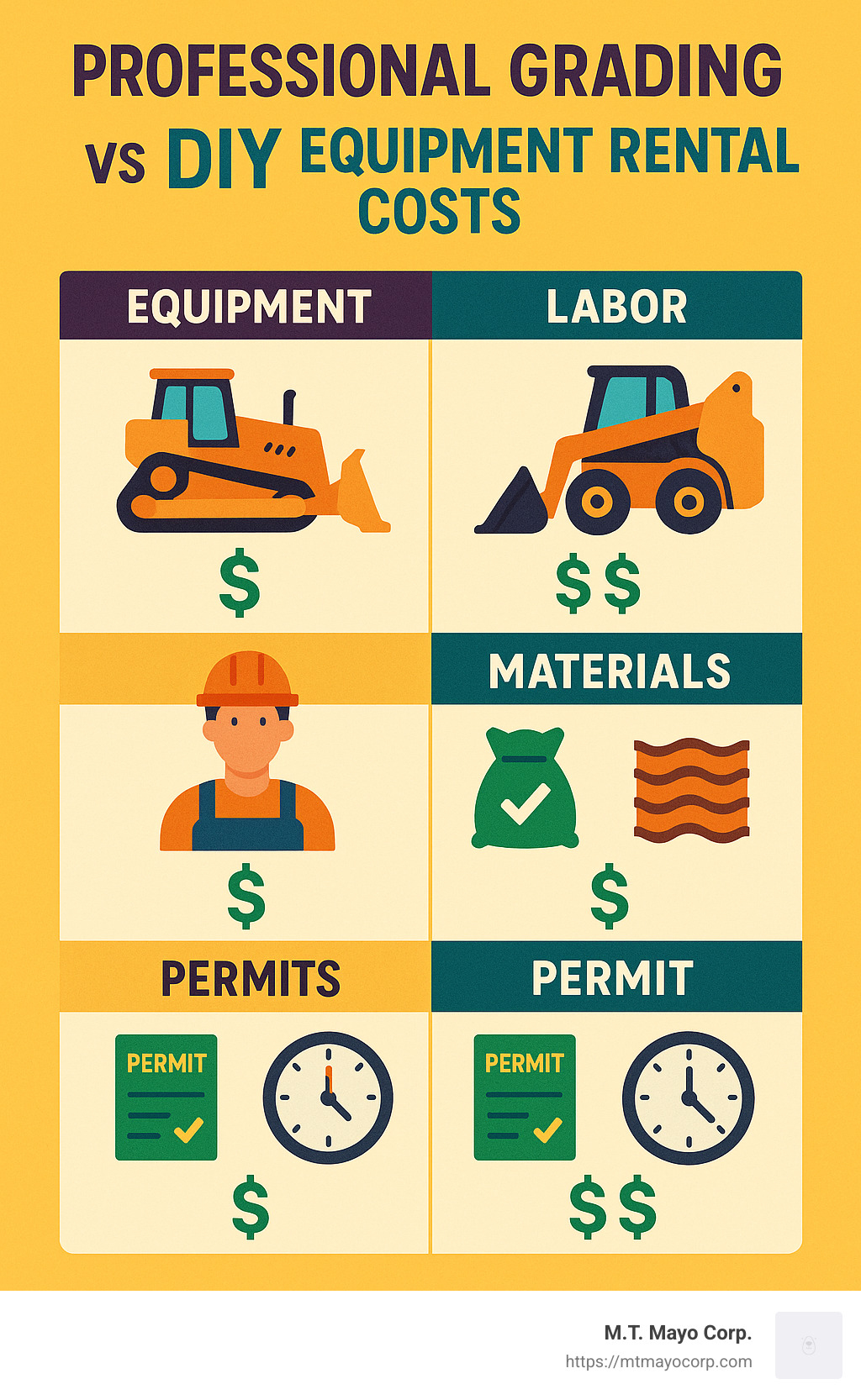
Cost Breakdown by Square Foot, Acre & Project Size – Land Grading Near Me
The scale of your project dramatically affects your overall grading costs. Here’s how prices typically break down by project size:
For small projects under 5,000 square feet, basic lawn re-leveling might cost $500-$1,000, while grading around a foundation typically runs $500-$3,000. Correcting drainage issues in a small area generally costs $1,000-$3,000, and preparing a base for a new patio or deck ranges from $800-$2,500.
Medium-sized projects covering 5,000-20,000 square feet cost more. A full backyard regrading project usually falls between $1,000-$5,000, while grading a commercial entrance might cost $2,500-$7,500. Preparing a parking pad typically runs $3,000-$8,000, and minor slope reduction work generally costs $4,000-$10,000.
Large projects covering more than 20,000 square feet or measured by acreage represent significant investments. Grading a one-acre residential lot costs between $15,800-$44,535 on average. Commercial building pad preparation often runs $20,000-$50,000+, while extensive slope removal can range from $25,000-$75,000+. For multi-acre developments, expect costs starting around $30,000 per acre.
If you’re considering the DIY route for smaller projects, be aware that equipment rental costs add up quickly. A skid steer typically costs $250-$350 per day to rent, while a laser level runs $75-$150 daily. Add in compactor rental ($80-$150/day), trailer rental ($50-$100/day), and fill dirt delivery ($150-$500), and you’re looking at $1,000-$2,000+ for a small project that might take you 2-3 days. Professional services for the same project might cost $1,500-$3,000, but come with expertise that prevents costly mistakes.
“Equipment rentals add up very quickly,” notes one contractor. “You might end up spending more money on the DIY approach than you would on hiring a pro, especially when you factor in the value of your time and the quality of results.”
At M.T. Mayo Corp., we offer competitive pricing for commercial grading projects throughout Middlesex and Essex Counties, with better rates for larger projects thanks to economies of scale.
Factors That Affect the Final Price
When you receive estimates that vary widely, it’s helpful to understand the factors influencing land grading costs. These variables explain why no two projects are priced exactly the same:
Site accessibility significantly impacts your bottom line. If heavy equipment can’t easily reach your site, contractors may need to use smaller machines or even manual labor in some areas, increasing labor costs. One recent client saved nearly $1,200 by widening their access path before work began.
Soil type plays a major role in pricing. Rocky or clay-heavy soils require more time and effort to grade properly compared to sandy soils. Similarly, slope severity directly correlates with cost—steeper grades require moving more earth and often necessitate additional erosion control measures.
The precision needed for your project affects pricing too. Sports fields requiring exact slopes for proper drainage cost more than basic yard grading. Compaction specifications also matter—stricter requirements for building foundations mean more equipment time and testing.
Additional components like French drains, catch basins, or retaining walls add to the total cost but solve drainage issues more comprehensively. Similarly, erosion control measures such as silt fencing or erosion blankets represent added costs that protect your investment.
Material and disposal costs vary widely by location and project needs. Importing clean fill dirt typically costs $15-$50 per cubic yard, while quality topsoil for planting areas runs $25-$80 per cubic yard. Drainage stone or base material averages $30-$75 per cubic yard, and disposing of excess soil or debris costs about $25-$50 per cubic yard.
Regional variations also impact pricing. Labor rates differ significantly between municipalities, as do permit costs and material availability. In some areas of Middlesex County, for instance, fill dirt costs nearly twice what it does in parts of Essex County due to supply and demand factors.
“Every site is unique,” explains one of our project managers at M.T. Mayo Corp. “That’s why we conduct thorough on-site assessments before providing estimates. We need to see the specific conditions we’ll be working with to give you accurate pricing.”
We believe in transparent, comprehensive estimates that account for all these variables. When you work with M.T. Mayo Corp., you’ll understand exactly what you’re paying for—and why the investment in proper grading protects your property for years to come.
The Land Grading Process: From Survey to Final Inspection
When you’re searching for land grading near me, understanding what happens from start to finish helps you prepare for your project. Let’s walk through what you can expect when working with professionals like our team at M.T. Mayo Corp.
The journey begins with an initial consultation where we’ll discuss your goals and concerns. This is where you can share those nagging drainage issues or landscape dreams. We’ll walk your property, noting existing conditions and potential challenges. Think of this as the “getting to know you” phase of your land’s makeover.
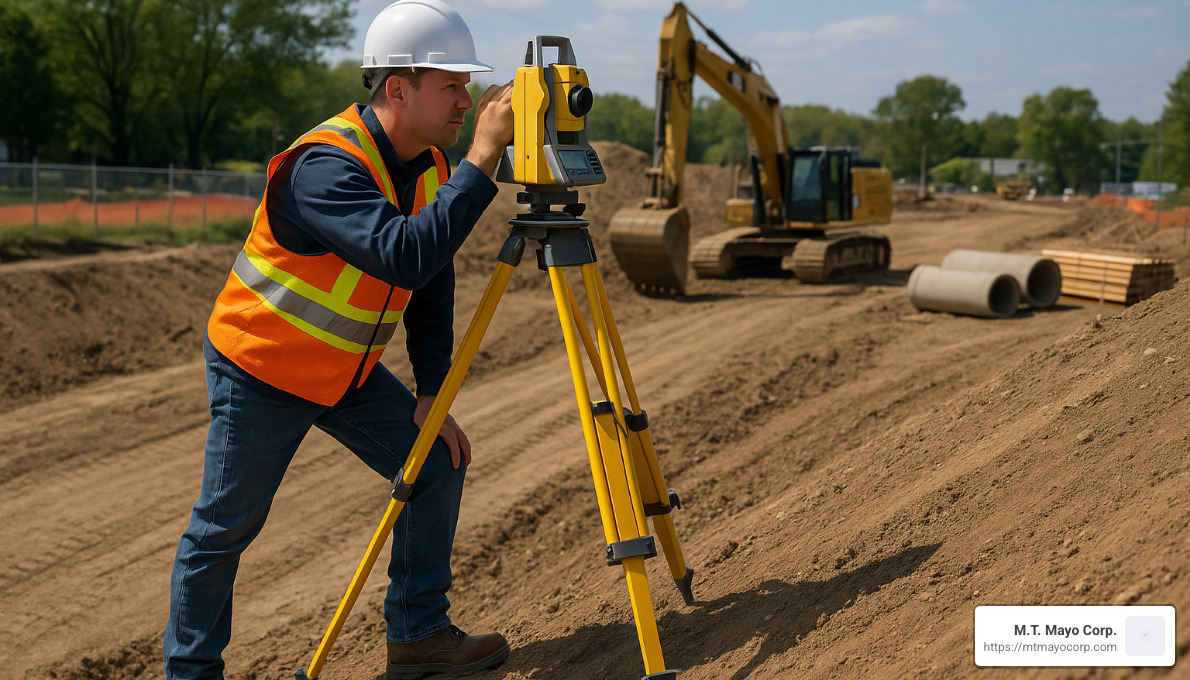
Next comes the detective work – a detailed topographic survey. Using laser transit equipment (like what you see in the image above), we map out your property’s existing elevations. This critical step allows us to create a precise grading plan showing where soil needs to be moved from and to. It’s like creating a roadmap for your soil!
Before any earth moves, we handle the paperwork. We’ll secure necessary permits, schedule utility locating (that important “Call 811” service), and set up erosion control measures. This preparation phase often takes 1-3 weeks, depending on your local municipality’s permit process.
Once approvals are in place, the change begins. We start by clearing any obstacles and carefully stripping and saving your valuable topsoil. During rough grading, we move substantial amounts of earth to create the basic contours outlined in your plan. Our operators balance “cut and fill” – industry terms for where we remove soil versus where we add it – to minimize the need to bring in or haul away materials.
With the major reshaping complete, we install any drainage components your property needs. This might include French drains, swales, or catch basins – all designed to direct water exactly where it should go. As one of our clients put it, “It’s amazing how much difference the right drainage makes – my property used to be a swamp after every rain!”
Proper compaction comes next, a step that prevents future settling and ensures stability. We compact the soil in layers (or “lifts” as we call them in the business) and then perform fine grading to achieve precise elevations. Our team uses laser equipment to verify every slope, making adjustments until everything is perfect.
The final construction phase involves returning your saved topsoil to the graded areas and stabilizing everything to prevent erosion. This prepares your canvas for the next step, whether that’s seeding, sodding, or more elaborate landscaping.
We wrap up with a final inspection and walkthrough with you. This is where we verify that all specifications have been met and that drainage systems function as designed. It’s your opportunity to ask questions and see how your investment will protect your property for years to come.
Typical Timeline: How Long Each Step Takes
Time is always a consideration for property owners, and grading projects follow a fairly predictable schedule when the weather cooperates.
The pre-construction phase typically takes 1-3 weeks. This includes your initial consultation (1-2 days), the topographic survey (2-5 days), permit approvals (1-3 weeks, depending on your town or city), and final scheduling (1-3 days).
Once we break ground, things move more quickly. For a typical commercial property, site preparation and clearing takes 1-3 days. The rough grading – the most visible change – usually requires 1-3 days for smaller sites and 1-2 weeks for larger areas. Drainage installation adds another 1-2 days, while fine grading and compaction typically need just a half to two days.
We’ll spend 1-2 days on topsoil distribution and stabilization, with final inspections requiring just a half to full day. All told, the active construction phase ranges from 3 days for simple projects to about 3 weeks for complex ones.
Of course, Mother Nature sometimes has other plans. Rain can halt grading work since wet soil doesn’t compact properly. Other potential delays include finding unexpected subsurface conditions (like buried debris or rock), permit processing times, material availability, and occasional equipment issues.
“Weather is the great wild card in grading projects,” our operations manager often says. “We build some flexibility into our schedules, but sometimes we just have to wait for things to dry out to ensure quality results.”
At M.T. Mayo Corp., we pride ourselves on providing realistic timelines based on our extensive experience with Middlesex and Essex County soil conditions and permitting processes.
Related Services Often Bundled With Grading
Land grading rarely happens in isolation. Most property owners find that addressing grading opens the door to other valuable improvements that work together to improve their property.
Excavation services naturally complement grading work since we already have the equipment on site. Many clients take advantage of this to have foundation work done, utility trenches dug, or water features created. Since our equipment is already mobilized, this integration often results in significant cost savings.
Similarly, if your project requires demolition work – perhaps removing old concrete, unwanted structures, or clearing site obstacles – it makes sense to handle this alongside your grading project. Our crews can seamlessly transition from demolition to grading, ensuring a coordinated approach.
Comprehensive drainage solutions go hand-in-hand with proper grading. While grading creates the right surface conditions for water flow, additional elements like French drains, catch basins, and downspout connections often provide the complete solution your property needs. We frequently install these systems during the grading process, creating an integrated drainage approach.
Many property owners also choose to add hardscape installation after grading. With a properly prepared base, it’s the perfect time to install patios, walkways, driveways, or retaining walls. These hardscape elements can improve both the functionality and beauty of your newly graded property.
Finally, erosion control measures protect your investment by preventing soil loss while vegetation establishes. From hydroseeding to erosion control blankets on steeper slopes, these protective measures ensure your grading work stands the test of time.
“Think of land grading as setting the stage,” explains one of our project managers. “Once that foundation is right, you can build all sorts of features on top with confidence they’ll last.”
At M.T. Mayo Corp., we specialize in providing these comprehensive site work packages, creating a seamless experience from start to finish. Our integrated approach ensures that all aspects of your project work together harmoniously, saving you time, money, and headaches. More info about Excavations and Sitework
Permits, Regulations & Best Seasons for Grading
When you’re planning a land grading project, understanding the regulatory landscape is just as important as knowing the physical landscape of your property. As you search for land grading near me, finding contractors who truly understand local regulations can save you significant headaches down the road.
The permit process might seem daunting at first, but it’s in place to protect both your property and the surrounding environment. Most municipalities in Massachusetts require permits for significant grading work, though the thresholds vary based on the area being disturbed or the volume of earth being moved. Commercial properties typically face stricter requirements than residential ones, and if your property is in a historic district or conservation area, you’ll likely encounter additional restrictions.
Beyond basic permits, you’ll need to address several regulatory concerns. Erosion and sediment control during construction is a major focus for local authorities, as is proper stormwater management. Wetland protection, tree preservation ordinances, and regulations about importing or exporting soil may also apply to your project.
“The permitting process can be complex, but it ensures that work is done safely and with minimal environmental impact,” explains one of our project managers at M.T. Mayo Corp. “We handle all of this for our clients, so they don’t have to worry about navigating the bureaucracy themselves.”
Environmental compliance adds another layer to consider. Larger sites may require National Pollutant Discharge Elimination System (NPDES) permits, and you’ll need to follow the guidelines set by the Soil and Water Conservation District, the EPA, and the Massachusetts Department of Environmental Protection.
Don’t forget about utilities, either. Massachusetts law requires calling 811 at least 72 hours before any digging begins. You might also need approvals from utility companies if you’re working near their easements, and special precautions are always necessary around gas lines, electrical conduits, and water mains.
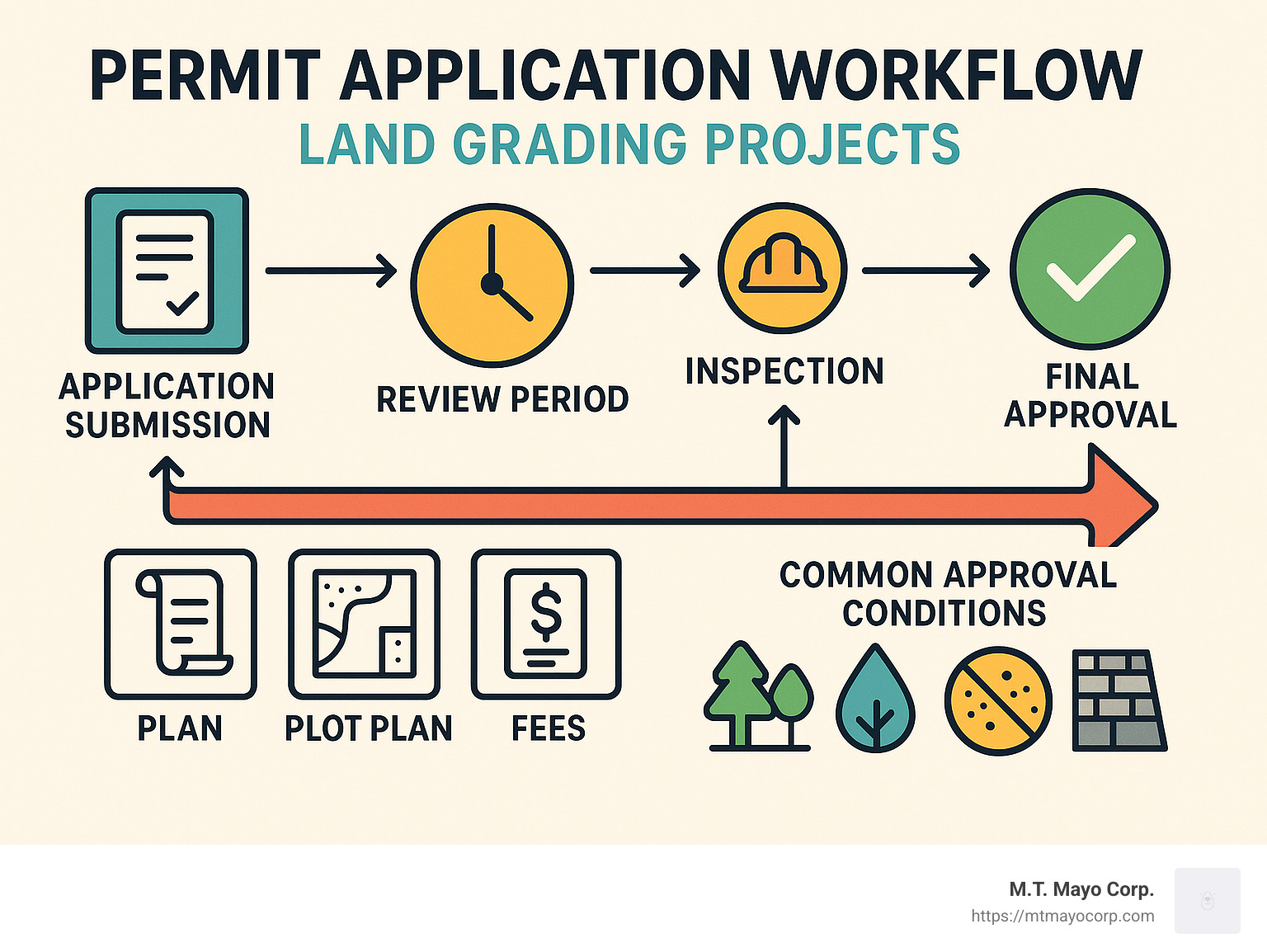
At M.T. Mayo Corp., we handle all permitting and regulatory compliance for our clients throughout Middlesex and Essex Counties. Our familiarity with local requirements helps streamline the approval process and prevents costly delays that could derail your project timeline.
Local Permit Checklist & Regulatory Tips
The permitting process for land grading in Massachusetts requires careful attention to detail, especially for commercial properties. Being prepared with the right documentation can make all the difference.
Most municipalities will ask for completed application forms, a detailed site plan showing both existing and proposed contours, and an erosion and sediment control plan. You’ll also likely need stormwater management calculations, a property boundary survey, and in some jurisdictions, proof that you’ve notified neighboring property owners. Filing fees typically range from $150 to $485, depending on your project’s scope.
Once your project is approved, be prepared for several inspections. Many commercial projects require a pre-construction meeting, followed by inspections of your erosion control measures before any earth is disturbed. You’ll also face inspections after major earthmoving, before backfilling drainage systems, and upon final completion.
“The inspection process might seem tedious,” notes one of our project managers, “but it actually protects you as the property owner by ensuring that the work meets all standards and won’t cause problems down the road.”
To maintain compliance throughout your project, you’ll need several protective measures in place. Silt fencing or filter socks around the perimeter help contain soil, while a stone construction entrance prevents mud from being tracked onto public roads. During dry conditions, dust control becomes essential, and you’ll need to protect any storm drains or catch basins in the area. Most municipalities also require disturbed areas to be stabilized within specific timeframes.
Some jurisdictions add financial requirements to the mix. You might need to post a performance bond, pay impact fees for stormwater management, or establish an escrow account for inspections and compliance monitoring.
At M.T. Mayo Corp., we’ve built strong relationships with building departments throughout our service area. These connections help us expedite approvals and ensure compliance with all local regulations, making the process as smooth as possible for our clients.
Best Seasons & Post-Project Care
Timing is everything when it comes to land grading, and in Massachusetts, some seasons are definitely better than others for this type of work.
Spring (April-May) offers ideal conditions after the frost has left the ground but before summer heat sets in. Fall (September-October) is another excellent time, after summer heat has subsided but before the ground freezes. We generally recommend avoiding winter months when the ground is frozen and mid-summer during drought conditions, as both present significant challenges for effective grading.
Weather plays a crucial role in project planning. At M.T. Mayo Corp., we carefully monitor forecasts and try to schedule projects during predicted dry periods. We also build weather contingencies into our timelines and always have erosion control measures ready for unexpected rain events.
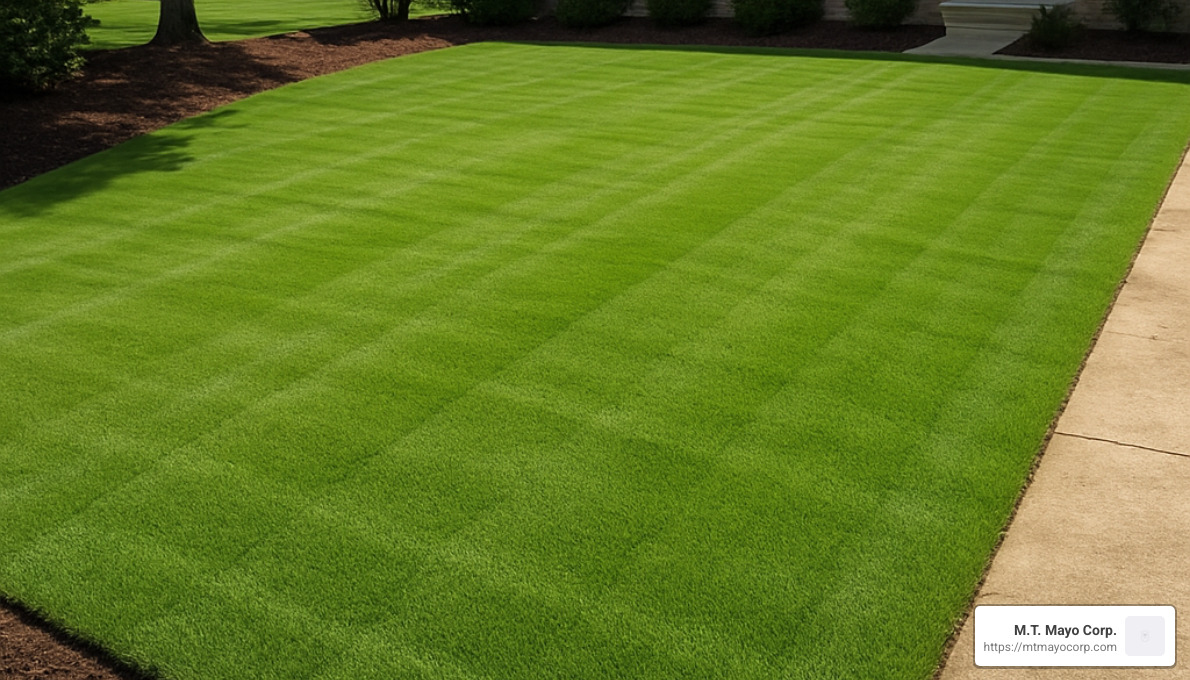
Once your grading project is complete, immediate care is essential to protect your investment. Stabilize soil quickly through seeding, sodding, or erosion control blankets. Minimize traffic on newly graded areas to prevent compaction or ruts. Water appropriately to maintain consistent moisture for new vegetation without causing erosion, and monitor drainage during the first few rain events to ensure everything is functioning as designed.
Long-term maintenance is equally important. Regular inspections help you catch signs of erosion or settling before they become serious problems, especially after heavy rainfall. Maintaining healthy vegetation prevents erosion and helps preserve your grading work. Keeping drainage features clean ensures they continue functioning properly, and addressing issues promptly prevents small problems from becoming major headaches.
“Think of your newly graded property like a fresh haircut,” explains one of our landscape professionals. “It looks great right away, but without proper maintenance, it won’t stay that way for long.”
At M.T. Mayo Corp., we don’t just complete your project and disappear. We provide detailed guidance on post-project care and offer maintenance services to ensure the long-term success of your grading investment. We can also recommend complementary services like hydroseeding or erosion control that will help protect your newly graded property through all seasons.
Frequently Asked Questions About Yard & Landscape Grading
How much does land grading typically cost in my area?
When Middlesex and Essex County property owners ask us about pricing for land grading near me, we explain that local costs typically run between $0.80 and $2.00 per square foot. That’s a bit higher than you’ll see in national averages, mainly because of our New England labor rates and the specific regulatory requirements in Massachusetts.
For commercial properties in our area, the investment generally breaks down like this: smaller commercial lots under 5,000 square feet usually cost between $4,000 and $10,000. Medium-sized commercial areas between 5,000 and 20,000 square feet typically range from $10,000 to $40,000. Larger commercial sites over 20,000 square feet start around $40,000 and go up from there.
These numbers reflect basic grading services, but there are some uniquely New England factors that might adjust your particular estimate. Our region’s famous ledge rock often requires specialized equipment and techniques to address properly. Many areas also have high water tables that demand more complex drainage solutions. Some towns and cities in our service area have stricter environmental regulations than others. And of course, our winters mean we sometimes need to include frost protection measures in our plans.
At M.T. Mayo Corp., we believe in transparency with our pricing. When we provide an estimate, we’ll walk you through exactly what factors are influencing the cost and help you understand the value you’re receiving. We’re always happy to explain how we can tailor solutions to work within your budget while still solving your drainage challenges effectively.
Can land grading increase my property value?
Absolutely! We’ve seen professional land grading significantly boost commercial property values throughout Massachusetts. Our climate and soil conditions make drainage issues fairly common around here, so properties with well-designed grading solutions stand out in the market. According to industry data we follow, quality land grading typically increases property values by 5% to 12% when it’s part of a comprehensive landscape improvement project.
This value increase comes from several tangible benefits. First, properly graded properties face substantially lower flood risks, which not only attracts buyers but often translates to lower insurance premiums. Your usable space also increases dramatically – that formerly soggy corner of your property could become valuable parking, an outdoor seating area, or space for future building expansion.
There’s also the immediate visual improvement. Well-graded commercial properties simply look more professional and well-maintained, creating that crucial positive first impression with clients and customers. And don’t overlook the ongoing savings – properties with proper drainage require significantly less maintenance related to water damage, erosion repair, and landscape replacement.
We’ve had clients tell us that their grading investment became a major selling point when they eventually sold their property. As one real estate professional who regularly works with our finished projects told us, “Buyers immediately notice and appreciate properties with level, well-drained outdoor spaces – it’s one less headache they’ll have to deal with later.”
Is it safe to DIY a small grading project?
While that YouTube video might make DIY grading look straightforward, we’ve seen enough “rescue projects” to recommend caution, especially for commercial properties. Even seemingly small grading projects involve significant safety and technical considerations that aren’t immediately obvious.
From a safety perspective, heavy equipment operation requires training and experience that most property owners simply don’t have. We’ve heard too many stories about rental equipment accidents that resulted in injuries or property damage. There’s also the very real danger of striking buried utilities – hitting a gas line or electrical conduit can have catastrophic consequences. Even manual grading work can lead to physical injuries from overexertion or repetitive strain.
The technical challenges are equally significant. Creating proper drainage slopes requires specialized equipment and knowledge of water flow dynamics. We’ve seen well-intentioned DIY projects that actually created new drainage problems by directing water toward foundations or neighboring properties. Proper soil compaction is another critical factor that’s difficult to achieve without professional equipment.
For commercial properties specifically, there are additional regulatory and liability concerns. Improper grading that affects neighboring properties or public infrastructure could expose your business to significant legal liability. Many municipalities require permits for grading work, and DIY projects might inadvertently violate these requirements.
As one of our clients who tried the DIY route before calling us shared: “I thought I was saving money by doing it myself, but I ended up spending twice as much to fix the problems I created. The pros finished in two days what took me two weekends, and their results actually worked.”
At M.T. Mayo Corp., we believe in empowering our clients with information, but we also recommend professional grading for all but the simplest projects. The investment in professional services typically pays for itself through quality results, regulatory compliance, and long-term performance. When you need land grading near me that’s done right the first time, we’re here to help.
Conclusion
Finding the right land grading near me service is crucial for protecting your commercial property investment and ensuring proper drainage and site stability. Throughout Middlesex and Essex Counties, property owners face unique challenges related to New England’s variable climate, complex soil conditions, and strict regulatory requirements.
At M.T. Mayo Corp., we bring decades of experience in site work, excavation, and drainage solutions to every grading project we undertake. As a licensed and insured contractor serving communities throughout northeastern Massachusetts, we understand the local conditions and regulations that impact your project.
Our comprehensive approach includes:
- Thorough site assessment and planning
- Detailed written estimates and proposals
- Professional-grade equipment and experienced operators
- Proper permitting and regulatory compliance
- Precise execution with regular quality checks
- Complete site cleanup and stabilization
Whether you’re preparing a site for new construction, addressing existing drainage issues, or enhancing your property’s functionality and appearance, proper land grading forms the foundation of your project’s success.
We invite you to contact M.T. Mayo Corp. for a free consultation to discuss your grading needs. Our team will evaluate your property, explain your options, and help you develop a cost-effective solution that protects your investment for years to come. More info about Excavations and Sitework
Don’t let drainage problems damage your property or limit its potential. Transform your commercial space with professional land grading services from M.T. Mayo Corp.—call today for your custom grading estimate!
