Drainage System for Commercial Building: Top Guide 2025
Protecting Your Investment: Why Commercial Building Drainage Matters
Drainage systems for commercial buildings are essential infrastructure components that protect your property investment from water damage. If you’re looking for a quick overview of commercial drainage systems, here are the main types:
| Type of Drainage System | Best Used For | Key Benefits |
|---|---|---|
| Trench Drains | Parking lots, loading docks | Handles heavy water flow, ADA compliant |
| French Drains | Foundation protection | Redirects groundwater away from buildings |
| Siphonic Drainage | Large flat roofs | 100x faster than gravity systems |
| Grading & Swales | Landscaped areas | Natural water redirection |
| Gutters & Downspouts | Building perimeter | Cost-effective roof runoff management |
Managing stormwater in a commercial environment is a highly responsible job. Without proper drainage, water can destroy your property’s foundation, damage structural elements, and create unsafe conditions for occupants and visitors. A single inch of water on just a 20-square foot area of your roof weighs approximately 104 pounds – imagine that weight distributed across your entire building!
Commercial drainage systems must be engineered to handle not only routine rainfall but also severe weather events. These systems capture, convey, store, and sometimes treat water before returning it to the environment or municipal systems.
The right drainage solution depends on your specific property layout, local climate conditions, and regulatory requirements. Whether you’re constructing a new building or upgrading an existing property, investing in proper drainage infrastructure will save you thousands in potential repair costs while extending your building’s lifespan.
“Managing stormwater in a commercial environment is a highly responsible job. The process starts with engineered solutions and detailed calculations to ensure safety and performance.”
For more information on drainage systems, click here.
Understanding the Importance of Proper Drainage in Commercial Buildings
Water is a bit like that friend who can be fun at parties but causes chaos if left unsupervised. In commercial properties, water without proper drainage is a recipe for disaster. Without a reliable drainage system for commercial buildings, your property faces threats that could compromise its structural integrity and create unsafe conditions for everyone involved.
The Cost of Water Damage
Water damage isn’t just a headache; it’s a wallet ache. When water sneaks into your building, it can wreak havoc on foundations, structural supports, interior walls, ceilings, and flooring. It doesn’t stop there—electrical systems, equipment, and inventory are at risk too. And let’s not forget the potential damage to your technology infrastructure. According to industry data, a single water damage incident can cost tens of thousands of dollars in repairs—not to mention the business interruption expenses and potential liability issues that come with it.
Structural Integrity at Risk
Think of your building’s foundation as its backbone. If water isn’t properly rerouted, it can cause some serious back problems. Hydrostatic pressure against foundation walls, soil erosion beneath footings, differential settlement, and structural cracks are all potential nightmares. These issues can compromise the building’s load-bearing capacity and lead to further structural headaches down the line.
A common guideline states that positive drainage should allow water to drain off the roof within 24-48 hours after it stops raining. If not, the weight of that standing water can put stress on the building that it simply wasn’t designed to handle.
Health and Safety Hazards
Beyond the bricks and mortar, poor drainage can stir up a storm of health and safety issues. Mold and mildew thrive in damp areas, creating slip and fall hazards from pooling water. These wet environments can also become breeding grounds for mosquitoes and other pesky pests. There’s also the risk of poor indoor air quality and potential electrical hazards if water meets wiring or equipment.
The Weight of the Problem
Here’s a fun fact for your next trivia night: A single inch of water over a 20-square foot area weighs a whopping 104 pounds. Now, imagine that on a commercial roof spanning thousands of square feet. You get the picture: proper drainage isn’t just important—prevent structural overload.
At M.T. Mayo Corp., we’ve witnessed how improper drainage can turn minor water issues into monumental structural problems. Our extensive experience throughout Middlesex and Essex Counties in Massachusetts has taught us that proactive drainage solutions are always more cost-effective than reactive repairs. For more details on how proper exterior drainage can protect your investment, check out our page on Exterior Drainage Systems.
Types of Drainage Systems for Commercial Buildings
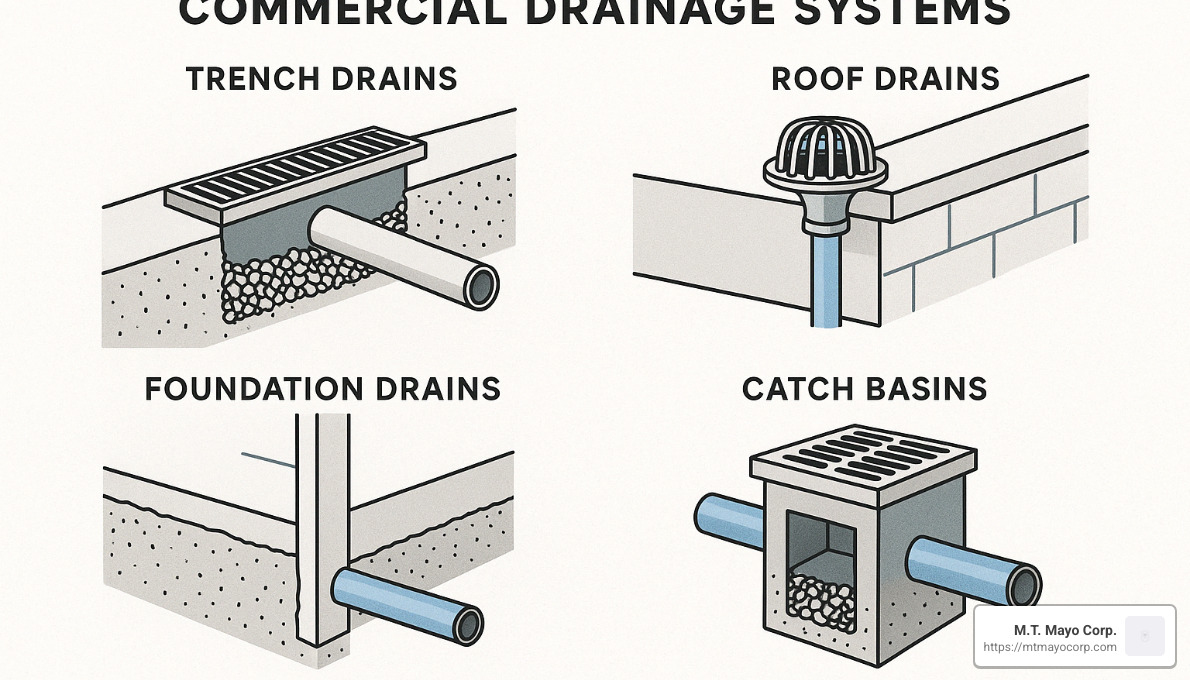
When it comes to a drainage system for commercial buildings, one size definitely doesn’t fit all. Different properties have unique needs based on location, water volume, and specific requirements. Let’s dive into the various systems available today.
Trench Drains for Commercial Buildings
Trench drains are your go-to for handling heavy water flow with grace. Think of them as the frontline soldiers in commercial drainage. These systems, also known as channel or linear drains, consist of linear channels topped with grates. Designed to be flush with surfaces, trench drains are perfect for areas like parking lots, loading docks, and industrial facilities.
Modern trench drains are usually crafted from polymer concrete, boasting a low water absorption rate of about 1%. This makes them superstars in managing large water volumes. They come in widths like 4″, 6″, 8″, and 12″, with grates available in materials such as galvanized steel and cast iron, each offering different load ratings.
Moreover, trench drains are compliant with safety standards, ensuring they’re up to code for public areas. They keep water – and potentially hazardous substances – in check, ensuring safety in both industrial and public spaces.
French Drains
Now, if you need to tackle groundwater sneaking up on your building’s foundation, French drains are your secret weapon. These subsurface drainage systems feature a trench filled with gravel housing a perforated pipe. The magic happens as water enters through these tiny perforations and is whisked away from the building.
French drains excel in intercepting groundwater, reducing hydrostatic pressure, and preventing water from pooling around the structure. They’re ideal for properties on sloped sites, older buildings with seepage issues, and areas with high water tables.
Siphonic Drainage Systems for Commercial Buildings
For those massive commercial roofs, siphonic drainage systems are like turning on a turbo engine. Traditional gravity systems move water decently, but siphonic systems pull it away at up to 100 times the speed. By creating a vacuum effect, these systems rapidly remove water, requiring smaller pipes and fewer roof penetrations.
They’re perfect for large, flat roofs on warehouses, shopping malls, and airport terminals. These systems not only speed up drainage but also reduce the structural load when the skies open up.
Grading and Swales
Sometimes, the simplest solutions shine the brightest. Grading and swales are natural, integrating drainage solutions that improve both water management and landscape beauty. Grading ensures your land slopes away from your building, while swales are shallow channels directing water away, designed with aesthetics in mind.
Grading ensures water flows smoothly away, preventing low spots where it could gather. Swales, planted with water-tolerant vegetation, not only manage water but also add a touch of nature’s charm, mimicking a creek right in your commercial landscape.
Gutters and Downspouts
Don’t underestimate the power of good old gutters and downspouts. While basic, they are essential for managing roof runoff. A well-designed system includes gutters appropriately sized for your roof and strategically placed downspouts.
For maximum efficiency, integrate gutters and downspouts with underground drainage pipes and surface features. This ensures they work in harmony with other systems, keeping your foundation dry and safe.
At M.T. Mayo Corp., we understand the importance of choosing the right drainage system for commercial buildings. We ensure your system is not just functional but also a perfect fit for your property’s specific challenges. Want to learn more about our expertise? Check out our site for more insights!
Materials Used in Commercial Drainage Systems
When it comes to a drainage system for commercial buildings, the materials you choose can make all the difference in durability, performance, and cost. Let’s explore some of the popular materials and what makes each one special.
PVC Pipes
Polyvinyl chloride (PVC) pipes are like the Swiss Army knife of drainage systems. They’re lightweight, which makes them easy to install—even if you’re not a muscle-bound superhero. With a lifespan that could rival your grandma’s antique rocking chair (50+ years in many cases), these pipes are also resistant to chemicals and corrosion, making them a go-to choice for many commercial drainage needs. Their smooth interiors ensure water flows like a dream.
PVC is a great fit for underground storm drainage, interior drainage pipes, and any place where you need chemical resistance or a lightweight option. It’s also easier on the budget, which keeps your wallet happy.
Polymer Concrete
Polymer concrete is like the superhero cape for trench drains. It’s got an extremely low water absorption rate, meaning it doesn’t let water hang around. With its superior compressive strength and excellent chemical resistance, this material can handle high traffic and heavy-duty environments without breaking a sweat. Plus, it can be manufactured with built-in slopes, making it a top choice for heavy-duty trench drains and areas exposed to chemicals like commercial kitchens.
Cast Iron
Who says old can’t be gold? Cast iron has been around forever and still holds its ground in drainage systems. Known for its durability and ability to handle extreme temperatures, it’s like the stalwart elder of the drainage world. Cast iron’s superior noise dampening properties keep things quiet, and its fire resistance is the cherry on top.
Modern innovations have added protective coatings to improve its corrosion resistance, making it perfect for vertical stacks in multi-story buildings and historical renovations where that timeless look is a plus.
HDPE (High-Density Polyethylene)
HDPE pipes bring flexibility and durability to the table. These pipes are like the yoga masters of drainage—they can bend without breaking, even in cold temps. With a long service life and excellent resistance to environmental stress, HDPE pipes are ideal for underground storm drainage and subsurface drainage systems. They’re also a smart choice in areas with ground movement, preventing breakage and ensuring longevity.
Galvanized Steel
For components like grates and frames, galvanized steel stands tall with its high strength-to-weight ratio. It offers excellent load-bearing capacity and good corrosion resistance, making it a cost-effective option for certain applications. Plus, it’s recyclable, so it’s kind of like the eco-friendly option of the bunch.
“The use of different materials like galvanized steel, HDPE, and fiberglass provides options custom to specific chemical and environmental challenges,” notes drainage industry experts.
Material Selection Considerations
At M.T. Mayo Corp., we don’t just throw darts when picking materials for your drainage system for commercial buildings. We carefully consider:
- Expected water volume and flow rate
- Chemical exposure, especially in industrial settings
- Load requirements, whether pedestrian or vehicular
- Installation environment, whether above ground, buried, or inside concrete
- Temperature fluctuations, crucial in New England’s climate
- Budget constraints
- Maintenance requirements
- Local building codes and regulations
Selecting the right materials ensures your commercial drainage system isn’t just a flash in the pan but a long-term solution that minimizes maintenance and maximizes efficiency.
Design Considerations for Efficient Stormwater Management
Designing an efficient drainage system for commercial buildings is both an art and a science. It requires a keen understanding of your site’s unique traits and the ability to foresee how stormwater will behave. Let’s dive into how we can keep the water management at your commercial site efficient and environmentally friendly.
Site Assessment: The Critical First Step
Before breaking ground, it’s vital to understand your site like the back of your hand. We start with a topographical survey to uncover the land’s natural drainage patterns. This helps us see the path water naturally wants to take. Soil testing comes next, revealing how well the ground can soak up water – some soils slurp it up like a thirsty sponge, while others act more like a raincoat.
Next is an existing drainage evaluation. This involves camera inspections and flow testing to understand your current drainage situation better. We also conduct a watershed analysis to see how water flows not just on your land, but in the surrounding area. Finally, we pin down discharge points and connections to municipal systems, ensuring everything flows smoothly.
System Capacity Planning
When planning your drainage system, we face a tough crowd: Mother Nature. She’s unpredictable, so we must prepare for her varying moods. Our systems are designed to handle regular rainfall and those pesky peak storm events that pop up once in a while.
To pull this off, we crunch numbers based on your roof area, building footprint, paved surfaces, local rainfall data, and more. We must ensure our system can manage the water without breaking a sweat, even during the stormiest of days.
Impact of Drainage System Design on Efficiency
Positive drainage is our ultimate goal. It means water flows away from the building, keeping it dry and safe. This requires careful planning:
- Roof slopes are set at a minimum of 2% to guide water away.
- Proper grading around the building ensures that water doesn’t hang around.
- Strategic drain placement prevents little puddles from becoming big problems.
Pipe sizing and layout are crucial, too. Pipes that are too small become overwhelmed, while oversized ones don’t keep the water moving efficiently. We aim for optimal pipe size and slope to prevent backups and sediment buildup.
Ponding, or standing water, is a no-go. It’s like an uninvited guest that overstays its welcome. We tackle this by eliminating flat areas, placing drains strategically, and ensuring water has a clear escape route.
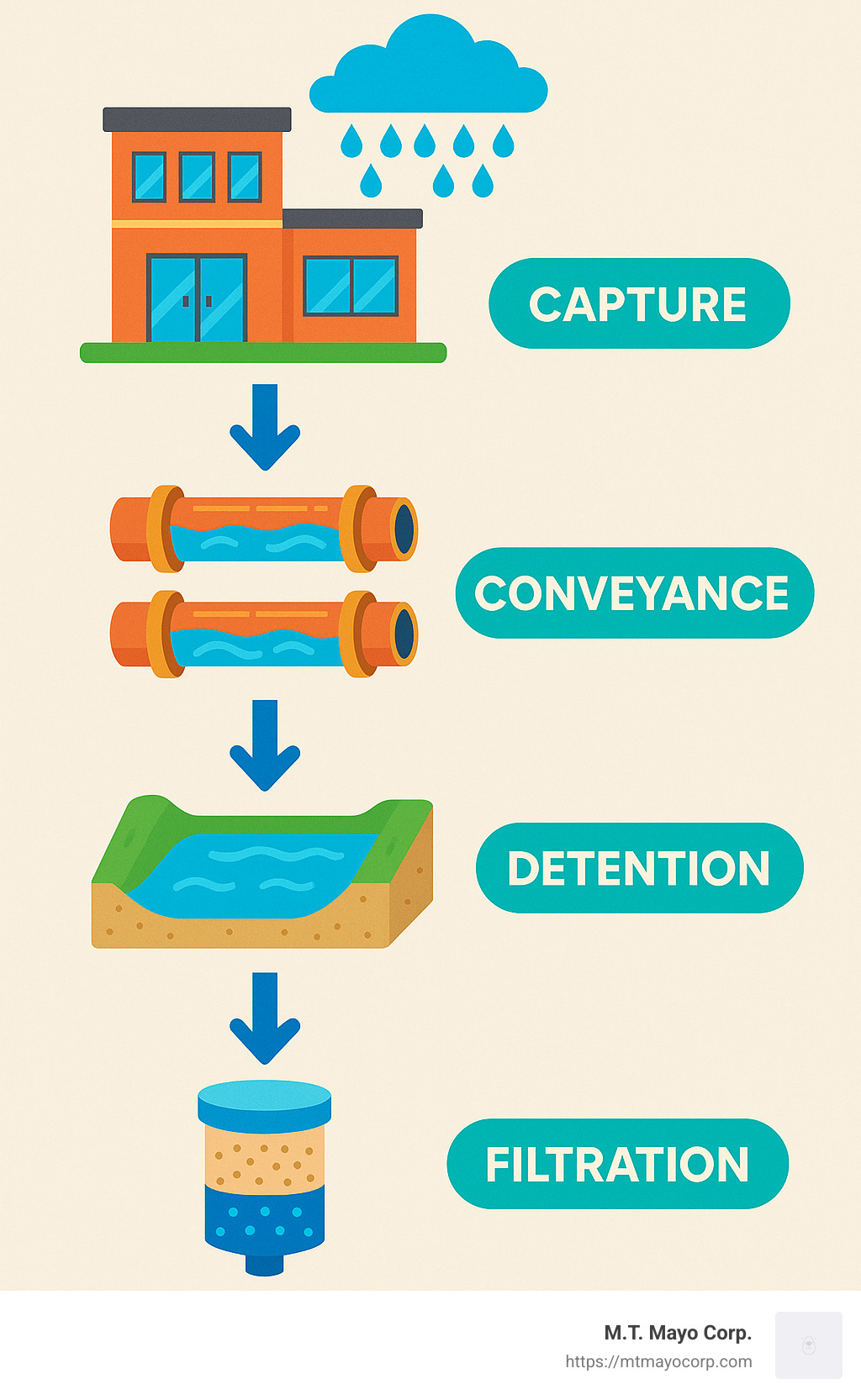
Environmental Sustainability in Drainage System Design
In today’s world, we need to think green. Incorporating sustainable elements into a drainage system for commercial buildings isn’t just trendy – it’s smart and cost-effective in the long run.
Green infrastructure solutions are a big part of this. Rain gardens and bioretention areas act like natural filters, cleaning water as it seeps through. Permeable pavements let rainwater flow through, reducing runoff. Green roofs absorb rainfall, cutting down on the amount of water that needs managing, while rainwater harvesting systems capture water for reuse in irrigation and other non-potable applications. Lastly, vegetated swales not only look great but slow down water flow, encouraging it to soak into the ground.
Low-Impact Development (LID) is another key strategy. By minimizing impervious surfaces and preserving natural drainage paths, we can treat stormwater right at its source. Using vegetation and soil as natural filters keeps the system decentralized and efficient.
Staying on the right side of regulatory compliance is a given. Sustainable design helps meet regulations requiring water quality treatment and peak flow reduction. We work closely with local authorities to ensure our designs exceed these requirements while providing top-notch performance. At M.T. Mayo Corp., we believe that thoughtful, sustainable drainage design isn’t just good for the environment – it’s good for business too.
Maintenance Practices for Longevity of Drainage Systems
Even the most well-designed drainage system for commercial buildings needs regular maintenance to stay in top condition. Taking a proactive approach not only helps avoid system failures but also extends the life of your drainage infrastructure and saves money in the long run.
Regular Inspection Schedule
Think of inspections as your drainage system’s check-up. Just like you’d visit the doctor to catch any health issues early, inspections help spot potential drainage problems before they become costly headaches. Quarterly inspections of gutters and downspouts keep them clear and functional, while semi-annual checks are crucial for both surface and subsurface components. And don’t forget those annual comprehensive inspections—they’re like the full-body scan your drainage system didn’t know it needed. After significant storms, quick post-storm inspections ensure your system handled the deluge like a champ.
During these inspections, be on the lookout for signs of trouble. Standing water or slow drainage can indicate blockages. Also, keep an eye out for cracks or breaks in the drainage components and any sediment accumulation or debris blockage. If you spot erosion around drainage structures or vegetation growth that could impede flow, address these issues promptly.
Blockage Prevention and Debris Removal
Preventing blockages is much easier than dealing with them later. Regular cleaning of gutters, downspouts, and drain grates is a must. Remove leaves, twigs, and other organic debris to keep things flowing smoothly. Clear sediment from catch basins and trench drains to prevent build-up. Trimming nearby trees and shrubs also helps reduce debris. Installing guards and screens at key entry points is a solid strategy for keeping unwanted blockages at bay.
Seasonal Maintenance Considerations
Seasonal changes present unique challenges for your drainage system. In winter, inspect and clear all drainage components before freezing temperatures hit. Check that exposed pipes are properly insulated, and ensure roof drains are clear before snow piles up. Verify that sump pumps are ready for action when the spring thaw arrives.
In summer, clear debris after the spring flowering and pollen seasons. Keep vegetation growth in check, and inspect for any damage from spring storms. Make sure your system can handle those heavy summer thunderstorms that seem to appear out of nowhere.
Sump Pump Testing
If your building has a basement or below-grade areas, sump pump maintenance is crucial. Test sump pumps at least twice yearly—spring and fall are good benchmarks. Make sure float switches operate properly, and check any backup power systems. Keep pump intakes and pits free of debris and sediment, and confirm that discharge pipes are clear and pointing in the right direction.
Professional Maintenance Services
Some maintenance tasks are best left to the pros. Professional services can provide camera inspections of underground piping and perform hydro-jetting to clear stubborn blockages. They can also handle structural repairs and make system upgrades or modifications. Compliance inspections for regulatory requirements ensure you’re on the right side of the law. At M.T. Mayo Corp., we offer comprehensive maintenance services for commercial drainage systems throughout Middlesex and Essex Counties. We’re here to help you protect your investment and avoid those dreaded emergency repairs.
Staff Education and Training
Your maintenance staff plays a crucial role in keeping the drainage system in tip-top shape. They should be trained to understand basic drainage system components and functions. Recognizing the warning signs of potential drainage issues is key, as is knowing how to properly dispose of waste to prevent drain contamination. Staff should also be familiar with emergency procedures for flooding or backups and document inspection findings. Educating your team about drainage system upkeep is an investment in your building’s future.
For more information on exterior drainage services, click here.
Regulatory Compliance and Building Codes
Navigating the maze of regulations and building codes is crucial when installing or upgrading a drainage system for commercial buildings. Not only does compliance ensure your system is legal, but it also guarantees safety and efficiency. Let’s break it down without getting tangled in red tape.
Local Regulatory Requirements
Your commercial drainage system must dance to the tune of several regulatory bodies. You’ll need to respect municipal building codes, cater to county health department standards, and not forget the state environmental protection mandates. And, oh yes, there’s the Federal Clean Water Act to keep in mind too.
If you’re in Massachusetts, the waltz becomes a bit more intricate. You’ll need to tango with local conservation commissions and show you can handle the steps set by the Massachusetts Department of Environmental Protection (MassDEP) stormwater standards. Don’t skip a beat of the Massachusetts State Building Code and be sure to glide gracefully around the Massachusetts Wetlands Protection Act when needed.
Permits and Approvals
Before you even think about breaking ground, you’ll need a stack of permits. Expect to need a building permit from your local authorities to start the show. If your system plans to tap into the municipal infrastructure, a stormwater permit will be added to your dance card. And if you plan to pirouette near wetlands or waterways, better have an environmental permit in hand. Finally, if your system is connecting to the public network, a utility connection permit will be necessary.
The permitting process can feel like a never-ending cha-cha: submitting plans, surviving reviews, addressing feedback, enduring inspections, and finally earning that coveted approval and certification.
Installation Standards
When it comes to installing commercial drainage systems, precision is key. Ensure proper bedding and backfill around those pipes for support. Keep your slopes and elevations just right so water flows where it’s supposed to. Don’t skimp on connections and joints—leaks are not invited to this party. Make sure there are enough access points for future maintenance, proper compaction is essential to avoid unwanted settling.
As industry regulations note, “Drainlayers working on commercial jobs must be registered both with industry boards and local councils to legally execute the work.” It’s a detail that can’t be overlooked.
ADA Compliance and Safety Standards
Your drainage system shouldn’t just work; it should also be accessible and safe for everyone. To meet Americans with Disabilities Act (ADA) requirements, grates should have openings no larger than ½ inch. Ensure all surfaces are stable, firm, and slip-resistant, and any transitions are smooth. Place components thoughtfully to avoid turning them into obstacles.
Safety doesn’t stop there. Be sure to meet OSHA requirements and choose load ratings that can handle the expected traffic. Keep covers and guards secure on all openings.
Working with Qualified Professionals
Given the complexity of regulations, teaming up with qualified professionals can make the process much smoother. You’ll need licensed civil engineers for precise system design and registered drainlayers for seamless installation. Certified inspectors can verify compliance, and experienced contractors, like us at M.T. Mayo Corp., ensure your project aligns with all local codes.
We stay on top of all necessary licenses and certifications to make sure your drainage project meets or surpasses every regulatory hurdle in the Woburn area and beyond. Rest assured, with M.T. Mayo Corp., your drainage journey will be in safe, experienced hands.
Frequently Asked Questions about Commercial Building Drainage Systems
What are the signs of drainage problems in commercial properties?
Several warning signs indicate potential issues with your drainage system for commercial building:
- Standing water in parking lots, landscaped areas, or on the roof
- Water stains on walls, ceilings, or around the foundation
- Cracks in the foundation, walls, or pavement
- Erosion of soil around the building perimeter
- Mold or mildew growth inside the building
- Unpleasant odors from drains or wet areas
- Soggy or spongy ground around the property
- Settling or sinking of walkways or pavement
- Basement or lower level flooding during rainfall
“Signs include areas of standing water in parking lots or lawns, potholes, dying landscaping, soil or foundation cracks, cracked or sinking sidewalks, and conditions conducive to mosquito breeding and mold growth,” notes property maintenance experts.
Early detection of these signs allows for prompt intervention before minor issues become major problems. At M.T. Mayo Corp., we recommend a thorough inspection as soon as any of these signs appear.
How often should drainage systems be inspected and maintained?
A proactive maintenance schedule for commercial drainage systems typically includes:
- Monthly visual inspections of accessible components
- Quarterly cleaning of gutters, downspouts, and surface drains
- Semi-annual comprehensive inspections (spring and fall)
- Annual professional assessment of the entire system
- Post-storm inspections after significant rainfall events
“Inspection frequency recommendations: at least once a year for general drainage system check, quarterly for gutters and downspouts, and semi-annually (spring and fall) for surface and subsurface systems,” advise maintenance professionals.
Specific components may require different schedules:
- Sump pumps: Test at least twice yearly
- Roof drains: Inspect and clean quarterly
- Catch basins: Clean annually or when sediment reaches one-third capacity
- Trench drains: Clean monthly in high-debris areas
Regular maintenance not only prevents failures but can substantially extend the lifespan of your drainage system while reducing long-term costs.
Can drainage systems be retrofitted to existing buildings?
Yes, existing commercial buildings can be retrofitted with improved drainage systems, though the process requires careful planning:
Assessment and Design Phase
- Comprehensive site evaluation to identify current issues
- Building structure analysis to determine feasible solutions
- Integration planning with existing systems
- Regulatory review to ensure compliance with current codes
- Cost-benefit analysis of various retrofit options
Common Retrofit Solutions
- Adding surface drains in problem areas
- Installing French drains around the perimeter
- Upgrading roof drainage components
- Improving site grading to direct water away from the building
- Adding detention or retention facilities to manage stormwater
“Drainage failures can not only harm a building’s foundation but also promote mold, mildew, and potential electrical hazards due to water exposure,” warns building experts, highlighting the importance of addressing drainage issues even in existing structures.
At M.T. Mayo Corp., we specialize in retrofitting drainage solutions for commercial properties throughout Middlesex and Essex Counties, working around existing operations to minimize disruption while maximizing effectiveness.
What size drainage system does my commercial building need?
Determining the appropriate size for a commercial drainage system involves several factors:
Calculation Factors
- Total roof area and building footprint
- Impervious surface area (parking lots, walkways, etc.)
- Local rainfall intensity data (including 10-year, 25-year, and 100-year storm events)
- Required discharge rates per local regulations
- Site topography and natural drainage patterns
Common Sizing Guidelines
- Roof drains: Typically one drain per 1,000-2,500 square feet of roof area
- Downspouts: Usually sized at 1 square inch of downspout for every 100 square feet of roof
- Trench drains: Commercial widths range from 4″ to 12″ depending on water volume
- Drainage pipes: Sized based on hydraulic calculations, ranging from 4″ to 24″ or larger
“Commercial trench drains are available in widths of 4″, 6″, 8″ and 12″ for varying requirements,” notes industry specifications.
Professional engineers can perform the necessary calculations to ensure your system is neither undersized (risking failure) nor oversized (wasting resources).
How does proper drainage prevent structural damage?
Proper drainage systems for commercial buildings protect structural integrity through several mechanisms:
- Reducing hydrostatic pressure against foundation walls
- Preventing soil erosion around footings and supports
- Maintaining consistent soil moisture levels to prevent expansion/contraction cycles
- Redirecting water away from vulnerable building components
- Reducing the weight load on roofs and structural elements
“By preventing the pooling of water on the roof, proper drainage systems protect the roofing membrane from damage, reducing the risk of leaks and avoiding extensive interior damage that could be expensive to repair,” explains structural engineers.
The relationship between drainage and structural integrity is direct and significant. Even small drainage failures can lead to major structural issues over time as water gradually undermines a building’s support systems.
Conclusion
Implementing an effective drainage system for commercial buildings isn’t just a box to tick off a to-do list—it’s a vital step in safeguarding your property’s longevity, safety, and overall value. Throughout this guide, we’ve uncovered how well-designed drainage can ward off water damage, keep structural woes at bay, ensure safety, and even boost environmental sustainability. It’s like giving your building a well-fitted raincoat!
“Proper drainage systems are crucial for protecting your commercial property’s integrity and value.”
At M.T. Mayo Corp., we have decades of experience tucked under our tool belts when it comes to drainage system design, installation, and maintenance. Based in Woburn and serving the surrounding communities in Middlesex and Essex Counties, we’re a licensed and insured contractor that always prioritizes safety, compliance, and quality.
Whether you’re starting on a new construction project, looking to upgrade an existing building, or tackling pesky drainage problems, our team is here to craft expert solutions custom to your specific needs and site conditions. We understand the unique weather challenges New England throws our way and design systems that stand strong through all four seasons.
Proactive drainage management is always more cost-effective than reactive repairs. By investing in proper drainage infrastructure now, you’re not just defending your commercial property against potential water catastrophes—you’re also creating a safer, more sustainable environment for everyone who steps through your doors.
Feel free to reach out to us at M.T. Mayo Corp. to discuss how we can help protect your investment for years to come. For more information on drainage systems, click here.
For further reading on overall stormwater management, you can also check out Stormwater management on Wikipedia.
Contact us today and let’s keep your building and your business on solid, dry ground.
