

French Gutter Drain: Top Benefits & DIY Tips 2025
Solving Property Drainage Problems with French Gutter Drains
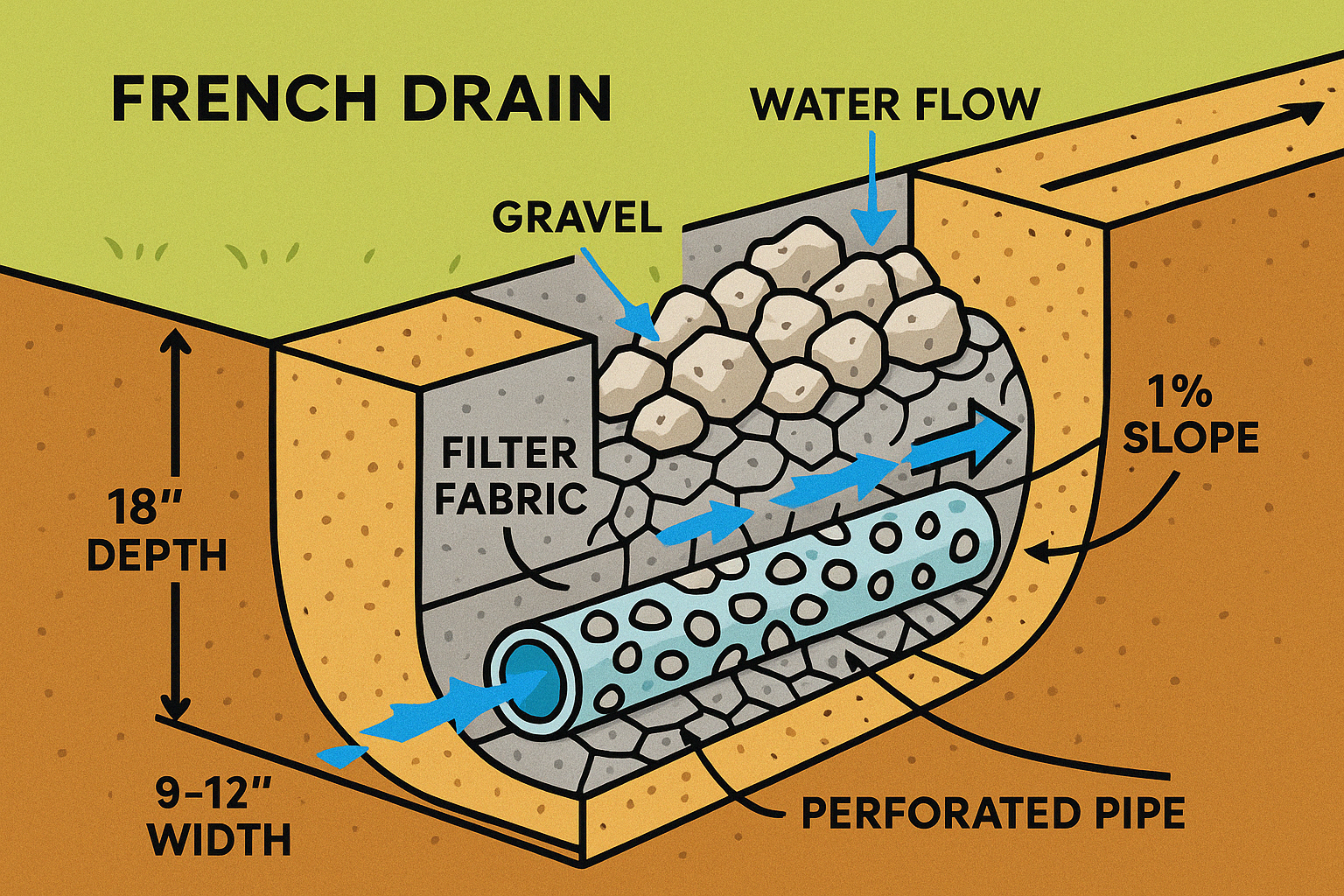
A french gutter drain is an underground drainage system designed to redirect water away from your property’s foundation using a perforated pipe surrounded by gravel in a sloped trench. Here’s what you need to know:
- Definition: A subsurface drainage system that collects and redirects groundwater
- Components: Perforated pipe, gravel, filter fabric, and proper slope
- Purpose: Prevents water damage to foundations, basements, and landscapes
- Installation depth: Typically 18 inches deep and 9-12 inches wide
- Required slope: At least 1% (1-inch drop per 10 feet of pipe)
When John first noticed pooling water around his commercial property in Woburn, he couldn’t understand why the regular gutters weren’t doing their job. The reality is that standard roof gutters and french gutter drains serve complementary purposes in a complete water management system.
“It might be hard to imagine that your downspout could affect your home’s foundation and structural integrity,” notes one drainage expert. Yet that connection between above-ground and below-ground water management is precisely what makes french gutter drains so valuable for commercial property managers.
French gutter drains excel at collecting groundwater before it can damage your foundation or create unsightly pools in your landscape. Unlike traditional gutters that manage roof runoff, these subsurface systems tackle water that accumulates at ground level, providing a comprehensive solution to property drainage challenges.
For commercial properties, where water damage can lead to costly repairs and business disruptions, installing a properly designed french gutter drain system is an investment that pays dividends through foundation protection and property preservation.
What Is a French Gutter Drain and How Does It Work?
Despite what the name suggests, the french gutter drain isn’t a European import. It was actually named after Henry Flagg French, an American lawyer and farm drainage enthusiast who popularized this clever system in his 1859 book. While the technology has certainly evolved since then, the fundamental principles remain unchanged.
At its core, a french gutter drain is beautifully simple: a gravel-filled trench with a perforated pipe that whisks water away from areas where it’s not wanted. Think of it as an underground highway specifically designed for water traffic.
Here’s how this ingenious system tackles water problems:
First, when rain falls or groundwater rises, it naturally seeks the path of least resistance—which happens to be your carefully prepared gravel-filled trench. The water easily flows between the spaces in the gravel, much like finding its way through a natural filter.
Next, this water continues downward until it reaches the star of the show: the perforated pipe. These strategic holes allow water to enter the pipe from multiple directions. Interestingly, modern installation often places these holes facing downward, which might seem counterintuitive at first.
“Installing the perforated (French drain) pipe with the holes on the bottom is crucial to ensure water enters the pipe as soon as possible,” explains many drainage experts, including our team at M.T. Mayo Corp.
This downward-facing approach works because water naturally seeks the lowest point. When the holes face down, water doesn’t need to rise to enter side or top perforations—it can immediately begin its journey through your drainage system.
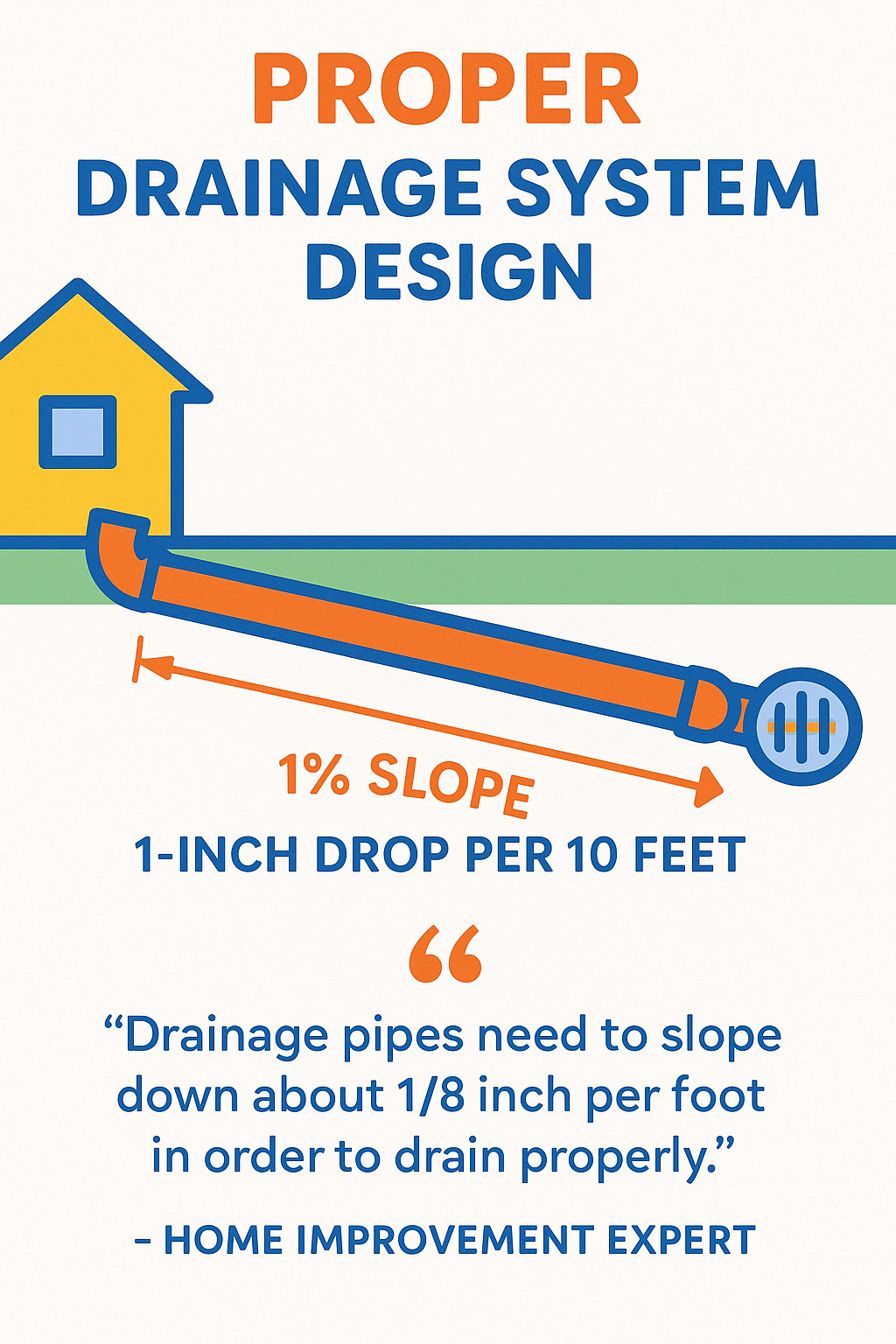
The final key to success is the slope. Your french gutter drain needs a downward gradient of at least 1%—that’s a one-inch drop for every 10 feet of pipe. This gentle slope ensures water keeps moving rather than pooling, which could lead to clogs or backups.
For commercial properties in Woburn and surrounding areas, this simple yet effective system can mean the difference between a dry, stable foundation and costly water damage. The beauty of a properly installed french drain is that once it’s in place, it works silently underground, protecting your property day after day, storm after storm.
Benefits of Installing a French Gutter Drain
Let’s face it—water problems around your property can quickly turn from a minor annoyance into a major headache. That’s where a french gutter drain comes in, offering much more than just a way to move water. For business owners and property managers in Middlesex and Essex counties, these drainage systems provide some impressive benefits that protect both your building and your bottom line.
Foundation Protection
Water is sneaky. It silently pools around your building, creating pressure that can force moisture through even the tiniest cracks in your foundation. Over time, this hydrostatic pressure doesn’t just cause leaks—it can actually warp and crack your foundation, threatening the very stability of your building.
A french gutter drain works like a defensive moat around your castle, intercepting water before it can reach your foundation walls. For commercial property owners, this prevention is far less expensive than the alternative—foundation repairs that can easily cost tens of thousands of dollars and disrupt your business operations.
Basement Waterproofing
If you’ve ever walked into a damp basement, you know that musty smell that immediately hits you. But moisture in below-ground spaces isn’t just unpleasant—it’s potentially destructive.
“Drainage problems in your yard can lead to pooling, mold, or water damage around your home; installing a French drain can solve these issues and protect your property,” notes a drainage professional.
By installing a french gutter drain around your building’s perimeter, you create a first line of defense against basement moisture. This is particularly valuable for commercial properties where basement areas might store inventory, house expensive mechanical systems, or even serve as customer or employee spaces.
Yard Drainage
Nothing says “we don’t care about our property” quite like puddles of standing water in your commercial landscape. These water pools don’t just look bad—they actively drive customers away, kill your landscaping investments, and create perfect breeding grounds for mosquitoes.
A strategically placed french gutter drain can transform those soggy problem areas, ensuring that even after heavy downpours, your grounds remain professional-looking and usable. Your customers will notice the difference, even if they can’t quite put their finger on why your property always looks so well-maintained.
Landscape Preservation
That beautiful commercial landscaping wasn’t cheap, was it? When water doesn’t drain properly, your investment literally washes away as plants suffer from root rot, soil erodes, and hardscaping elements shift or crack under the pressure.
A properly installed french gutter drain helps protect these investments by controlling water flow across your property. The result is landscaping that maintains its professional appearance year-round, creating that crucial positive first impression for clients and customers.
Moisture Control
Excess moisture doesn’t just damage your building—it creates the perfect environment for mold and mildew to flourish. These unwelcome guests can trigger allergies and respiratory issues among employees and customers, potentially creating liability issues for your business.
By maintaining appropriate moisture levels around your property, a french gutter drain contributes to a healthier environment both inside and outside your building. Your staff will breathe easier (literally), and you’ll have one less workplace health concern to worry about.
When properly designed and installed by drainage experts like those at M.T. Mayo Corp., a french gutter drain system becomes an invisible guardian for your commercial property, silently protecting your investment day in and day out, through every rainstorm and spring thaw.
How to Install a French Gutter Drain System
While professional installation from experts like us at M.T. Mayo Corp. is recommended for commercial properties, understanding the process helps you make informed decisions about your drainage solutions. Here’s a comprehensive guide to installing a french gutter drain system:
Step 1: Planning the French Gutter Drain Installation
Before you pick up any shovel or equipment, proper planning will save you time, money, and potential headaches. Start by walking your property during or just after a heavy rain – this reveals the true story of where water collects and causes problems.
Site assessment is critical to success. Notice where puddles form, where soil stays soggy days after rain, and any water marks on your foundation. These clues tell you exactly where your drainage system needs to focus.
Safety comes first, which means identifying what’s beneath the surface before digging. Always call 811 at least three days before your planned installation. This free service marks underground utilities like gas, electric, and water lines. I’ve seen too many projects turn into expensive emergencies because someone skipped this crucial step.
Finally, determine where all this water will go. Your french gutter drain needs an exit strategy – whether that’s connecting to a storm drain, creating a dry well, or directing water to a natural slope away from buildings. Just remember, being a good neighbor means not directing your water problems onto adjacent properties. Local regulations in Middlesex and Essex counties often have specific requirements about water discharge, so a quick check with municipal authorities can prevent future complications.
Step 2: Digging the Trench for Your French Gutter Drain
Now comes the real work. Trench digging is labor-intensive but forms the backbone of your drainage system.
The magic numbers to remember are 18 and 12 – your trench should be approximately 18 inches deep and 9-12 inches wide. This depth ensures the drain captures groundwater before it reaches foundation level, while the width provides ample space for both pipe and gravel.
One common mistake I see is digging a perfectly level trench. Water only flows downhill! Maintain a consistent slope of at least 1% (that’s a 1-inch drop for every 10 feet of length). For longer runs, place stakes and string to guide your digging and ensure this gradient remains consistent.
For commercial properties with extensive drainage needs, specialized trenching equipment makes this job significantly easier. At M.T. Mayo Corp., we have the heavy equipment to handle even large-scale commercial drainage projects efficiently.
Step 3: Lining the Trench with Filter Fabric
This step might seem minor, but it’s actually what determines whether your french gutter drain lasts 5 years or 25 years.
Line the entire excavated trench with high-quality filter fabric, also called geotextile material. This special fabric acts like a coffee filter – it allows water to pass through while blocking soil particles that would otherwise eventually clog your system. Make sure to leave enough excess material hanging over the sides of the trench; you’ll fold this over the top of the gravel later.
Choose a non-woven geotextile specifically designed for drainage applications. The small additional cost for quality material here pays enormous dividends in the longevity of your system. I’ve seen too many property owners try to save a few dollars on fabric only to spend thousands replacing a clogged system a few years later.
Step 4: Installing the Perforated Pipe in the French Gutter Drain
With your trench prepared and lined, it’s time for the centerpiece of your drainage system – the perforated pipe.
Here’s a counterintuitive tip that confuses many first-time installers: position the pipe with the perforations facing downward, not up. This seems backward, but it actually works better because water naturally seeks the lowest point. When holes face downward, water enters the pipe immediately rather than having to rise to the level of side or top perforations.
For most commercial applications, a 4-inch diameter perforated pipe provides sufficient capacity. Larger properties or areas with significant water issues might benefit from 6-inch pipe, but 4-inch is the standard workhorse for most installations.
As you lay the pipe, regularly check that you’re maintaining that crucial 1% grade. A simple level or string line helps verify the slope continues properly throughout the installation. When connecting pipe sections, use proper fittings rather than simply butting pieces together. Proper connections ensure your system functions as a unified whole without leaks or separation over time.
Step 5: Backfilling with Gravel and Soil
The final phase brings your french gutter drain system to life and determines how well it will perform for years to come.
Start by covering the pipe with clean gravel, typically 3/4-inch to 1 1/2-inch size. This gravel envelope should extend from the bottom of the trench to about 3-4 inches from the surface. The spaces between these stones create channels for water to move freely into and around the pipe – essentially expanding your drainage capacity beyond just the pipe itself.
Next, fold the excess filter fabric over the top of the gravel layer, creating a complete envelope that prevents soil from infiltrating the system. This “wrapping” step is often overlooked but is essential for long-term performance.
Finally, backfill the remaining space with topsoil and finish according to your landscaping plans. For commercial properties, we often recommend leaving the top few inches as a visible gravel strip. This not only marks the drain’s location for future reference but also provides additional surface water collection capacity. However, if aesthetics are a priority, the system can be completely hidden beneath sod or landscaping for a seamless appearance.
When properly installed, your french gutter drain system should provide decades of reliable service, protecting your property from water damage while remaining largely maintenance-free. Of course, for commercial properties where water management is critical, professional installation ensures your system meets both current needs and future challenges.
Materials Needed for French Gutter Drain Installation
When preparing to install a french gutter drain, gathering all the right materials before you break ground will save you time, money, and frustration. Think of it as preparing all your ingredients before cooking a complex meal—you’ll want everything within reach when you need it.
Perforated Pipes
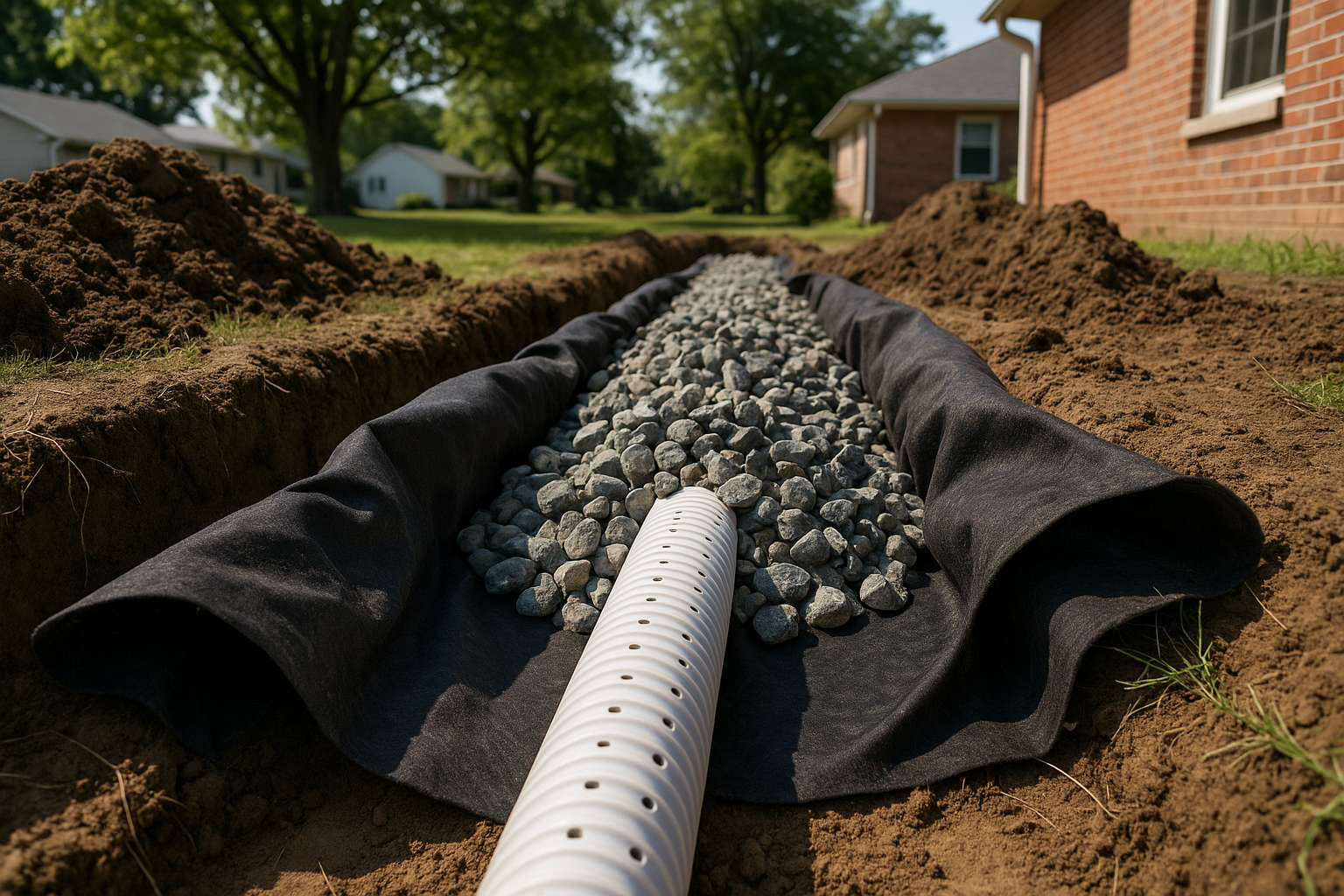
The star of any french gutter drain system is the perforated pipe that actually carries water away from your property. For commercial applications, we typically recommend a 4-inch diameter pipe—this size strikes the perfect balance between water capacity and installation practicality.
“Schedule 40 PVC 4″ for the downspout drain pipe and perforated 4″ for the French drain is standard,” explains one of our drainage specialists at M.T. Mayo Corp. We prefer Schedule 40 PVC for its outstanding durability—this isn’t a project you want to repeat anytime soon!
When selecting your pipe, look for those with multiple small holes or slots rather than fewer large openings. Some premium pipes even come with pre-installed filter socks, which provide an extra layer of protection against silt and debris. While they cost a bit more upfront, they can extend the life of your system significantly.
Gravel
The humble gravel surrounding your drainage pipe is actually doing several important jobs simultaneously. It creates spaces for water to collect, provides structural support for the pipe, and acts as a natural filter for larger debris.
For a professional installation, you’ll want to use 3/4-inch to 1 1/2-inch clean, washed gravel or crushed stone. The “clean, washed” part is crucial—garden-variety gravel often contains fine particles that will eventually clog your system. When ordering, be specific about needing drainage-grade materials.
For planning purposes, expect to use approximately 1 cubic yard of gravel for every 30 linear feet of standard trench. And here’s a pro tip: avoid limestone or other soft stones that can break down over time and compromise your drain’s effectiveness.
Filter Fabric
This unsung hero of the french gutter drain system—also known as geotextile—prevents soil from sneaking into your carefully constructed drainage system. Think of it as the bouncer keeping unwanted particles out of your drainage nightclub.
You’ll need a non-woven geotextile specifically designed for drainage applications. The fabric should be wide enough to line your entire trench and still have approximately 12 inches of excess material on each side so you can fold it over the top of your gravel layer when finishing the installation.
Quality matters here—professional-grade fabric resists tearing and degradation, which means your drainage system will function properly for years longer. This is definitely not the place to cut corners on your materials budget.
Trenching Tools
For commercial-scale installations, having the right equipment makes all the difference between a quick, professional job and days of backbreaking labor.
A mechanical trencher is worth its weight in gold for excavating long runs of trench with consistent depth and width. Pair this with a laser level to ensure your drainage system maintains that critical 1% slope throughout the installation.
You’ll also need basic measuring tools—tape measure, stakes, and string for layout work—plus compaction equipment to properly secure your backfill once the system is in place. While smaller residential installations might get by with shovels and manual tools, commercial projects almost always benefit from mechanical assistance.
Additional Materials
Depending on the specifics of your property and drainage needs, you might also require various fittings and accessories to complete your system. Connectors, elbows, and T-fittings allow you to create a comprehensive drainage network rather than just a straight run.
Solid, non-perforated pipe sections are needed for discharge areas where you want water to flow through rather than be collected. Catch basins can be strategically placed to collect surface water at key points, while pop-up emitters provide attractive, functional discharge points in landscaped areas.
Don’t forget to include cleanouts—access points that allow for future maintenance without digging up your entire system. These simple additions can save thousands in service costs over the life of your drain.
At M.T. Mayo Corp., we help commercial property owners in Woburn and surrounding areas source the right materials for their specific drainage needs, ensuring your french gutter drain system is built to last.
More info about Drainage Systems
Common Mistakes to Avoid When Installing a French Gutter Drain
Even the best drainage plans can go awry when common installation errors creep in. After installing hundreds of french gutter drain systems throughout Middlesex and Essex counties, we’ve seen how these mistakes can undermine an otherwise sound drainage solution.
Incorrect Slope
Perhaps the most critical error we see is improper sloping of the drain pipe. A french gutter drain requires a minimum 1% grade—that’s a 1-inch drop for every 10 feet of pipe. When this slope is insufficient, water stagnates instead of flowing away from your property.
“I’ve seen perfectly good materials wasted because someone eyeballed the slope instead of measuring it,” shares one of our installation specialists. “Then they wonder why the drain backs up during the first heavy rain.”
Using a laser level during installation isn’t just being fussy—it’s the difference between a system that works for decades and one that fails after the first storm. For longer drain runs, even small slope errors compound, potentially causing the entire system to malfunction.
Clogging Risks
A french gutter drain is only as good as its ability to stay clear of debris and sediment. We regularly encounter systems that failed prematurely because they lacked proper protection against clogging.
Skipping the filter fabric is like building a house without a roof—it might look fine initially, but problems are inevitable. The fabric creates a barrier that allows water through while keeping soil particles out of your drainage system.
Similarly, using unwashed gravel containing fine particles sets your drain up for failure. Those small particles wash down into the pipe perforations over time, gradually choking the system. Always insist on clean, washed gravel specifically intended for drainage applications.
Mixing Roof and Ground Water
This mistake deserves special attention because it’s both common and potentially devastating to your drainage system.
“It is definitely NOT a good idea to tie gutter downspouts into a French drain.” – Home Improvement Expert
This warning exists for good reason. Roof runoff contains debris like leaves, twigs, and granules from shingles that can quickly clog a french gutter drain. Additionally, the volume of water from a roof during heavy rain can overwhelm a system designed primarily for groundwater management.
Instead, direct downspouts to discharge near (but not directly into) your french gutter drain, allowing natural filtration through the soil before water enters the system.
Improper Pipe Placement
The counterintuitive truth about perforated drainage pipes is that they work best with the holes facing downward, not upward. Many DIY installers place the holes facing up, assuming this will collect water more efficiently.
In reality, water seeks the lowest point, so when perforations face downward, water enters the pipe immediately upon reaching the bottom of the trench. With upward-facing holes, water must rise to pipe level before entering—exactly what you don’t want in a drainage system.
We’ve also seen installations where the pipe was placed directly on the trench bottom without a gravel bed underneath. This prevents water from entering through the bottom perforations and reduces the system’s effectiveness dramatically.
Inadequate Planning for Outlets
A french gutter drain needs somewhere to discharge collected water. We’ve seen otherwise well-constructed systems fail because they lacked proper outlet planning.
Your drainage system should discharge to:
– A storm drain (where permitted by local regulations)
– A dry well or rain garden
– A lower elevation point away from structures
– A drainage ditch
Never direct discharge toward neighboring properties or into sanitary sewer systems—both can create legal liabilities and potential environmental issues.
Forgetting About Maintenance Access
Even the best french gutter drain system needs occasional maintenance. Installing without cleanout access points makes future maintenance difficult or impossible.
Adding cleanouts at key junctions and direction changes allows for inspection and cleaning if the system ever slows down. This small addition during installation can save thousands in repair costs down the road.
By avoiding these common pitfalls, your french gutter drain system can provide decades of reliable service, protecting your property from water damage and preserving your landscape. When in doubt, consulting with drainage professionals like our team at M.T. Mayo Corp. can help ensure your system is installed correctly the first time.
Common Mistakes to Avoid When Installing a French Gutter Drain
Let’s be honest—drainage isn’t the most exciting home improvement project, but getting it wrong can lead to some very exciting (and not in a good way) problems down the road. After years of helping property owners throughout Middlesex and Essex counties, we’ve seen just about every french gutter drain mishap possible. Here are the mistakes you’ll definitely want to avoid:
Incorrect Slope
Water is stubborn—it only flows downhill, and it needs enough of a slope to keep moving. One of the most common errors we see is when people install their french gutter drain without adequate slope.
Without at least a 1% grade (that’s a 1-inch drop for every 10 feet of pipe), water will simply sit in your drain rather than flow to the outlet. It’s like trying to slide down a barely tilted playground slide—you just get stuck halfway.
For longer drainage runs, we actually recommend slightly increasing this slope to ensure everything keeps flowing smoothly. As one drainage specialist put it: “For effective drainage, the trench must have a 1% slope, equating to at least a 1-inch drop for every 10 feet of pipe.”
When we install french gutter drains at M.T. Mayo Corp., we use laser levels to ensure precise grading throughout the entire system. That little bit of extra care makes all the difference between a drain that works for decades and one that fails after the first heavy rain.
Clogging Risks
A clogged french gutter drain is about as useful as a screen door on a submarine. Unfortunately, several common installation errors can lead to premature clogging.
Skipping the filter fabric is probably the biggest culprit. This geotextile material acts like a bouncer at an exclusive club, keeping soil particles out while letting water in. Without it, soil gradually migrates into your gravel bed and pipe, eventually turning your drainage system into a solid mass.
Another frequent issue is using the wrong type of gravel. That bargain-priced “drainage gravel” with lots of small particles might save you money upfront, but those fine particles will eventually work their way into your pipe. Always use clean, washed gravel without fine particles.
One pro tip we share with our commercial clients: “Use filter fabric around the pop-up emitter to maintain a clear, maintenance-free drainage system.” This small extra step can prevent clogs at the most vulnerable point in your system.
Mixing Roof and Ground Water
This might be the most controversial point in drainage circles (yes, drainage experts can get pretty heated about this topic). Should you connect your roof downspouts directly to your french gutter drain?
The emphatic answer from most professionals is no.
Here’s why: roof runoff during a heavy storm delivers a massive volume of water all at once, potentially overwhelming your french gutter drain system. Plus, roof water often carries granules from shingles, leaves, and other debris that can clog your drainage system.
Instead, keep these systems separate. Use solid pipe for roof water and perforated pipe for groundwater collection. They can share the same trench if needed, but they should remain distinct systems with different discharge points.
Improper Pipe Placement
It seems counterintuitive, but the holes in your perforated pipe should face downward, not upward. When we explain this to clients, we often get puzzled looks—after all, wouldn’t holes on top catch more water?
The science is actually pretty simple: water naturally seeks the lowest point. When it reaches the bottom of your trench, you want it to enter the pipe immediately rather than having to rise to reach side or top perforations.
As one drainage expert explains: “Installing the perforated (French drain) pipe with the holes on the bottom is crucial to ensure water enters the pipe as soon as possible.”
This small detail makes a significant difference in how efficiently your french gutter drain system performs, especially during heavy rainfall when immediate water collection is essential.
Inadequate Outlet Planning
Even the most perfectly installed french gutter drain will fail if the water has nowhere to go. We’ve seen too many property owners focus entirely on collection while neglecting discharge planning.
Before digging your first shovelful of dirt, know exactly where that water will end up. Options include:
- Municipal storm drains (always check local regulations first)
- Dry wells for gradual water dispersion
- Rain gardens or retention areas for environmentally friendly solutions
- Natural waterways (permits may be required)
Discharging onto a neighbor’s property or into unauthorized areas can create legal liabilities. In Woburn and surrounding communities, local ordinances often dictate acceptable drainage discharge locations.
At M.T. Mayo Corp., we conduct thorough site assessments to identify the optimal drainage solution for your specific property conditions. Sometimes the difference between a successful installation and a problematic one comes down to understanding not just how to collect the water, but where to send it once collected.
Maintaining Your French Gutter Drain System
That french gutter drain you’ve invested in isn’t quite a “set it and forget it” solution. While these systems are designed to operate with minimal attention, a little maintenance goes a long way toward ensuring years of trouble-free performance. Think of it like changing the oil in your car—a small effort now prevents big problems later.
Regular Inspections
Picture this: It’s been raining for days, and suddenly you notice water pooling in areas where your drainage system should be working. This scenario is exactly what regular inspections help you avoid.
Make it a habit to check your french gutter drain system at least twice a year—once in early spring as the ground thaws and again in late fall before winter sets in. These transition seasons are perfect for spotting potential issues. After unusually heavy downpours, take a quick walk around your property too. These “storm checks” can catch problems when they’re still small and manageable.
During your inspections, keep an eye out for warning signs. Soggy soil directly above your drain line usually indicates a clog or break in the system. Standing water near the drain area suggests the system isn’t moving water efficiently. If you notice new erosion channels around outlet areas, your system might be overwhelmed during heavy rains.
For commercial property managers in Woburn and surrounding areas, these inspections should be documented. A simple maintenance log with dates, observations, and any actions taken provides valuable information for insurance purposes and helps track system performance over time.
Cleaning
Even the best-designed french gutter drain will eventually collect some debris. Regular cleaning keeps everything flowing smoothly.
If your system includes catch basins or surface inlets (those grated openings that allow surface water to enter the drain), make these your cleaning priority. Remove leaves, twigs, and sediment that accumulate in these collection points. A shop vacuum works wonders for this task, especially in fall when leaves are abundant.
The outlet areas—where water exits your drainage system—need attention too. Vegetation can grow surprisingly quickly around these discharge points, potentially blocking water flow. Trim back plants and clear away any sediment that’s built up at the outlet.
For commercial properties with extensive drainage systems, consider professional maintenance every few years. Hydro-jetting—a process that uses high-pressure water to clear pipes—can remove accumulated sediment and restore your system to like-new condition. This service is particularly valuable for older systems or those in areas with high sediment content in the soil.
“The most effective maintenance for drainage systems is preventative maintenance,” notes one drainage professional. “It’s much easier to keep a system clean than to restore one that’s completely clogged.”
Preventing Clogs
The best maintenance strategy is preventing problems before they start. With french gutter drains, this means being mindful of what happens above and around your drainage system.
Your landscaping choices matter tremendously. Avoid planting trees with aggressive root systems near your drain lines—willow, poplar, and silver maple are notorious for seeking out water sources and infiltrating drainage pipes. If you already have such trees nearby, consider installing root barriers to protect your drainage system.
Be strategic with mulch placement. While mulch is excellent for plant beds, it can wash into drainage components during heavy rains. Keep a mulch-free buffer zone around any visible drainage elements.
Seasonal awareness helps too. In autumn, rake leaves promptly to prevent them from decomposing over drain areas. During winter, avoid piling plowed snow directly over drain components—the weight can compress soil and affect drainage patterns. When spring arrives, check for any frost heaving that might have altered pipe alignment.
Communication is key for commercial properties. Make sure your landscape maintenance crews understand where drainage components are located, and instruct them to keep grass clippings and debris away from these areas. A simple diagram showing drain locations can prevent accidental damage during routine grounds maintenance.
With proper care, your french gutter drain system should provide decades of reliable service. At M.T. Mayo Corp., we’ve seen well-maintained systems functioning effectively for 20+ years. For our commercial clients in Middlesex and Essex counties, we offer maintenance programs that include regular inspections and professional cleaning to ensure your drainage investment continues protecting your property year after year.
The most expensive drainage system is the one you have to install twice. A little preventative maintenance saves both money and headaches in the long run.
Cost Considerations for Installing a French Gutter Drain
Let’s talk money. After all, when it comes to installing a french gutter drain system, understanding the costs involved helps you make smart decisions about protecting your property.
Material Costs
The materials for your drainage project will make up a big chunk of your budget, and quality matters when it comes to long-term performance.
Good quality perforated pipe will cost between $1-$3 per linear foot, depending on the diameter and material you choose. For commercial properties, we typically recommend the higher-end options that will stand up to years of use.
Then there’s the gravel – expect to pay about $25-$45 per ton, and you’ll need roughly one ton for every 20-30 feet of standard trench. Professional-grade filter fabric runs about $0.50-$1.50 per square foot, and don’t forget to budget $5-$20 for each connection fitting.
When you add it all up, a 100-foot commercial installation using premium materials typically ranges from $1,000-$2,500, though local prices and your specific requirements will affect the final tally.
“I thought I could save money by using cheaper materials,” one Woburn business owner told us, “but I ended up spending twice as much when I had to redo the whole system two years later.”
Labor Costs
Professional installation ensures your french gutter drain works properly from day one, but it does add to your investment. For commercial properties, expect to pay between $10-$30 per linear foot for professional installation, which includes:
Trenching: The labor and equipment needed to dig your drainage trench
Installation: Skilled workers who know how to properly assemble the system
Finish Work: Restoring your landscape after the installation is complete
The final cost depends on several factors – how easy it is to access your property, what your soil conditions are like, how deep and wide the trench needs to be, how complex your system is, and local labor rates in your area of Middlesex or Essex county.
Equipment Rental
If you’re considering the DIY route, don’t forget to factor in equipment rental costs. A trencher will set you back $150-$350 per day, compaction equipment runs $50-$150 daily, and a laser level (essential for getting that crucial slope right) costs $50-$100 per day.
By the time you add up these rental fees, you might find that professional installation is actually more economical, especially when you consider the expertise and warranty that comes with professional service.
Long-term Savings
While the upfront costs might make you hesitate, think about the long-term savings a properly installed french gutter drain provides:
Foundation repairs can easily cost $5,000-$40,000 or more, making your drainage investment look like a bargain by comparison. Beyond that, you’re protecting your landscaping, hardscaping, and building interiors from water damage.
For commercial properties, there’s also the significant benefit of reducing liability from slip hazards and preventing water-related disruptions to your business operations. One day of business closure due to flooding could cost far more than your entire drainage system.
Budgeting Tips
If you’re planning drainage improvements for your commercial property, here are some practical ways to manage the costs:
Get multiple quotes from reputable contractors to compare proposals. At M.T. Mayo Corp., we pride ourselves on providing detailed, transparent quotes so you know exactly what you’re paying for.
For larger properties, consider a phased implementation approach – address the most critical areas first, then expand the system over time as your budget allows.
Whenever possible, coordinate your drainage installation with other planned excavation or landscaping work to reduce mobilization costs and minimize disruption to your property.
Finally, don’t forget to budget for periodic inspection and cleaning. A small investment in maintenance can extend the life of your system significantly and protect your initial investment.
“The best time to install a drainage system is before you have water problems,” notes one of our project managers. “The second best time is now, before small issues become expensive disasters.”
At M.T. Mayo Corp., we work with commercial property owners throughout Middlesex and Essex counties to design drainage solutions that fit both their water management needs and their budgets. We believe in doing the job right the first time, saving you money and headaches in the long run.
French Gutter Drains vs. Other Drainage Solutions
When it comes to managing water on your property, you have several options to choose from. Understanding how french gutter drains stack up against other drainage solutions can help you make the best choice for your specific situation.
Comparative Analysis
Let’s take a closer look at how different drainage systems work and what makes each one unique:
French Gutter Drains work quietly underground, collecting and redirecting groundwater before it can cause problems. They’re particularly effective for managing overall site drainage and preventing water from reaching your foundation. Think of them as your property’s underground water highway, silently channeling moisture away from important structures.
Traditional Gutters are the familiar systems attached to your roof’s edge. Unlike their underground cousins, these visible components focus specifically on catching rainwater from your roof and directing it away from your building’s immediate perimeter. They’re your first line of defense against rainfall.
Sump Pumps take a more active approach to water management. Typically installed in basements or crawlspaces, these powered systems actively pump out water that has already made its way inside. They’re like having a dedicated water bouncer, forcibly removing unwanted moisture from below-grade areas.
Dry Wells offer a more environmentally friendly solution. Instead of just moving water elsewhere, dry wells collect runoff and allow it to gradually absorb into the surrounding soil. They’re like natural water storage tanks, helping return water to the ground rather than sending it away.
Pros and Cons
Every drainage solution comes with its own set of advantages and limitations:
French Gutter Drains
The beauty of a french gutter drain system lies in its simplicity and effectiveness. Once installed, these passive systems require no power to operate and remain completely hidden from view. They’re excellent for managing water across large areas and, when properly installed, can last for decades.
However, installation isn’t a small undertaking. The process requires significant excavation, and without proper filter fabric, these systems can become clogged over time. They also need a consistent slope to function properly and may struggle in areas with heavy clay soil.
“A properly installed French drain is like insurance for your foundation,” notes one drainage expert. “It’s an investment that pays off by preventing much costlier water damage down the road.”
Traditional Gutters
The familiar roof gutter system offers relatively straightforward installation and maintenance. Problems are usually easy to spot since the system is visible, and you can direct water to specific areas of your choosing.
On the downside, their visibility means they affect your property’s appearance. They require regular cleaning to prevent clogs from leaves and debris, and they’re limited to handling roof water only. In harsh winter climates, they can also suffer damage from ice buildup.
Sump Pumps
The active nature of sump pumps makes them uniquely capable of moving water uphill if needed—something gravity-based systems can’t do. They provide excellent protection in areas with high water tables and can be equipped with battery backups for added security.
The trade-off is their dependence on electricity and higher maintenance requirements. During power outages, standard sump pumps stop working precisely when you might need them most. They’re also limited to protecting specific localized areas rather than providing property-wide drainage.
Dry Wells
For the environmentally conscious property owner, dry wells offer a sustainable solution that returns water to the natural groundwater system. Their simple design has no visible components above ground, maintaining your property’s aesthetic appeal.
Their limitations become apparent during heavy, prolonged rainfall when their capacity can be quickly overwhelmed. They’re also not suitable for all soil types and may require periodic maintenance to continue functioning effectively.
Integrated Approaches
For most commercial properties in Middlesex and Essex counties, the most effective approach combines multiple drainage systems working together. This comprehensive strategy might include:
Roof Water Management: Traditional gutters collect and direct rainfall from your roof surfaces.
Perimeter Protection: French gutter drains create an underground barrier preventing groundwater from reaching your foundation.
Problem Area Solutions: Sump pumps provide targeted protection for high-risk below-grade areas.
Environmental Considerations: Dry wells or rain gardens receive water from other drainage systems, allowing for natural absorption.
At M.T. Mayo Corp., we don’t believe in one-size-fits-all solutions. Each commercial property has unique drainage challenges based on its topography, soil conditions, existing structures, and local rainfall patterns. We carefully evaluate these factors to recommend the optimal combination of drainage solutions for your specific needs.
“The best drainage systems are the ones you don’t have to think about,” says one of our drainage specialists. “They just quietly do their job, keeping your property dry and protected year after year.”
[TABLE] comparing French gutter drains and other systems:
| System Type | Best For | Installation Complexity | Maintenance Needs | Lifespan | Visibility |
|---|---|---|---|---|---|
| French Gutter Drain | Groundwater management, foundation protection | High | Low-Moderate | 20-30+ years | Invisible |
| Traditional Gutters | Roof runoff collection | Moderate | High | 20+ years | Visible |
| Sump Pumps | Below-grade water removal | Moderate | High | 5-15 years | Partially visible |
| Dry Wells | Environmentally friendly water absorption | Moderate | Moderate | 10-15+ years | Invisible |
Whether you’re dealing with standing water, foundation concerns, or simply want to be proactive about water management, understanding these different systems helps you make informed decisions about protecting your commercial property.
Signs You Need a French Gutter Drain on Your Property
Water problems don’t usually announce themselves with a fanfare—they start with subtle hints that are easy to miss until they become major headaches. For commercial property owners in Woburn and throughout Middlesex and Essex counties, recognizing these early warning signs can save thousands in repairs and protect your business operations. Here are the key indicators that your property might be crying out for a french gutter drain solution:
Pooling Water
That innocent-looking puddle in your parking lot or beside your building isn’t just an eyesore—it’s a red flag. When water collects and lingers for more than 24 hours after rainfall, it’s telling you something important about your property’s drainage.
“The most obvious sign you need improved drainage is standing water that doesn’t drain within a day after rain stops,” notes one property management expert.
Beyond the unsightly appearance, these pools create perfect mosquito breeding grounds in warmer months. For businesses, they represent potential liability issues when customers or employees have to steer around or through them. That puddle today could be undermining your pavement tomorrow, leading to expensive repairs down the road.
Basement Leaks
Have you noticed that distinctive musty smell in your commercial building’s basement? Or perhaps you’ve spotted damp patches on walls or floors? These are telltale signs that groundwater is finding its way into your building—exactly the problem a french gutter drain is designed to prevent.
Even minor moisture intrusion can trigger mold growth, damage stored inventory or records, and create unhealthy conditions for employees. For retail or service businesses with finished basement spaces, water intrusion directly impacts your customer experience and can force temporary closures.
The connection between exterior drainage and basement moisture is direct and unmistakable. Addressing the root cause with proper drainage is far more effective than repeatedly dealing with the symptoms inside.
Foundation Cracks
Your building’s foundation is quite literally what your business stands on, and water is its greatest enemy. When you spot new cracks appearing in foundation walls—especially horizontal cracks or any wider than 1/8 inch—it’s time to take immediate action.
These cracks often develop because of hydrostatic pressure from water-saturated soil pushing against your foundation. A properly installed french gutter drain relieves this pressure by intercepting and redirecting the water before it can cause damage.
For commercial properties, foundation issues rarely stay minor for long. What begins as a hairline crack can quickly develop into a structural concern that affects everything from door alignment to plumbing integrity. The cost difference between installing drainage and repairing foundation damage can be tens of thousands of dollars.
Yard Erosion
When rainwater creates miniature canyons across your property’s landscape, it’s not just washing away soil—it’s potentially washing away your investment. Erosion channels or gullies forming after rainfall indicate uncontrolled water flow that needs to be managed.
This unmanaged water movement can undermine walkways, parking areas, and landscaping features. Over time, it will find its way to your building’s foundation, potentially causing all the problems mentioned above.
For businesses that have invested in attractive landscaping to create curb appeal, erosion represents a continuous battle that drains maintenance budgets and diminishes property appearance. A french gutter drain system can capture this water before it gains the momentum to cause damage.
Wet Spots
Some areas of your property seem perpetually damp, even during dry spells? These persistently wet spots often indicate underground water movement—springs or a high water table—that could be directed toward your foundation.
These chronically wet areas create ongoing maintenance challenges for commercial properties. They damage pavements through freeze-thaw cycles in winter, create slippery conditions that pose liability risks, and can make portions of your property unusable for extended periods.
For businesses where every square foot of property represents potential value, having areas rendered unusable by persistent moisture is an unnecessary limitation. A properly designed french gutter drain can reclaim these areas by effectively managing subsurface water.
If your commercial property in Woburn or surrounding areas exhibits any of these warning signs, it’s worth considering a professional assessment. The drainage experts at M.T. Mayo Corp. can evaluate your specific situation and determine if a french gutter drain system would be the appropriate solution for your water management challenges.
Taking action when you first notice these signs, rather than waiting for more serious damage to occur, can save significant money and disruption to your business operations in the long run.
Conclusion
Let’s face it—water is both a necessity and a potential nightmare for property owners. When it’s flowing where it should, all is well. But when water decides to make itself at home around your foundation or in your basement, the headaches (and expenses) quickly multiply.
A properly designed and installed french gutter drain system acts like a silent guardian for your commercial property, quietly redirecting water away before it can cause expensive damage. Think of it as an insurance policy you can actually see working.
At M.T. Mayo Corp., we’ve helped countless business owners throughout Middlesex and Essex counties solve their drainage headaches. The look of relief on a property manager’s face when they no longer have to worry about basement flooding after every rainstorm? That’s what drives our team.
Our expertise in excavation, drainage, and site work ensures that your french gutter drain system will perform reliably for years to come. We don’t just dig trenches and lay pipe—we create comprehensive water management solutions custom to your specific property challenges.
What makes french gutter drains so effective? They intercept groundwater before it reaches your foundation, directing it safely away from your building. When properly installed with the right slope, quality materials, and thoughtful integration with existing systems, they provide peace of mind that’s well worth the investment.
For business owners in Woburn, Cambridge, Lowell, and throughout our service area, proper drainage isn’t just about preventing problems—it’s about protecting your property value, reducing long-term maintenance costs, and ensuring your commercial space remains safe and inviting for everyone who visits.
Water damage to a commercial property isn’t just inconvenient—it can disrupt operations, damage inventory, create liability issues, and lead to costly repairs. Why wait until you’re dealing with these problems when a proactive solution is just a phone call away?
Ready to stop worrying about what’s happening beneath your property when it rains? Contact M.T. Mayo Corp. today for a professional assessment and customized drainage solution. Our experienced team will evaluate your specific situation and recommend the most effective approach to keep water where it belongs—away from your foundation and business.
