Demolition and Excavation: 5 Essential, Crucial Facts
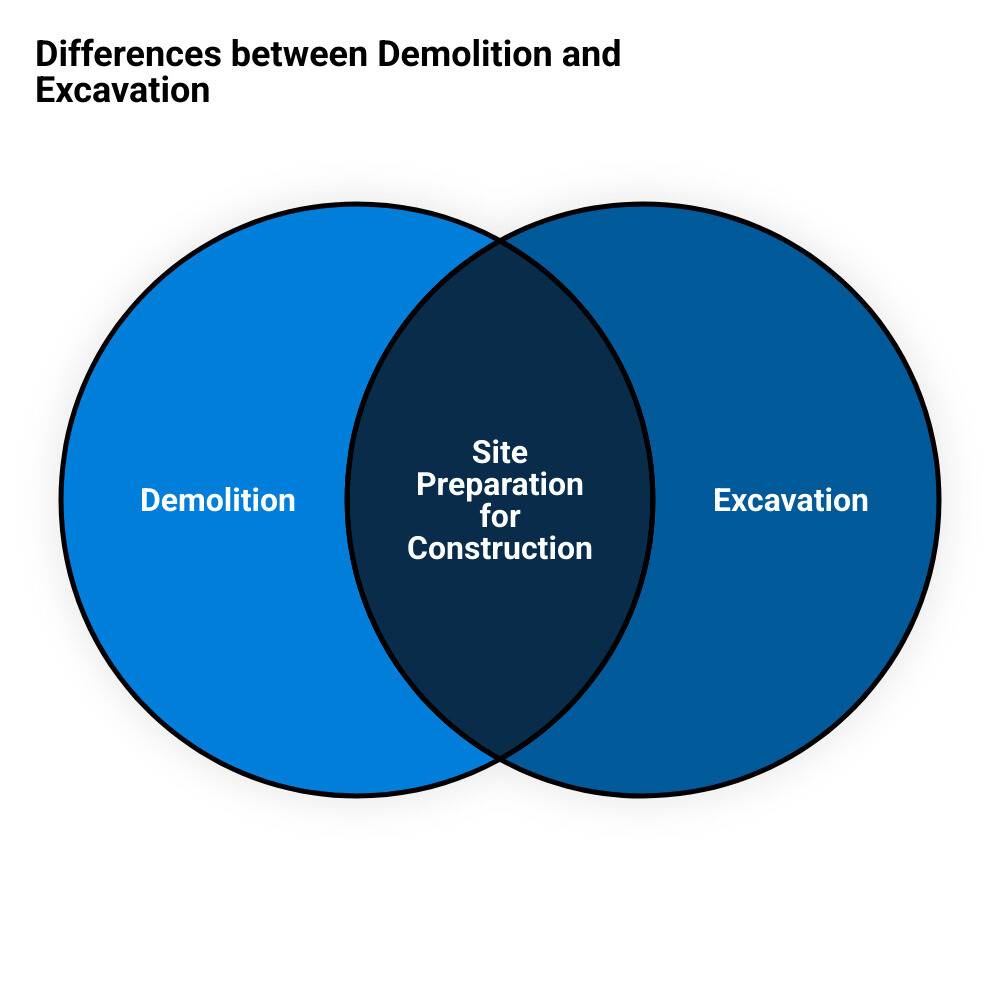
Demolition and excavation are two essential pillars of any successful construction project. Understanding the difference is key when you are managing a site preparation for new development. Here’s a quick snapshot:
- Demolition: Removing existing structures to make way for something new. It involves tearing down buildings and is the first step before any excavation can start.
- Excavation: Digging and moving earth to prepare for foundations, utilities, and landscaping. It’s about reshaping the land to make it suitable for construction.
Both processes are critical in changing a raw land into a ready-to-build site.
In construction projects, the site preparation begins with demolition if there are existing structures, followed by excavation to mold the terrain. Choosing the right professionals like M.T. Mayo Corp. ensures that the job is done safely, on time, and within budget.
M.T. Mayo Corp. offers experienced services in both areas, ensuring compliance with safety and environmental standards. This is crucial for property managers in the Greater Woburn area who need reliable and trustworthy partners to handle complex site work efficiently.
Understanding Demolition
Demolition is a crucial step in construction projects, especially when existing structures need to be removed to make way for new developments. It involves a series of steps designed to ensure safety and efficiency.
Demolition Steps
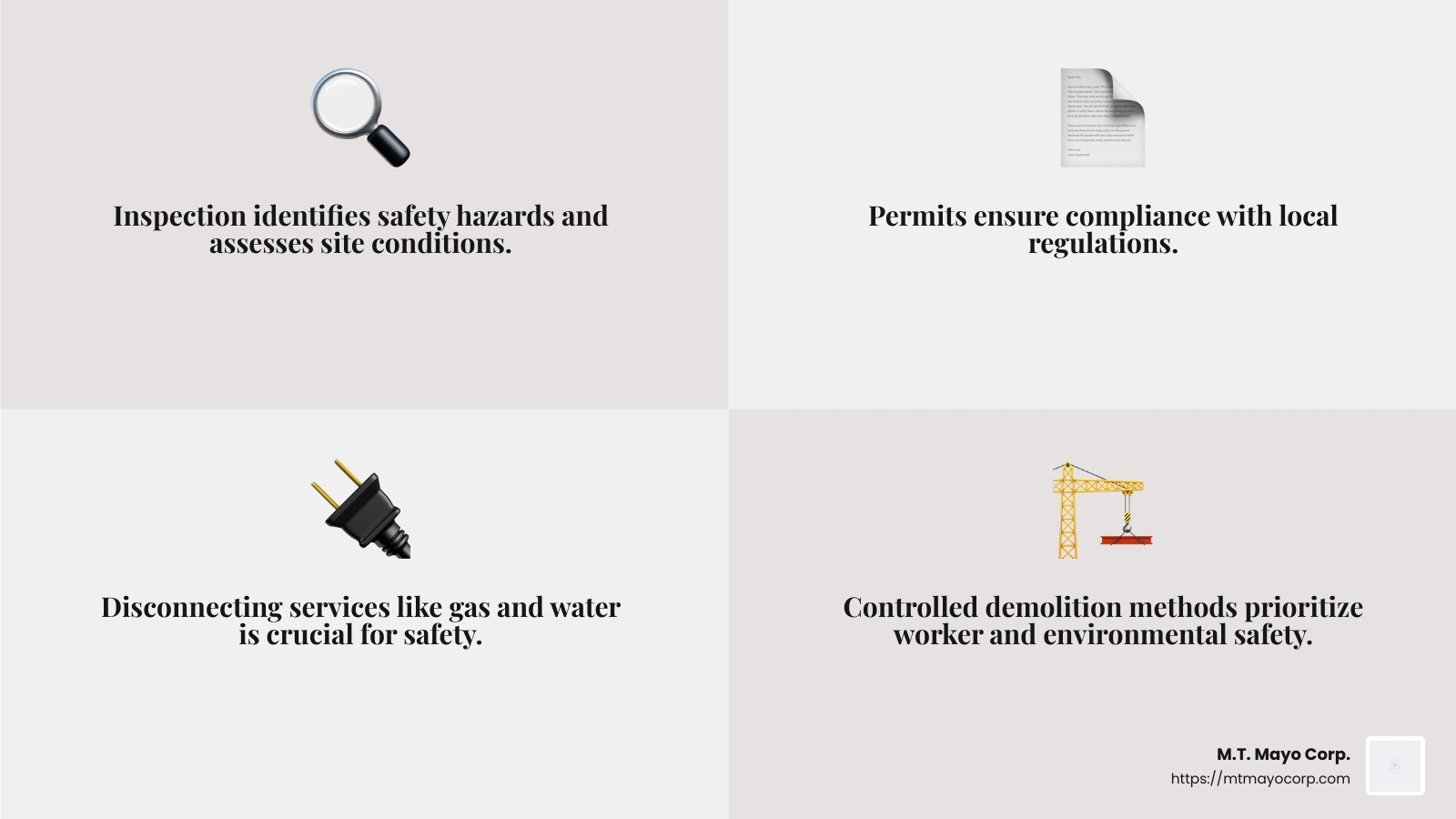
- Inspection: Before any demolition work begins, a thorough inspection of the building is necessary. This step helps identify potential safety hazards like chemicals or structural weaknesses. It also involves assessing drainage conditions, walkways, and roadways to ensure a safe working environment.
- Permits: Obtaining the necessary permits from local authorities is a legal requirement for demolition. This ensures that the demolition process complies with local regulations and standards.
- Disconnecting Services: All existing services such as gas, water, electricity, and sewerage must be safely disconnected. Temporary fencing is often used to secure the area and prevent unauthorized access.
- Demolition Process: The actual tearing down of the structure is done using controlled methods. This can involve heavy machinery like bulldozers and cranes, and sometimes even explosives for larger structures. Safety is a top priority during this phase to protect workers and the surrounding environment.
Each step in the demolition process is carefully planned and executed to minimize risks and ensure an efficient transition to the next phase of construction. With experienced contractors like M.T. Mayo Corp., you can be confident that your demolition project will be handled with precision and care.
Understanding Excavation
Excavation is the art of moving earth to prepare a site for construction. This process is crucial in creating a stable foundation for any new build, whether it’s a road, a building, or a park.
Excavation Steps
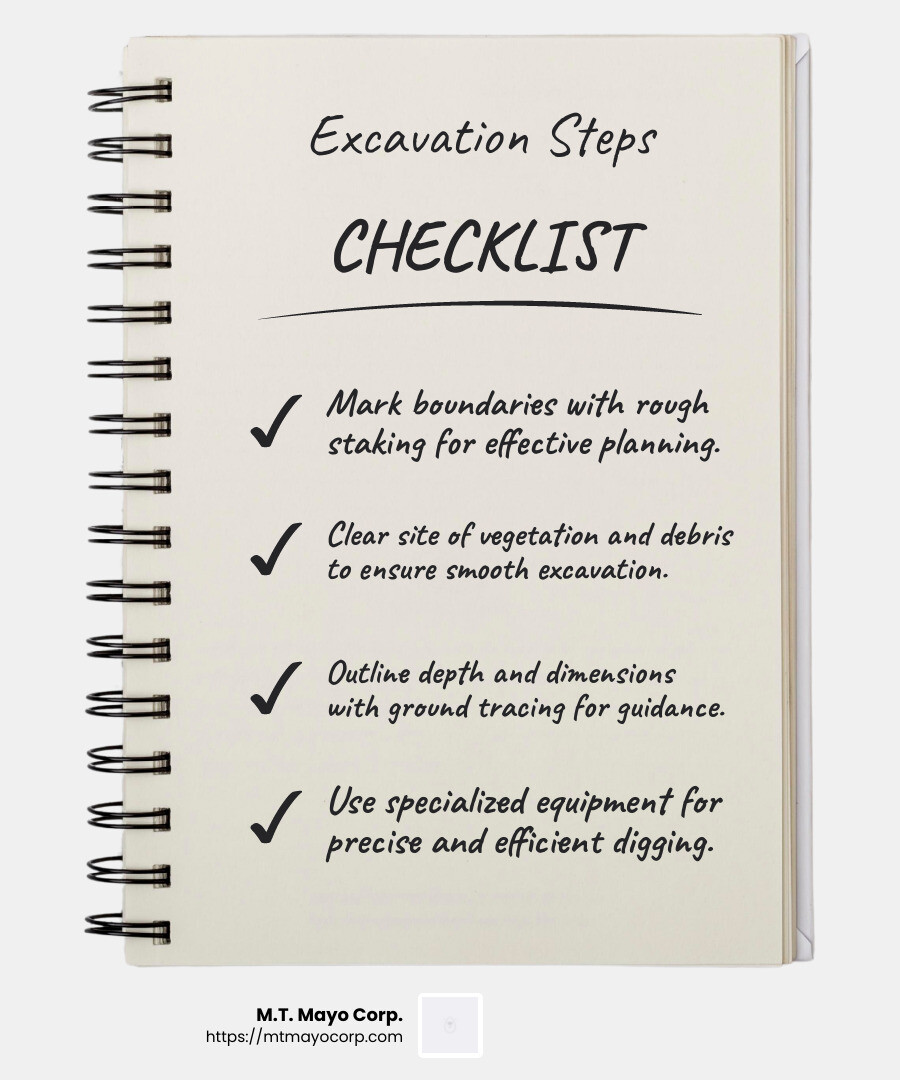
Excavation involves several key steps, each critical to the success of the construction project:
- Rough Staking: This initial step involves marking the boundaries of the excavation area. By identifying the extent of the soil and potential obstacles, workers can plan effectively for the excavation process.
- Clearing: Before any digging begins, the site must be cleared of vegetation and debris. This ensures that the excavation can proceed smoothly without any hindrances.
- Ground Tracing: Next, workers lay down the excavation and center lines. This includes outlining the depth and dimensions of the area to be excavated, guiding the machinery operators during the digging process.
- Excavation Process: This is where the heavy machinery comes into play. Using specialized equipment like excavators and bulldozers, workers remove soil and rocks to create trenches, holes, or foundations. These machines are powerful and precise, making them ideal for shaping the earth according to construction plans.
- Rough Grading: After the main excavation, the site undergoes rough grading. This involves either removing excess soil or adding backfill to achieve the desired ground level. The area is then overlaid with topsoil, preparing it for the next stages of construction.
Demolition and Excavation: Key Differences
When it comes to demolition and excavation, knowing the differences can help you understand how each plays a unique role in construction projects. Let’s break it down.
Site Clearing
Both demolition and excavation involve site clearing, but they do it differently. Demolition focuses on removing existing structures. This could mean tearing down a building to make way for a new one or clearing out old infrastructure. Excavation, on the other hand, involves moving earth. It’s about preparing the ground for new construction by digging and reshaping the land.
Existing Structures vs. New Construction
In demolition, the main goal is to safely dismantle existing structures. This can involve using wrecking balls, machinery, or even explosives to bring down buildings. The focus is on removing what’s already there.
Excavation, however, is all about preparing the site for new construction. Once the old structures are gone, excavation begins. This involves creating foundations, trenches, and drainage systems to support new buildings or roads.
Earth Movement
Earth movement is a key component of excavation. It’s about removing, relocating, or reshaping the soil to fit the construction plans. Heavy machinery like bulldozers and excavators are used to dig, move, and grade the earth.
Demolition, while it may involve some earth movement, is more about the controlled destruction of structures. The focus is on safely breaking down materials and managing debris.
Why These Differences Matter
Understanding these differences helps in planning construction projects more effectively. Demolition clears the way, while excavation prepares the ground. Together, they ensure that a construction site is ready for the next phase, whether it’s laying down a new foundation or installing utility lines.
By recognizing the distinct roles of demolition and excavation, you can better appreciate how each contributes to the safe and efficient preparation of a construction site. This knowledge is crucial for anyone involved in planning or overseeing construction projects.
The Role of Demolition and Excavation in Construction
Demolition and excavation are foundational steps in construction projects. They prepare sites for new developments, ensuring that everything is set for a successful build.
Site Preparation
Before any construction can begin, the site must be prepared. This often starts with demolition, where existing structures are carefully dismantled. Safety is a priority here, with inspections and permits ensuring compliance with local regulations. Once the site is clear, excavation begins. This involves moving earth to create a stable base for construction. Think of it as setting the stage for what’s to come, whether it’s a new building, road, or landscape.
Construction Projects
In construction, both demolition and excavation play critical roles. Demolition clears away the old, while excavation prepares the ground for the new. This might involve digging foundations, grading land, or even creating slopes for drainage. Each step is crucial for ensuring the stability and longevity of the final structure.
Utility Lines
One of the key tasks in excavation is laying utility lines. This includes water pipes, electricity cables, and telecommunication conduits. Proper excavation ensures these lines are buried safely and efficiently, preventing future issues and ensuring seamless connectivity. Without careful planning and execution, utility lines can become a major headache down the road.
Drainage Solutions
Effective drainage is another important aspect of site preparation. Excavation helps create channels and slopes that direct water flow, minimizing the risk of flooding and water damage. This is especially important in areas prone to heavy rainfall or with poor natural drainage. Proper excavation ensures that water is managed effectively, protecting both the site and the structures built on it.
By understanding the role of demolition and excavation in construction, you can see how they work together to transform a site from a blank slate into a busy construction zone. This preparation is essential for the success of any construction project, laying the groundwork for everything that follows.
Frequently Asked Questions about Demolition and Excavation
What is the difference between demolition and excavation?
Demolition and excavation are two distinct processes in the field of construction. Demolition involves tearing down existing structures to clear a site. This might mean taking down a building, a bridge, or any other structure that stands in the way of new development. It’s all about making space for the new by safely removing the old.
On the other hand, excavation is about moving earth, rocks, and other materials. This process prepares the site for construction by creating the necessary spaces for foundations, basements, or utility lines. While demolition clears the way, excavation shapes the land for future construction.
Can excavation occur without demolition?
Yes, excavation can certainly occur without demolition. In many cases, a site might be undeveloped land, requiring no tearing down of structures. Instead, excavation is used to prepare the land for new construction. This could involve grading land for a new road, digging trenches for pipelines, or preparing foundations for a new building.
Why are demolition and excavation often used together?
Demolition and excavation often go hand in hand because they complement each other in the construction process. When a site has existing structures, demolition is necessary to clear these structures out of the way. Once the demolition is complete, excavation takes over to prepare the site for the new construction.
For instance, after a building is demolished, the debris needs to be cleared, and the ground may need reshaping to lay down new foundations or install utility lines. These combined efforts ensure that the site is ready for the next phase of development, making it a seamless transition from old to new.
By working together, demolition and excavation set the stage for successful construction projects, whether it’s a new residential complex, commercial building, or infrastructure development.
Conclusion
At M.T. Mayo Corp., we understand the critical roles that demolition and excavation play in successful construction projects. Our team is committed to delivering reliable services that prioritize safety and compliance, ensuring that every project is executed smoothly and efficiently.
Safety and Compliance: We are a fully licensed and insured contractor, which means we adhere to all local, state, and environmental regulations. Our focus is not just on getting the job done, but on getting it done safely and responsibly. This commitment to safety ensures peace of mind for our clients and a secure working environment for our team.
Reliable Services: With years of experience in site work solutions, we bring expertise and precision to every project. Whether it’s clearing a site through demolition or preparing the ground with excavation, our skilled team uses the latest equipment and methods to deliver high-quality results. We take pride in completing projects on time and within budget, without compromising on quality.
Site Work Solutions: Our comprehensive services go beyond just demolition and excavation. We offer a full range of site work solutions, including drainage systems and utility tie-ins, to fully prepare your site for construction. This holistic approach ensures that your site is ready for whatever improvements are planned, paving the way for successful development.
If you’re planning a construction project and need expert site preparation, look no further than M.T. Mayo Corp. Our water and sewer tie-ins are just one example of how we can support your project from start to finish. Contact us today to learn more about how we can help make your vision a reality.
